
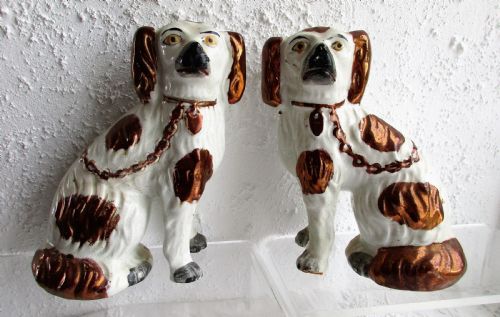
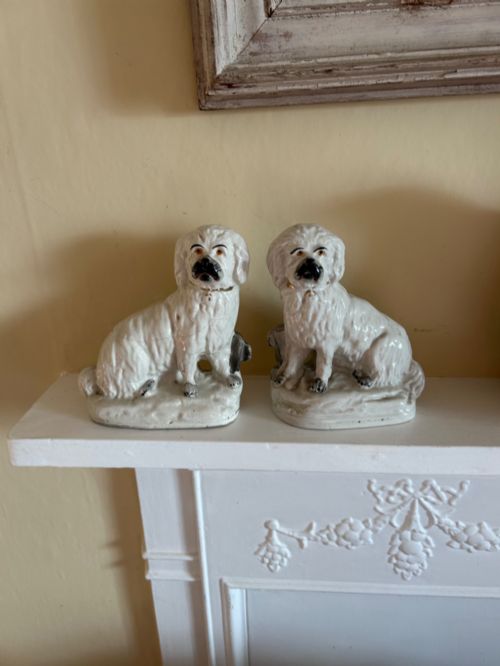


Earthenware Staffordshire Dog Pair
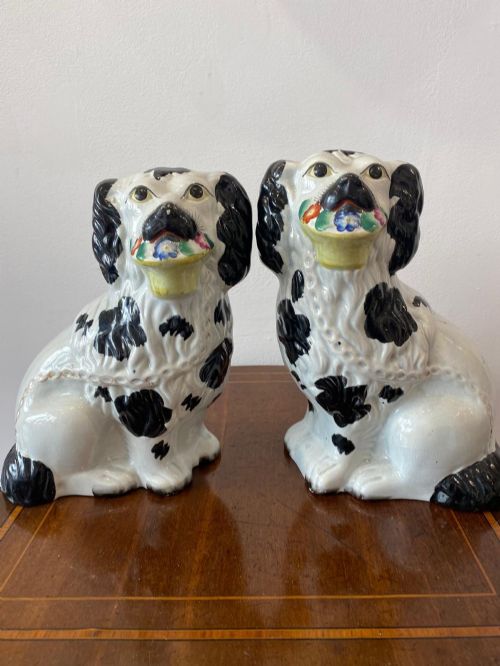
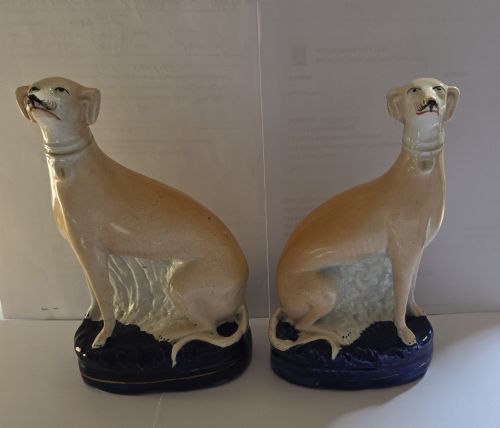
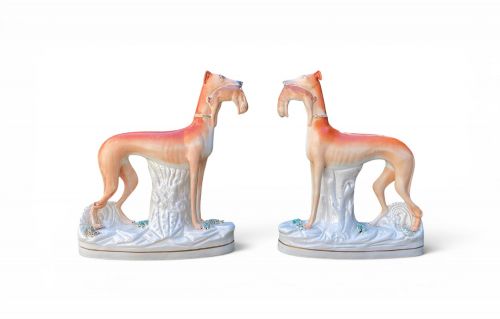
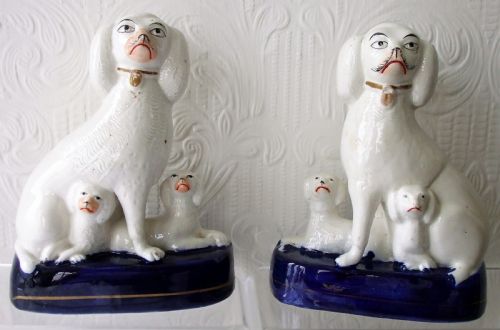
These earthenware staffordshire dog pair figures bring Victorian hearths into focus, offering symmetrical pairs of spaniels, greyhounds, and poodles.
Earthenware Staffordshire Dog Pair
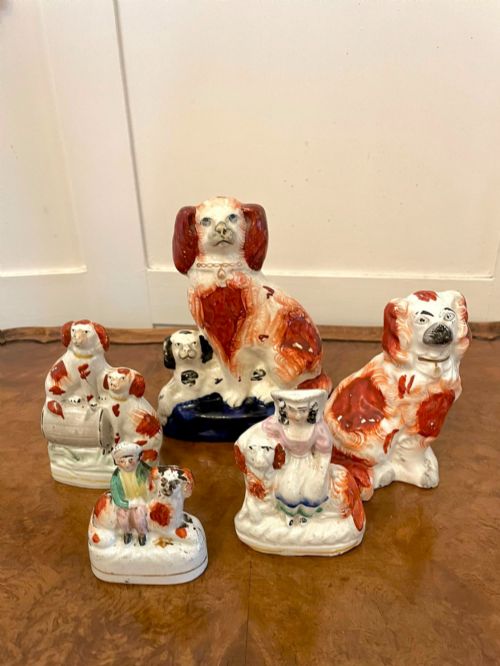
An earthenware staffordshire dog pair captures the domestic animal forms popular during the nineteenth century, including spaniels, poodles, greyhounds, pugs, and Maltese terriers. These mantlepiece ornaments often appear as seated companions, sometimes modelled with pups, hares, or as quill holders.
Most examples originate from the Victorian period, spanning decades from roughly eighteen forty-five to nineteen hundred, aligning with the Victorian, Regency, and country pottery styles. Buyers encounter both miniature versions and large figures finished with distinct colour variations.
The objects serve primarily as decorative figures and pottery sculptures meant for display in pairs, reflecting English traditional tastes of the nineteenth century.
How They Were Made
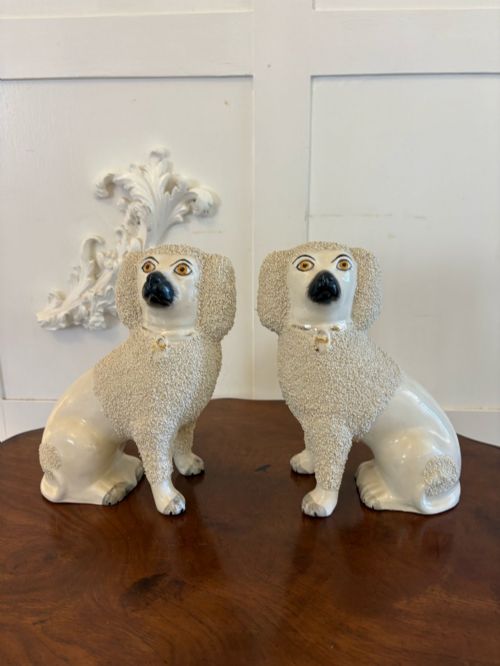
Makers often applied surface textures such as encrusting or wool effects, particularly on poodles, alongside hand-painted black, white, red, and multi-coloured enamel pigments.
Listings feature earthenware materials, lead glazes, enamel paints, and gold leaf applications across the nineteenth century.
What Varies in Quality
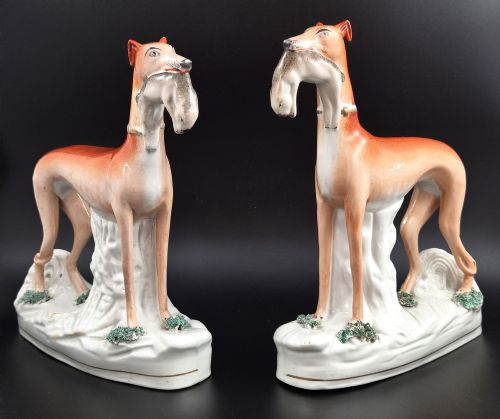
The presence of specialised forms, such as greyhounds with hares or quill holders, elevates the decorative interest of a pair compared to standard seated spaniels.
Thomas Parr·Wooley
The Earthenware Staffordshire Dog Pair Glossary
- Earthenware
- A porous pottery body fired at lower temperatures, commonly used for nineteenth-century figures. It requires a protective glaze to hold liquids and display enamel colours.
- Lead glaze
- A glossy coating applied to ceramic wares before firing, creating a smooth, protective finish. It gives these nineteenth-century figures their characteristic shine.
- Gilt
- A thin layer of gold leaf or gold paint applied to surface details such as lockets and chains. It provides metallic contrast against the white ceramic body.
- Encrusting
- Applied ceramic clay particles used to create textured coats on poodles and other miniature dog figures. This technique mimics curled fur or decorative elements.
Earthenware Staffordshire Dog Pair: Frequently Asked Questions
What are earthenware staffordshire dog pairs?
These ceramic mantlepiece ornaments depict various canine breeds modelled in symmetrical pairs during the nineteenth century. Common subjects include spaniels, greyhounds, and poodles.
Potters produced them across the Victorian era in diverse sizes, ranging from miniatures to large fireplace figures decorated with enamels and gilt highlights.
How were staffordshire dogs used?
Victorian households placed these figures on mantlepieces, often facing inward toward each other from opposite ends of the hearth.
Certain specialised forms also functioned as quill holders on desks, combining decorative appeal with practical utility.
How do I date a pair?
Dating relies on stylistic clues, modelling techniques, and materials associated with nineteenth-century production. Regency and Victorian examples often feature distinct glaze characteristics and enamel palettes.
Specific makers or annotated decorative motifs can further narrow the period of manufacture between eighteen forty-five and nineteen hundred.
What colours do these dogs come in?
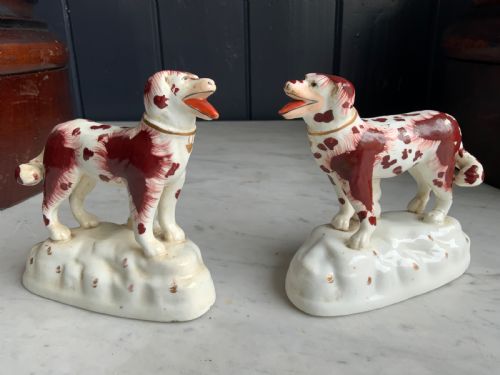
Enamel decoration varies widely, featuring black and white combinations, red and white, solid white with gilt, and multi-coloured patterns.
Details like gold chains, lockets, and facial markings add contrast to the primary earthenware body and glaze.