


Victorian Porcelain Dinner Service
A victorian porcelain dinner service brings nineteenth-century dining tables to life with hand-painted scenes and gilded borders.
Victorian Porcelain Dinner Service
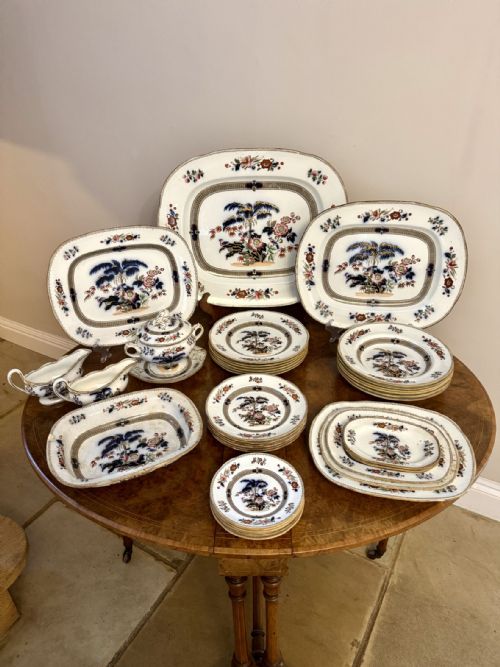
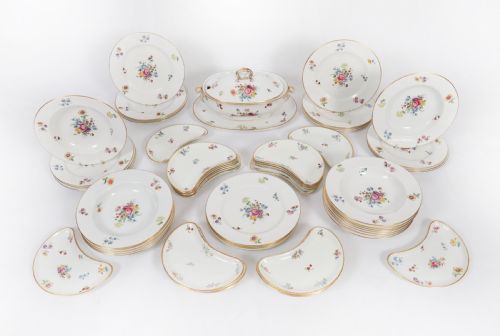
A victorian porcelain dinner service comprises matched tableware sets produced during the nineteenth century, including full services, part services, and smaller child or toy editions. These sets reflect the formal dining customs of the period through varied dinnerware configurations and decorative plates.
Buyers encountering this page will most frequently meet pieces originating from the nineteenth century, featuring styles designated as Victorian and French Provincial. The forms range from extensive sixty-piece sets down to individual dinner plates and miniature ceramics.
How they were made
Potters utilised ceramic, earthenware, bone china, and porcelain bodies, applying lead or translucent glazes over the shaped clay. Enamel colours and gilt accents were added to decorate the surfaces before firing.
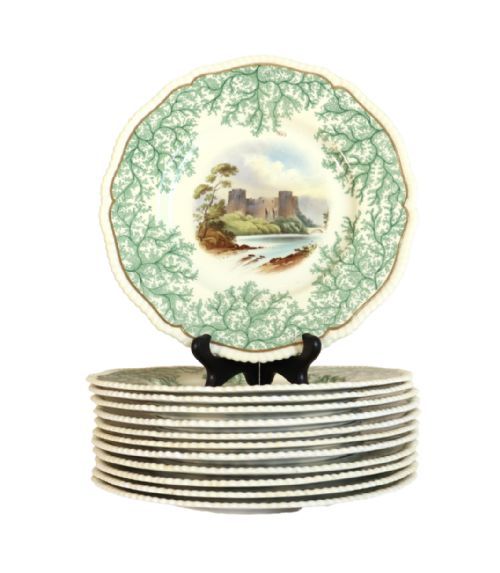
Many items incorporate hand-painted details and specialised transfer-printing techniques such as Flow blue, alongside moulded seaweed borders and landmark scenes.
Listings feature 19th-century periods alongside Edwardian dates, using materials such as bone china, ironstone, and earthenware.
What varies in quality
Quality differences emerge in the complexity of the decoration, moving from simple transfer prints to intricate hand-painted compositions and detailed gilding. The extent of a surviving service also dictates its standing, with large, complete sets showing greater preservation than partial collections.
The precision of the ceramic body and glaze application separates standard utilitarian output from finer exhibition-grade dinnerware produced by established potteries.
Spode·Wedgwood·Copeland·Coalport·Doulton·Limoges
The Victorian Porcelain Dinner Service Glossary
- Bone China
- A type of soft-paste porcelain incorporating animal bone ash for added strength and whiteness. It creates a translucent body favoured for fine nineteenth-century tableware.
- Flow Blue
- A cobalt blue transfer-printing technique where the colour bleeds slightly into the surrounding white glaze during firing. This produces a hazy, painterly effect popular on Victorian earthenware and porcelain.
- Gilt
- A thin layer of gold applied to the rims, handles, or patterns of ceramic pieces. It elevates the decorative scheme of formal dining services.
- Part Service
- An incomplete set of tableware that has lost some of its original components over time. These gatherings still provide matching plates and serving pieces for modern use.
Victorian Porcelain Dinner Service: Frequently Asked Questions
How do I clean a victorian porcelain dinner service?
Wash each piece gently by hand using warm water and mild dish soap. Avoid abrasive sponges and dishwashers to protect the delicate enamel and gilt decoration.
Dry the items immediately with a soft, lint-free cloth to prevent water spots from forming on the glaze.
Can I use these dinner services for food?
Many nineteenth-century ceramic sets remain structurally sound for occasional dining use. Inspect each plate for soundness before serving food upon it.
Keep in mind that older glazes and gilt work can wear down with frequent use and acidic foods.
What is the difference between a full and a part service?
A full service contains the original complement of plates, platters, and tureens intended for a Victorian dining table. A part service preserves only a fraction of those original pieces due to loss or breakage over the decades.
Part services offer an accessible entry point for collectors who want authentic nineteenth-century tableware without needing a massive set.
How do I date nineteenth-century porcelain?
Examine the base of the ceramics for maker marks, registration diamonds, or impressed factory ciphers. These stamps often indicate the exact year or decade of manufacture.
Stylistic clues like hand-painted floral motifs, transfer-printed landmarks, and specific border designs also help narrow down the production period.