


Victorian Imari Pattern China
Victorian imari pattern china brings vibrant colour and complex oriental motifs to nineteenth-century tables, offering both decorative presence and utilitarian service.
Victorian Imari Pattern China
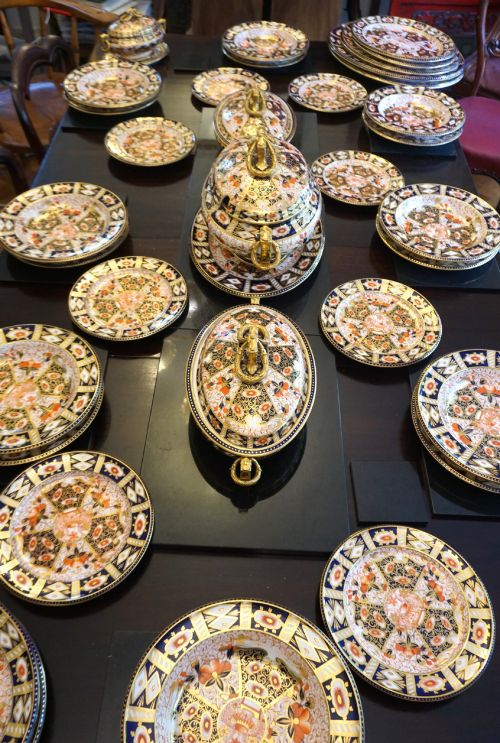
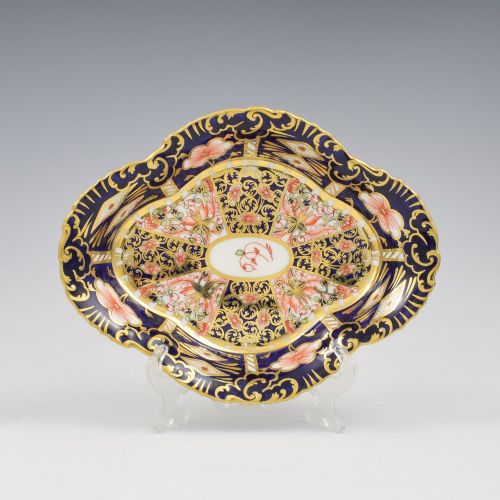
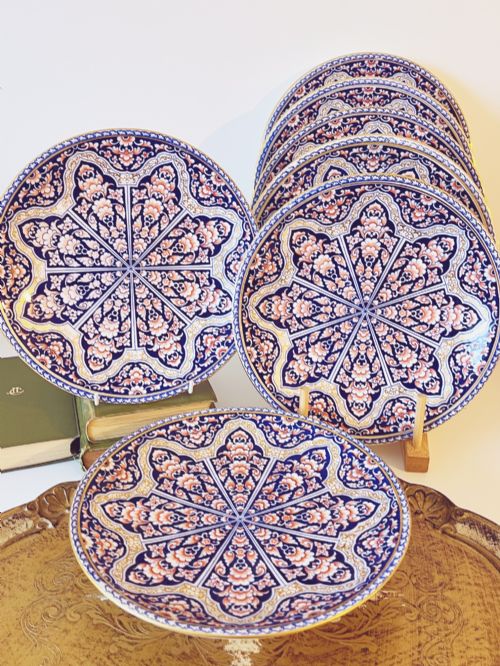
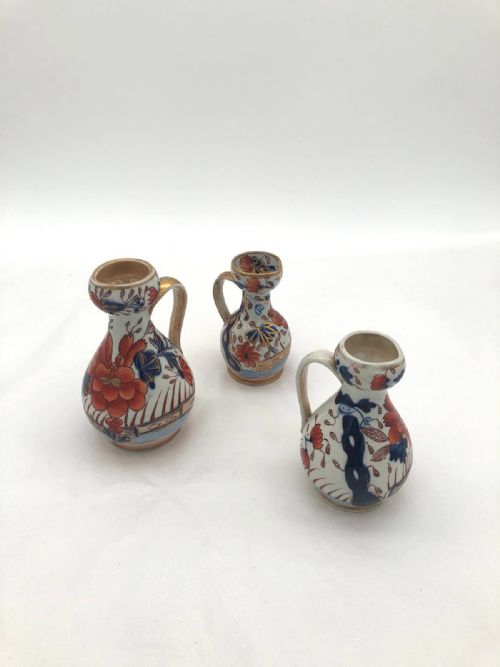
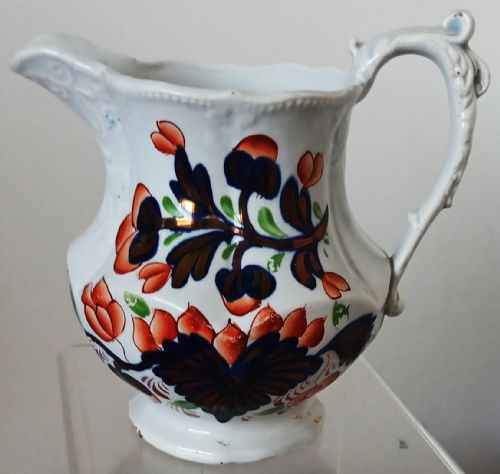
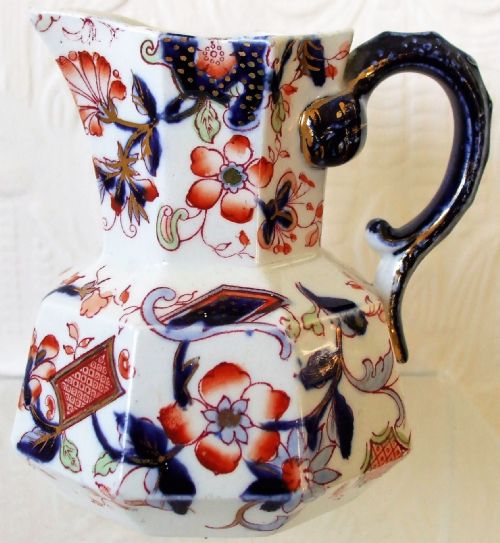
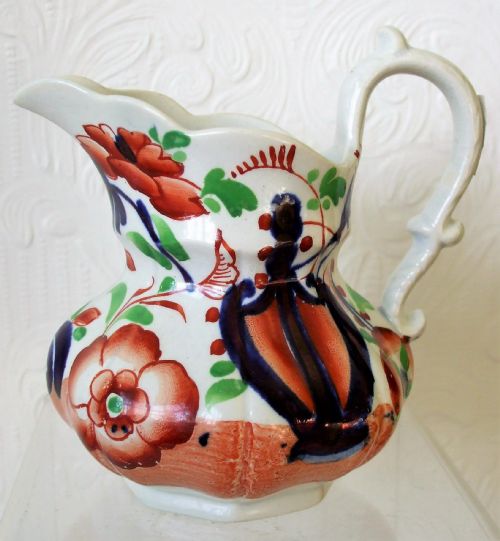
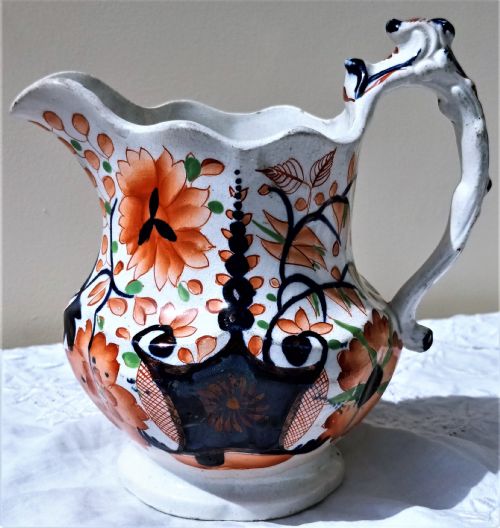
Victorian imari pattern china encompasses a wide array of domestic and decorative ceramics produced during the nineteenth century, including full dinner services, dessert sets, tea wares, and individual jugs. These pieces draw heavily on Japanese export aesthetics, reinterpreted through British ceramic traditions to suit contemporary tastes.
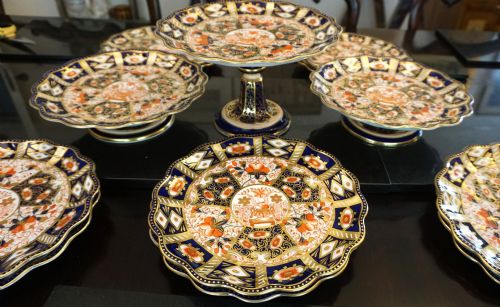
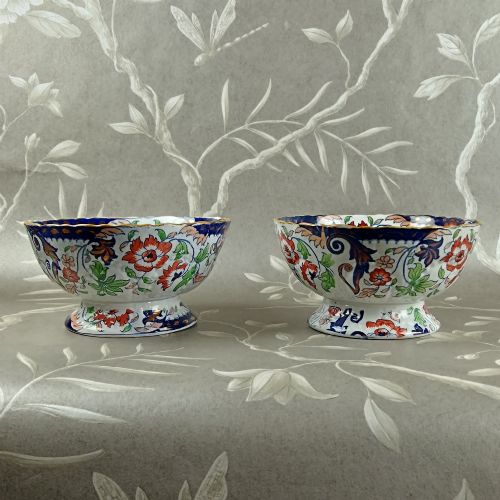
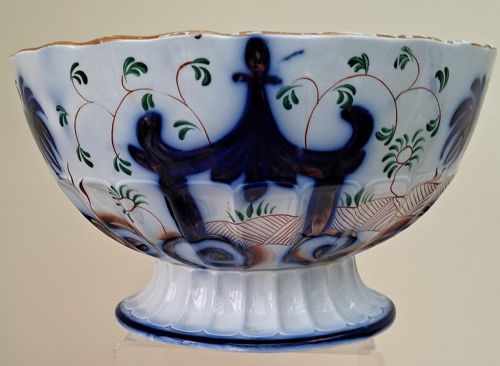
The domestic forms on this page range from modest footed bowls and soap dishes to expansive multi-piece services comprising plates, comports, and tureens. Miniature items such as watering cans and flat irons also appear alongside larger utilitarian jug and basin sets.
Makers and potteries of the era adapted these rich decorative schemes onto various ceramic bodies, yielding tableware that functioned just as readily for display as for dining.
How they were made
Potteries constructed these wares using robust ironstone, earthenware, and bone china bodies, providing a durable base capable of sustaining heavy daily use. Manufacturers then applied intricate designs utilising enamel colours, gold leaf, and glaze.
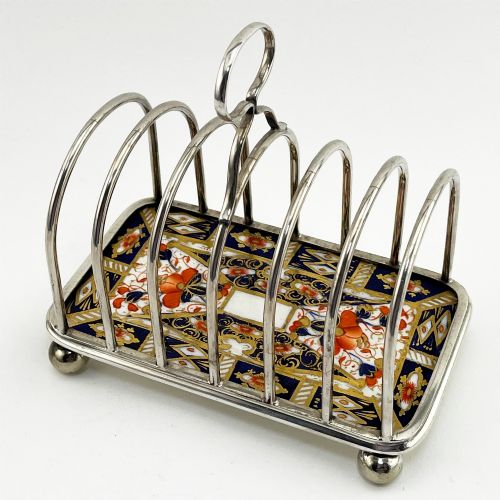
The characteristic palette relies on deep cobalt blues, iron reds, and gleaming gilt highlights, fusing underglaze and overglaze techniques. Artisans painted motifs like fences, doves, and pagodas directly onto the ceramic surface before a final firing sealed the vibrant pigments.
What varies in quality
Quality across these ceramics rests largely on the crispness of the hand-painted detailing and the richness of the gilding applied to the ironstone or bone china body. Pieces displaying dense, neatly executed oriental motifs show a higher level of artisan skill than simpler, repetitive transfers.
The preservation of the original enamel colours and gold leaf through successive decades dictates the visual strength of a service or individual vessel. Complete sets featuring matching date marks and uniform glazing retain greater cohesion than assembled groupings.
Royal Crown Derby·Mason's Ironstone·Gaudy Welsh·Wedgwood·Keeling and Co·Royal Davenport·Coalbrookdale
The Victorian Imari Pattern China Glossary
- Ironstone
- A dense, heavy ceramic body patented in the nineteenth century to imitate Chinese porcelain while offering superior durability. It forms the foundation for many robust jugs, plates, and tureens.
- Imari
- A style of ceramic decoration originating in Japan, characterised by a palette of blue, red, and gold. British potteries adapted this aesthetic during the nineteenth century for domestic tea and dinner wares.
- Comport
- A raised dish or bowl used for serving fruit or dessert as part of a formal service. These sit atop a central pedestal on the dining table.
- Tureen
- A deep covered vessel designed for serving soup, sauce, or vegetables. They often arrive paired with matching ladles and undertrays.
- Enamel
- Opaque vitreous material fused to the surface of ceramics to add vibrant colour. It provides the reds, greens, and blues characteristic of these decorated patterns.
Victorian Imari Pattern China: Frequently Asked Questions
What is imari pattern china?
Imari pattern china refers to ceramics decorated in the distinctive Japanese export style, featuring iron red, cobalt blue, and gilt highlights. British potteries adopted this aesthetic during the nineteenth century.
These motifs typically include floral arrangements, architectural elements, and garden scenes rendered in rich, contrasting tones across various tableware forms.
How do I identify ironstone?
Ironstone is a heavy, durable ceramic body developed in the nineteenth century to provide a strong alternative to porcelain. It rings slightly when struck and resists chipping.
Many pieces bear specific maker marks on the underside, indicating production by prominent potteries of the period.
Were these services used daily?
Dinner and tea services saw regular deployment in nineteenth-century households for entertaining guests and everyday dining alike. Their robust ironstone construction suited this practical function.
Larger services often included specialised vessels such as comports, sauce tureens, and ashsets tailored for specific courses.
How should I care for antique china?
Antique ceramics require gentle handling and hand washing in lukewarm water with mild soap. Avoid abrasive sponges that might damage the overglaze enamel or gold leaf.
Keeping pieces away from extreme temperature shifts protects the underlying ceramic body and preserves the original glaze.