



Gilt Cobalt Porcelain Service
A gilt cobalt porcelain service brings rich blue glaze and burnished gold leaf to the table, offering a traditional centrepiece for display or dining.
Gilt Cobalt Porcelain Service
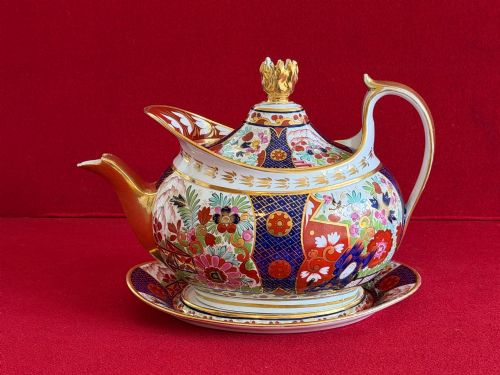
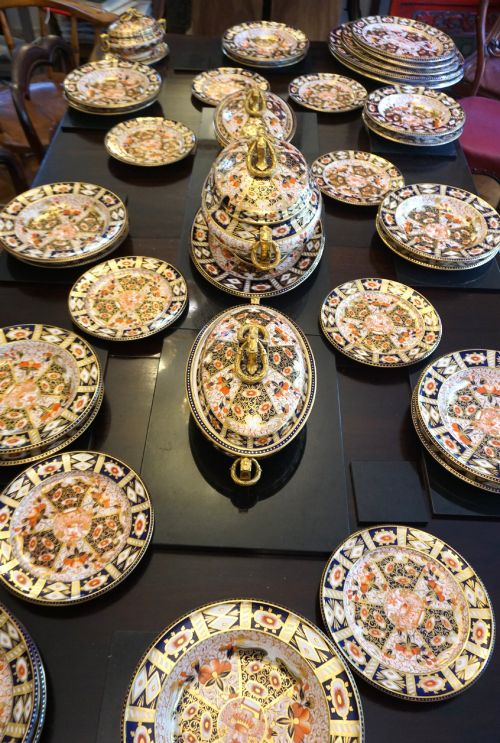
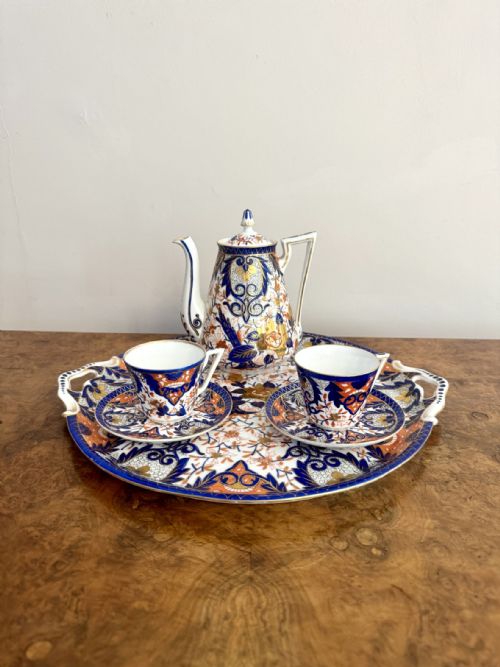
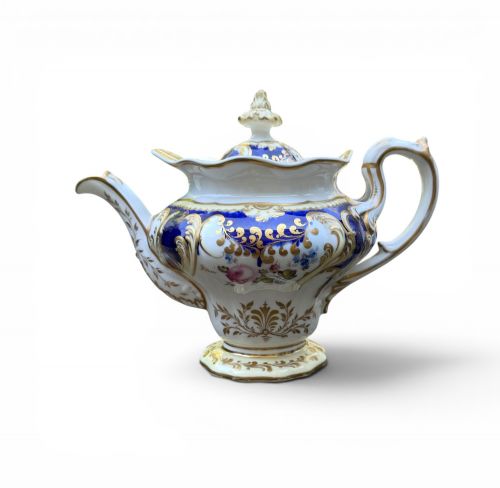
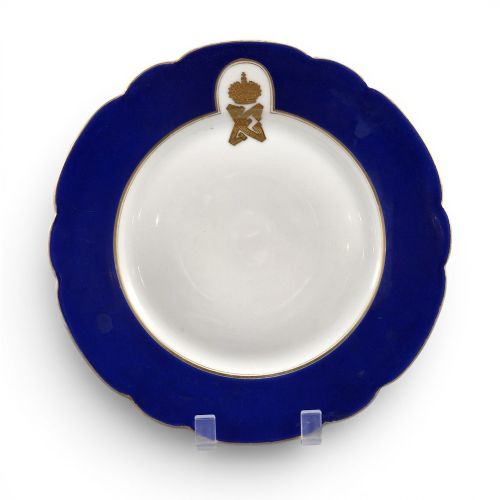
A gilt cobalt porcelain service comprises matched vessels and tableware uniting deep cobalt blue decoration with applied gold leaf or gilding. Buyers seeking a gilt cobalt porcelain service encounter sets ranging from extensive dinner services to smaller coffee sets, dessert services, and tea sets.
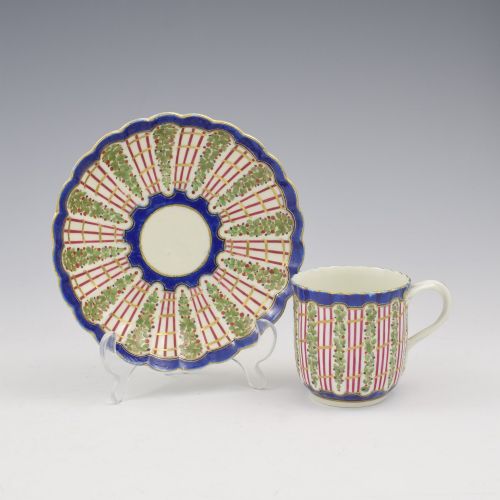
The material record spans soft-paste porcelain, bone china, and standard porcelain body types adorned with cobalt glaze and enamel highlights. Pieces emerge across the eighteenth century, nineteenth century, and early twentieth century, taking forms such as cabinet plates, teapots, sugar bowls, sauceboats, and cups and saucers.
Stylistic variation is wide, drawing on Georgian, Victorian, Rococo Revival, and Imperial Russian traditions alongside Imari patterns. Surviving sets often appear as part services, individual cabinet display plates, or larger multi-piece dining configurations.
Materials and manufacture
Potters formed these services using porcelain or bone china bodies, applying deep cobalt blue underglaze to create rich background tones. Enamel colours were frequently added over the glaze to enrich floral, Japanese-inspired, or heraldic motifs.
Finishing involved the application of gold leaf or gilding to rims, handles, and borders, which was then fired to bond with the glazed surface. Early examples rely on soft-paste porcelain bodies before later nineteenth-century production shifted towards more durable porcelain and bone china.
Gilt Cobalt Porcelain Service Retail Price Guide 2026
Typical asking prices for gilt cobalt porcelain service among the pieces listed under this phrase on Sellingantiques today, from the lower quarter to the upper quarter. They describe what is for sale here now, not the wider market.
Listings feature porcelain, enamel, gold leaf, and cobalt glaze across Georgian, Victorian, Edwardian, and Imperial Russian styles.
Assessing quality
Quality in a gilt cobalt porcelain service rests on the crispness of the cobalt glaze application and the density of the hand-applied gilding. Superior pieces display even colour saturation without pooling in the blue ground and precise, well-preserved gold leaf detailing.
The refinement of the porcelain body and the complexity of the form distinguish standard tableware from exceptional cabinet pieces. Sets featuring complete matching components or provenance linked to notable services command greater interest than assembled or partial groupings.
Davenport·Royal Crown Derby·Coalport
The Gilt Cobalt Porcelain Service Glossary
- Cobalt glaze
- A deep blue mineral colour applied to pottery before or after firing that remains stable at high temperatures. It provides the dark contrasting ground typical of these services.
- Gilding
- The application of gold leaf or gold paint to the surface of porcelain. This technique highlights rims, handles, and decorative borders.
- Soft-paste porcelain
- An artificial porcelain compound fired at lower temperatures than hard-paste porcelain. It was utilised by early English factories before standard bone china predominated.
- Imari pattern
- A decorative style inspired by Japanese export wares featuring iron red, cobalt blue, and gilt detailing. It appears frequently on nineteenth-century tableware.
- Cabinet plate
- A decorative plate intended for display in a cabinet rather than for dining use. These pieces often exhibit more intricate painting and heavier gilding.
Gilt Cobalt Porcelain Service: Frequently Asked Questions
How do I care for antique porcelain services?
Antique porcelain with gold leaf and enamel decoration requires gentle hand washing in lukewarm water with mild soap. Avoid abrasive sponges and dishwashers to protect the delicate gilding and cobalt glaze.
Store pieces with felt dividers between plates to prevent scratching the surface glaze. Display them away from direct sunlight to keep enamel colours bright.
Were these services used daily?
Larger dinner and dessert services were generally reserved for formal dining, entertaining guests, and special household occasions. Smaller tea and coffee sets saw more frequent domestic use.
Complete surviving sets often indicate that portions were set aside or kept safely in cabinets rather than subjected to everyday wear.
How can I tell the period of a service?
Dating relies on factory marks, impressed numbers, and registration diamonds stamped into the underside of the porcelain. Stylistic clues such as Rococo Revival moulding or specific Imari palette choices also point to exact decades.
Early pieces often feature softer porcelain bodies and hand-painted details, whereas late nineteenth-century sets utilise harder bone china formulations.
What is a part service?
A part service is a surviving subset of an originally larger dining, dessert, or tea collection. Over time, individual plates, cups, or saucers get broken or separated from the main group.
Finding remaining pieces together offers a practical way to acquire antique porcelain for display or limited use without needing a full historical service.