
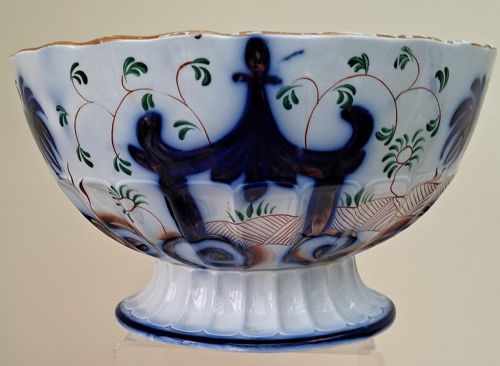


Victorian Porcelain Compote
A victorian porcelain compote brings a grand centrepiece presence to the table, fashioned from porcelain and bone china with gilded highlights.
Victorian Porcelain Compote
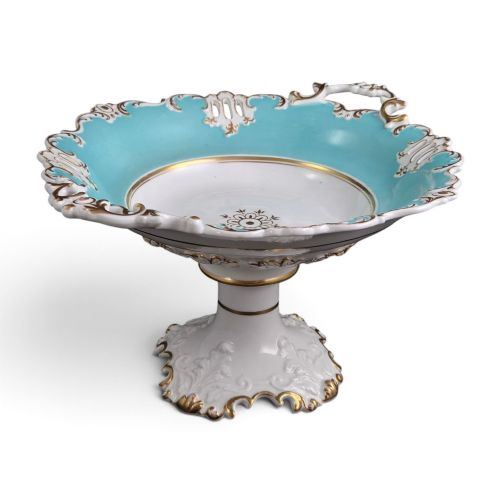
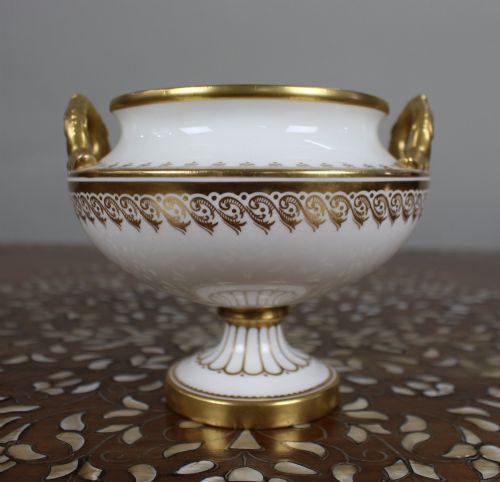
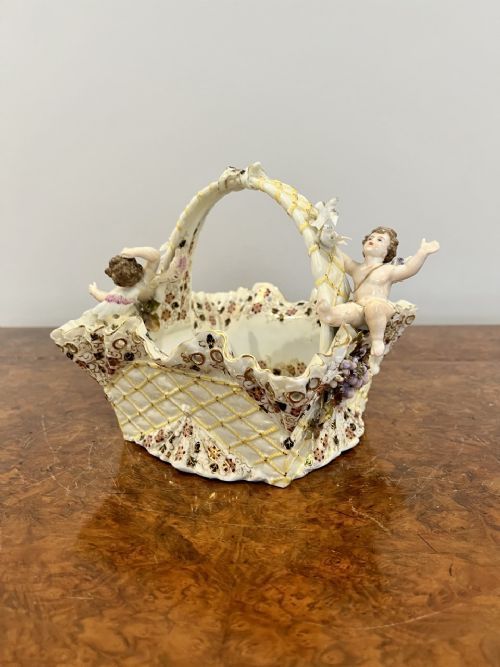
A victorian porcelain compote stands as a footed display vessel or centrepiece designed to present fruit or dessert on the dining table. The pieces found here span the nineteenth century, encompassing shapes such as tazzas, footed bowls, and decorative baskets.
Makers shaped these items in styles ranging from Rococo Revival and Neoclassical to the Victorian Aesthetic Movement. Many examples incorporate figural elements like cherubs alongside traditional pedestal bases.
How they were made
Potters shaped these vessels using porcelain, bone china, and ironstone, often applying enamel paint by hand. Artisans then enriched the forms with gold leaf, gilt, and gilding to accentuate the moulded surface details.
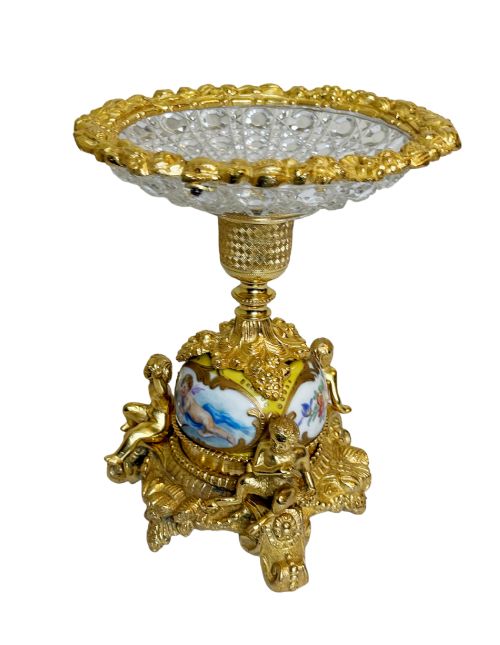
Certain ambitious compositions combine porcelain bodies with gilt bronze or ormolu mounts. Cut crystal elements also appear alongside the ceramic structures in more elaborate centrepieces.
Listings feature items spanning the nineteenth century into the early twentieth century, utilising porcelain, ironstone, bone china, and ormolu.
What varies in quality
The standard of painting defines the upper tier of these pieces, particularly where hand-painted floral motifs or figural putti show fine brushwork and shading. Crispness in the porcelain moulding and the richness of the applied gilding further separate standard production from superior examples.
The complexity of the form influences the standing of a compote, with pierced lattice work, figural supports, and multi-part construction demonstrating greater ambition from the factories that produced them.
Coalport·John Ridgway·Thomas Moorcroft for E.J.D Bodley·Mason’s·Royal Worcester
The Victorian Porcelain Compote Glossary
- Compote
- A raised vessel with a foot or pedestal used for serving fruit or sweets at the table. It shares its function with the tazza.
- Tazza
- A shallow saucer-like dish mounted on a stem and foot, frequently employed as a centrepiece. The form dates back long before the nineteenth century.
- Gilt bronze
- An alloy of copper and zinc coated with a layer of gold, utilised for mounts and structural supports on composite table pieces. It provides a durable metallic contrast to ceramic bodies.
- Bone china
- A type of porcelain incorporating bone ash, which yields a strong, slightly translucent body suitable for intricate moulding. Factories utilised it extensively for nineteenth-century tableware.
- Putti
- Representations of chubby male infants, often winged, derived from classical art and frequently modelled in porcelain to support or adorn centrepieces.
Victorian Porcelain Compote: Frequently Asked Questions
What is a victorian porcelain compote used for?
These vessels were originally designed to hold fruit, nuts, or small desserts during formal nineteenth-century dining. They functioned primarily as decorative centrepieces for the middle of the table.
Today, they serve equally well as decorative items on sideboards or mantelpieces. Their elevated forms bring height and traditional character to a room.
How do I identify the period of a compote?
Dating relies on stylistic clues such as Rococo Revival curves or Aesthetic Movement motifs, alongside factory marks stamped or painted underneath. The nineteenth-century examples often feature hand-painted floral panels or moulded cherubs.
Materials also offer guidance, as bone china and ironstone gained prominence alongside traditional porcelain during this era. Comparing the form to known factory patterns helps narrow down the decade of production.
Where were these compotes manufactured?
Production took place across English potteries and continental European factories. English names such as Coalport and Mason's worked alongside German and French manufacturing centres.
Continental pieces frequently incorporated elaborate figural groups and ormolu mounts. English makers often focused on refined bone china bodies and botanical painting.
How should I care for a porcelain compote?
Gentle dusting with a soft cloth is recommended to protect the delicate painted surfaces and gilded highlights. Hand washing in lukewarm water with mild soap should be done only when necessary, avoiding harsh scrubbing.
Because many pieces combine porcelain with gilt bronze or applied enamel, they require careful handling away from direct heat and heavy traffic areas.