



Gilt Porcelain Tazza
A gilt porcelain tazza brings elevated display to a table, combining raised porcelain bowls with metallic or enamel mounts from the nineteenth century.
Gilt Porcelain Tazza
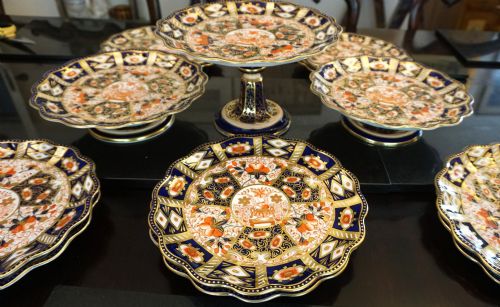
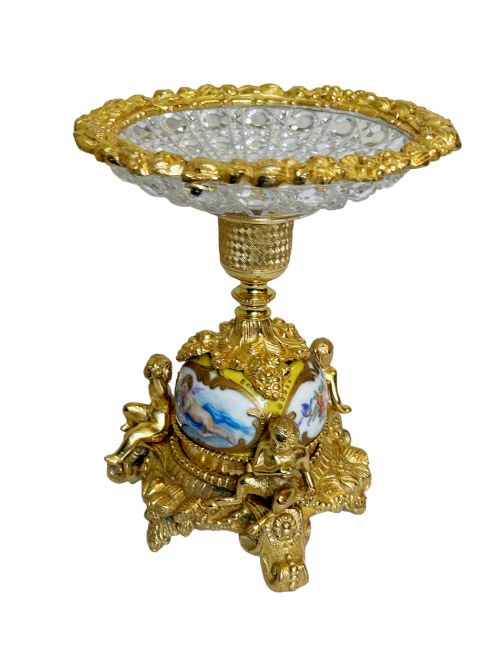
A gilt porcelain tazza stands as an elevated footed dish, often catalogued alongside comports and centrepieces in nineteenth-century British, French, and German output. These pieces serve as focal display objects on dining tables or sideboards, combining ceramic bowls with metallic highlights.
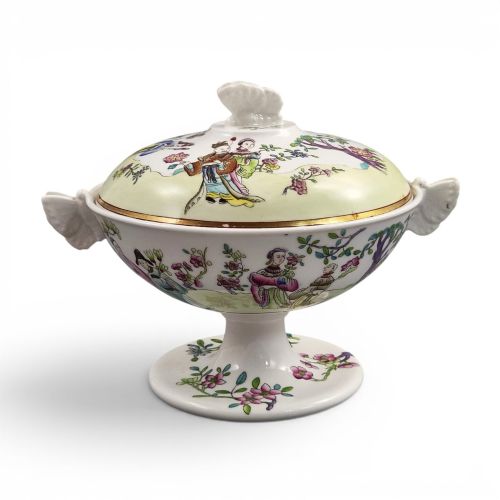
The versions encountered on this page span the Georgian, Victorian, and later nineteenth-century periods, showing influences from Rococo Revival to Japonisme. Makers utilised bone china and felspar porcelain alongside gilt bronze and ormolu mounts to create structured, footed forms.
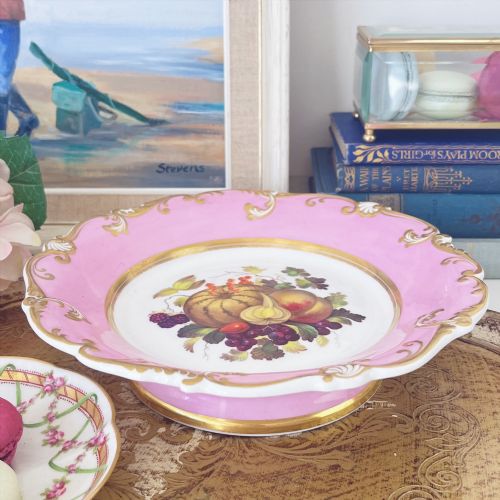
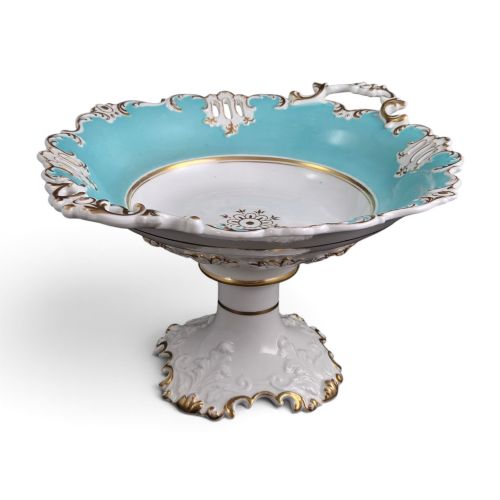
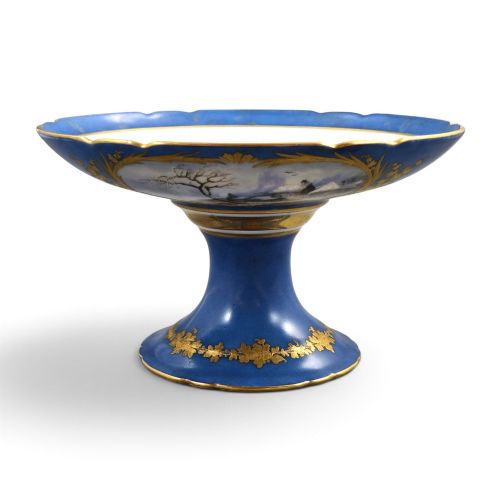
Forms vary from shell-edged footed bowls to large pedestal vessels with butterfly handles and champlevé enamel accents. Each object combines a ceramic dish body with distinct decorative painting, ground colours such as turquoise or pink, and gilded framing.
Distinctions in craftsmanship
Quality rests in the precision of the hand-painting and the integration of the metal mounts with the ceramic body. Pieces featuring detailed botanical or figural painting alongside heavy ormolu or champlevé enamel mounts sit at the upper end of the range.
The sophistication of the porcelain body, whether standard porcelain, bone china, or felspar porcelain, dictates the refinement of the piece. Crisp moulding, delicate handles such as butterfly shapes, and rich, unrubbed gilding distinguish superior examples from simpler factory output.
Gilt Porcelain Tazza Retail Price Guide 2026
Typical asking prices for gilt porcelain tazza among the pieces listed under this phrase on Sellingantiques today, from the lower quarter to the upper quarter. They describe what is for sale here now, not the wider market.
Some nineteenth-century comports feature delicate butterfly-shaped handles perched ready to take flight from the porcelain rim.
Coalport·H & R Daniel·Sèvres·Spode·Thomas Moorcroft·E.J.D Bodley·Louis Pierre Malpass
The Gilt Porcelain Tazza Glossary
- Tazza
- An elevated shallow bowl or dish on a foot or pedestal, used historically for serving or display. These pieces function as decorative centrepieces on tables.
- Comport
- A footed dish or stand designed for holding fruit or sweetmeats at dessert. The term frequently appears alongside tazza in nineteenth-century classifications.
- Ormolu
- Gilt bronze, where a finely ground high-carat gold mercury amalgam is applied to a bronze object. This technique imparts a rich metallic lustre to mounts and handles.
- Champlevé
- An enamelling technique where troughs or cells are carved into the surface of a metal object and filled with vitreous enamel. These enamel sections appear set into the metal mounts.
- Felspar porcelain
- A dense ceramic paste incorporating feldspar, developed in the early nineteenth century to improve the durability and whiteness of porcelain. Spode utilised this material for pedestal bowls.
- Japonisme
- A nineteenth-century artistic movement influenced by Japanese art and aesthetics. Pieces from this movement incorporate distinct decorative arrangements on porcelain dishes.
Gilt Porcelain Tazza: Frequently Asked Questions
What is a gilt porcelain tazza used for?
These elevated vessels served as decorative centrepieces on dining tables or sideboards during the nineteenth century. They were primarily used for the display of fruit, sweetmeats, or as standalone ornamental pieces.
In modern settings, collectors place them on side tables or cabinets to highlight the hand-painted porcelain and gilt mounts. They require stable placement away from heavy traffic areas due to their height and mounted elements.
How do I date a nineteenth-century tazza?
Dating relies on stylistic markers, ceramic bodies, and factory marks where present. Pieces from the Georgian era often feature felspar porcelain and specific botanical hand-painting, while Victorian examples span Rococo Revival and Aesthetic Movement designs.
Examining the metal mounts, such as ormolu or champlevé enamel, helps narrow the production window. Mid-nineteenth-century items frequently display elaborate enamel work and heavier gilt bronze framing.
What is the difference between a tazza and a comport?
While both terms describe elevated footed dishes, tazza traditionally refers to a single-stemmed shallow bowl originating from classical forms. Comport is a broader nineteenth-century term often applied interchangeably to footed dessert dishes and centrepiece bowls.
Makers and retailers historically used both designations for the same category of footed display vessels. The structural design of a footed bowl with handles or decorative mounts remains consistent across both labels.
How do I care for a gilt porcelain tazza?
Maintenance involves gentle dusting with a soft, dry cloth to protect the painted porcelain and delicate gilt surfaces. Water and harsh cleaning agents should be avoided, particularly where ormolu and enamel mounts meet the ceramic.
Display the piece on a secure, level surface out of direct sunlight to preserve the ground colours and gold leaf. Handle the object by its base or ceramic body rather than relying on decorative handles or mounts.