



Antique Fruit Painted Tazza
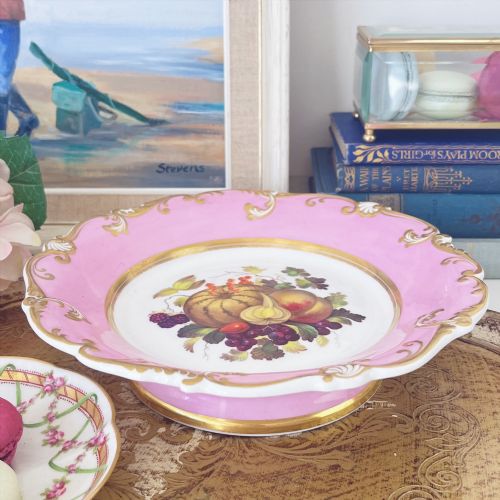
An antique fruit painted tazza brings handpainted botanical studies and raised pedestals to the table, combining Victorian porcelain with decorative display.
Antique Fruit Painted Tazza
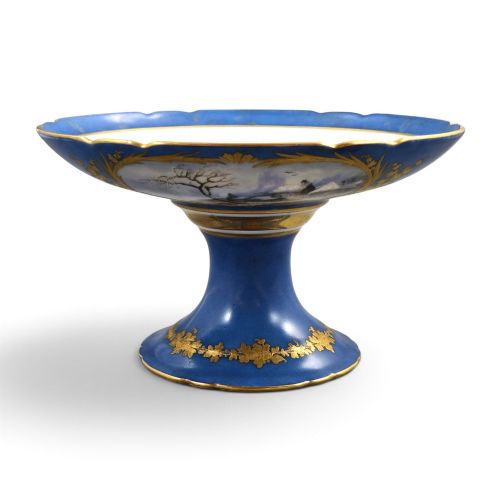
When you search for an antique fruit painted tazza, you are looking at elevated serving dishes and pedestal bowls designed for display on the dining table or sideboard. These pieces combine raised footed bases with handpainted fruit motifs, often appearing alongside terms like comport, centerpiece, and pedestal dish.
You are most likely to meet 19th Century and Victorian examples on this page, with notable representations of Sevres style porcelain alongside maker-marked pieces. Forms range from shell edge footed comports to large pedestal dishes and ironstone china comports.
The origins span French porcelain traditions, Chinese Canton pieces, and English factories such as H & R Daniel and Mason's. Styles lean towards French Rococo Revival, Regency, and Arts and Crafts, reflecting varied domestic and decorative interiors.
How they were made
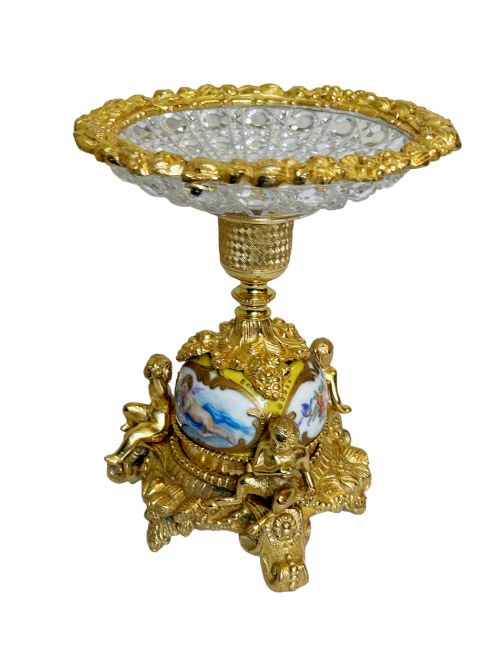
Makers shaped these tazzas from porcelain, ironstone, and cut crystal, often mounting them in gilt bronze, ormolu, or heavy gilding. The structural bodies rely on fired ceramic or cut glass fixed to raised pedestals.
Decoration combines handpainted fruit studies with coloured grounds in pink, blue, or white, accompanied by enamel highlights and shell edge mouldings. Metal mounts utilise cast bronze and ormolu framing, sometimes featuring cherubs or elaborate scrolled feet.
Antique Fruit Painted Tazza Retail Price Guide 2026
Typical asking prices for fruit painted tazza among the pieces listed under this phrase on Sellingantiques today, from the lower quarter to the upper quarter. They describe what is for sale here now, not the wider market.
Cast bronze cherubs occasionally peer out from beneath the crystal bowls, holding up the weight of the fruit.
What varies in quality
Quality rests upon the execution of the handpainted fruit and the crispness of the porcelain moulding or cut crystal work. Finer examples display detailed botanical brushwork set against rich coloured grounds and secure gilding.
The sophistication of the supporting structure distinguishes the range, where cast gilt bronze or ormolu mounts with sculptural elements like cherubs elevate the piece beyond standard ceramic pedestals.
H & R Daniel·Sèvres·Moorcroft
The Antique Fruit Painted Tazza Glossary
- Tazza
- A shallow bowl or dish mounted on a stem and foot, used for serving fruit or sweets on formal tables.
- Comport
- A large decorative footed dish or bowl used alongside tazzas for tabletop display and dessert service.
- Ironstone
- A heavy, durable type of earthenware patented in the nineteenth century as a tougher alternative to porcelain.
- Ormolu
- Gilded bronze used for decorative mounts, handles, and pedestals on nineteenth-century decorative pieces.
- Canton
- Porcelain produced in China for export, typically decorated with colourful painted scenes and motifs.
Antique Fruit Painted Tazza: Frequently Asked Questions
What is an antique fruit painted tazza used for?
These elevated dishes served fruit and sweetmeats during formal nineteenth-century dining and dessert courses.
Today they function as decorative centrepieces on sideboards, dining tables, and mantelpieces.
How do I identify a Victorian tazza?
Victorian examples often feature handpainted fruit decoration combined with colourful ceramic grounds and raised footed bases.
Look for period markers such as ironstone bodies, Sevres style porcelain, or French gilt bronze mounts.
Are these tazzas made of porcelain?
Many pieces are formed from porcelain or ironstone, while others incorporate cut crystal bowls.
Several examples add structural height using gilt bronze, ormolu, or metal pedestals.
What styles are common in these comports?
The selection includes French Rococo Revival, Regency, and Arts and Crafts aesthetic influences.
Origins stretch from European porcelain houses to Chinese export production and English factories.