


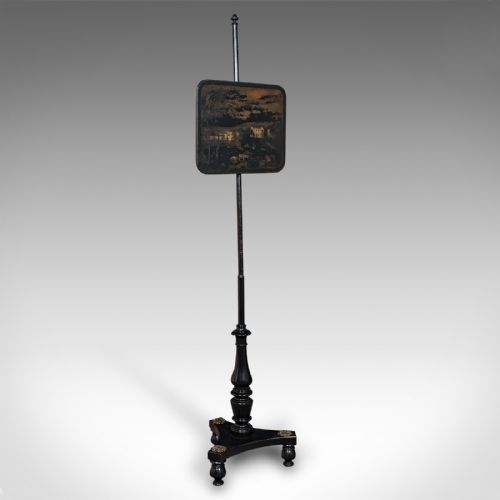


Victorian Pole Screen
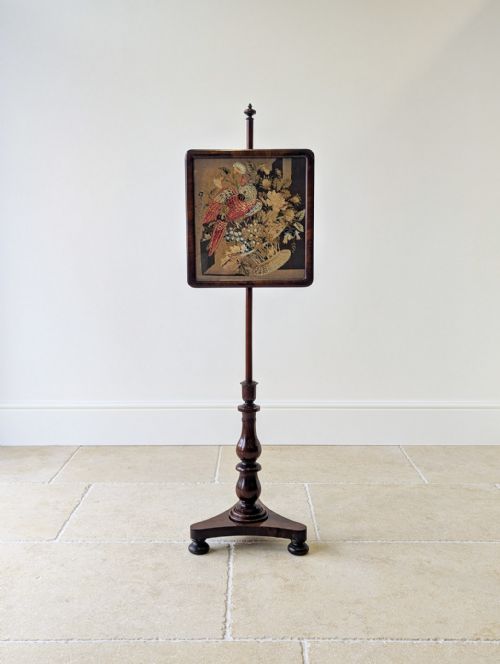
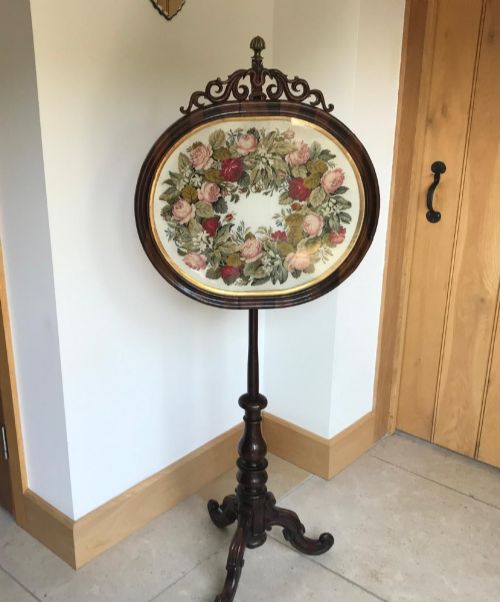
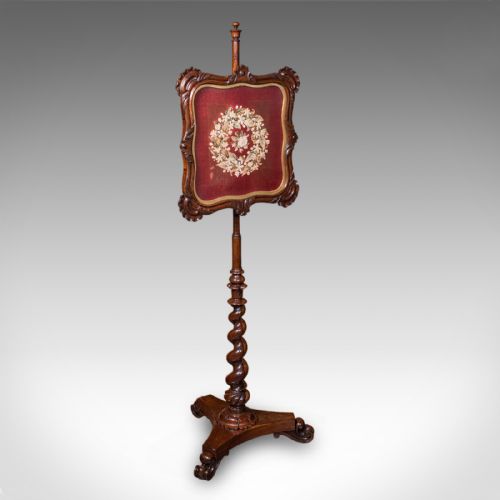
These Victorian pole screens are adjustable fireplace shields designed to deflect radiant heat, standing on tall slender shafts with weighted tripod bases.
Victorian Pole Screen
A victorian pole screen consists of a vertical wooden shaft supported by a tripod base, carrying an adjustable panel that slides up and down to block the heat of an open fire. Most examples encountered here date from the nineteenth century, spanning periods from the Regency and William IV eras through to the height of the Victorian epoch.
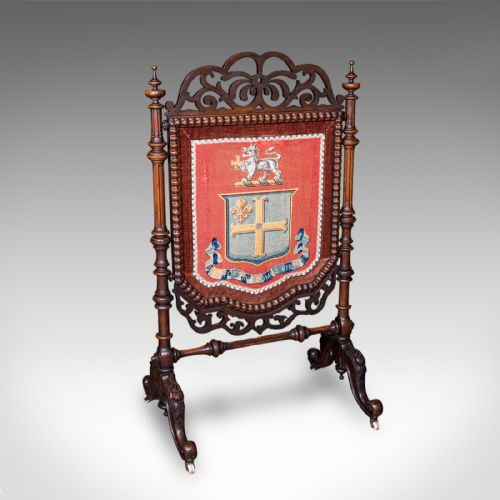
The hanging panels take various forms, including framed needlepoint, tapestry, embroidered wool, silk, and painted papier-mâché, occasionally incorporating armorial motifs or local scenes. Collectors frequently find these pieces executed in timbers such as rosewood and mahogany, alongside walnut and satinwood variations.
Materials and Construction
Cabinetmakers constructed the slender vertical poles and supportive tripod bases using dense hardwoods like rosewood, mahogany, and walnut, often shaping the wood with turned details and carved tripod feet. Brass mechanisms and collars allowed the central screen panel to slide and lock at different heights along the pole.
The functional screens themselves stretched textiles - frequently wool, silk, and needlepoint tapestry - over internal wooden frames or mounted them as rigid panels of papier-mâché and glass. Gilded accents and fine embroidery threads completed the decorative surfaces designed to withstand fireside use.
Victorian Pole Screen Retail Price Guide 2026
Typical asking prices for victorian pole screen among the pieces listed under this phrase on Sellingantiques today, from the lower quarter to the upper quarter. They describe what is for sale here now, not the wider market.
Assessing Quality
The distinction between ordinary and superior pieces rests on the crispness of the timber carving on the base and the complexity of the needlework within the panel. Dense rosewood and finely figured mahogany denote better workshop origin than simpler utility timbers.
Adjustment mechanisms operating smoothly without excessive wear separate well-engineered stands from neglected examples. Hand-worked Berlin woolwork and intricate armorial embroidery elevate the decorative merit far above standard printed or mass-produced textiles.
The Victorian Pole Screen Glossary
- Pole screen
- A vertical fireside stand with a vertically adjustable panel used to shield the face from radiant fireplace heat. These pieces combine a weighted base, a slender central shaft, and a sliding display surface.
- Needlepoint
- A form of counted thread embroidery stitched onto an open-weave canvas foundation. This technique produced the durable floral and pictorial panels seen on nineteenth-century firescreens.
- Berlin woolwork
- A type of coloured wool embroidery popular during the nineteenth century, worked from charted paper designs. It accounts for many of the vibrant floral motifs found on Victorian screen panels.
- Tripod base
- A three-legged support structure providing stability for tall vertical furniture. These bases frequently feature cabriole legs or carved scroll feet.
- Regency
- An English design period spanning the early nineteenth century, known for classical restraint and refined proportions. Pieces from this era often utilise dark rosewood with understated brass mounts.
Victorian Pole Screen: Frequently Asked Questions
What was a pole screen used for?
These screens served to protect people from the intense radiant heat of an open coal or wood fire. By adjusting the height of the sliding panel along the pole, sitters could shield their faces from scorching temperatures.
Beyond functional climate control, they functioned as decorative furnishings in nineteenth-century drawing rooms. The needlework panels also displayed the domestic embroidery skills of the household.
How do you adjust the height?
A brass collar or internal friction mechanism grips the vertical wooden pole, allowing the panel to slide up and down. Users simply position the screen at eye level relative to their seating position.
Over time, these mechanisms can wear down, requiring careful handling or professional adjustment to hold the panel securely in place.
Where were they placed in a room?
They stood directly between the fireplace seating area and the hearth. Owners placed them strategically to intercept direct heat before it reached the face.
When not in use near an active fire, they remained positioned around the drawing room as decorative stands displaying needlework or painted scenes.
How can I tell the period?
Stylistic details in the woodwork and the nature of the embroidery provide clear chronological markers. Regency and William IV examples often feature clean lines and dark rosewood, whereas later Victorian pieces embrace heavier carving and diverse timbers like walnut.
Hardware construction, such as the brass adjustment collars and screw threads, also helps distinguish earlier Georgian and Regency specimens from mid-nineteenth-century work.