


Regency Mahogany Screen
These regency mahogany screen pieces bring adjustable warmth and intricate needlework panels to a fireside, offering both practical utility and period charm.
Regency Mahogany Screen
When you search for a regency mahogany screen, you encounter a variety of forms designed to deflect hearth heat or divide a room. The selection spans single pole screens with adjustable shields, multi-panel folding privacy screens, and occasional tables fitted with rising panels.
Most examples date from the Regency and William IV periods, constructed in rich mahogany timber. Alongside traditional fireside pole screens with needlepoint or embroidered panels, the listings include larger room dividers and writing tables with integrated screens.
Materials and Construction
Makers utilised solid and veneered mahogany as the primary timber, sometimes incorporating exotic woods like goncalo alves or rosewood. Brass hardware, including adjustable collars and sliding mechanisms, allowed the central panels to move vertically along wooden poles.
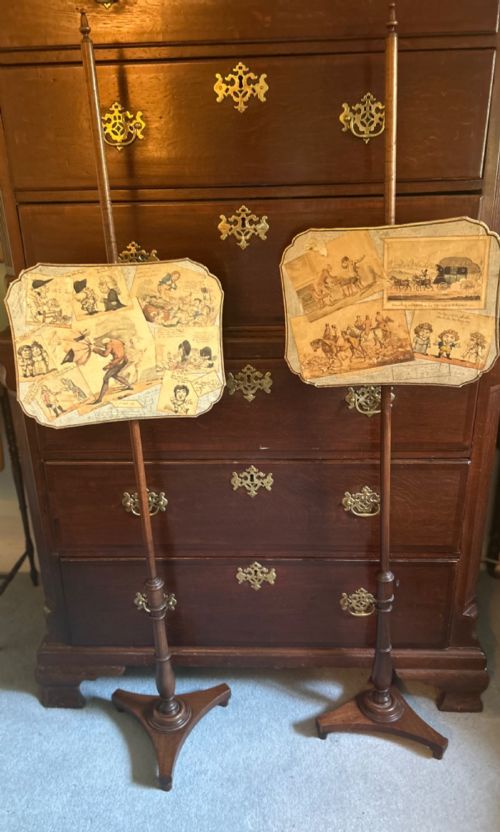
Panels frequently feature hand-worked textiles, including needlepoint, tapestry, silk, wool, and linen sampler work. Some rarer iterations display poker work or satirical prints mounted within the wooden frames.
Assessing Quality and Execution
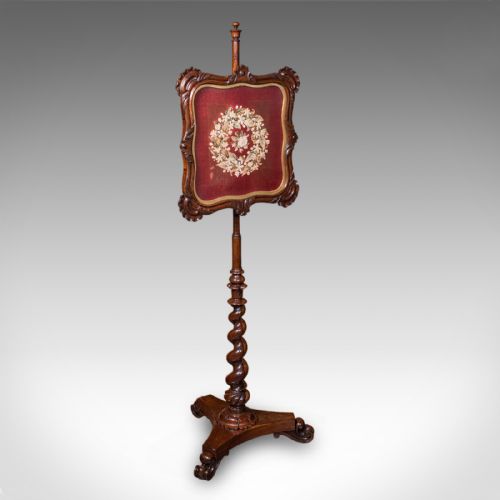
Quality rests in the crispness of the mahogany turning, the stability of the brass adjustment mechanism, and the condition of the textile panel. Superior pieces exhibit well-balanced tripod bases with finely carved supports and original, undamaged needlework.
The integration of secondary functions also marks the hierarchy of these items. Tables incorporating writing surfaces or reading desks alongside the screen demand greater joinery skill than standard single-purpose pole screens.
The Regency Mahogany Screen Glossary
- Pole screen
- A freestanding fireside screen featuring a vertically adjustable panel mounted on a central wooden pole with a tripod base. This design allowed users to slide the shield up or down to block heat from the fireplace.
- Needlepoint
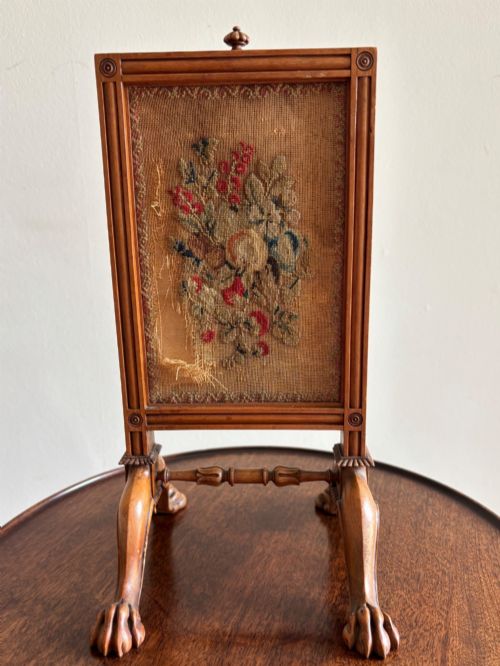
- A form of canvas work embroidery executed with wool or silk yarn, commonly found within the frames of period screens. Surviving examples often display intricate floral motifs, pictorial scenes, or alphabetic samplers.
- Goncalo alves
- A dense tropical hardwood with distinctive contrasting grain patterns, utilised by cabinet makers for high-status furniture. It appears on selected larger screens as an alternative to standard mahogany.
- Poker work
- A decorative technique using a heated metal tool to burn designs into wood or leather. Certain screens incorporate panels decorated with this scorched illustration method.
- William IV
- A design period spanning the 1830s, bridging the Regency and early Victorian eras. Pieces from this time often display heavier proportions and robust turning compared to earlier Georgian work.
Regency Mahogany Screen: Frequently Asked Questions
How did people use a pole screen?
These screens stood near the hearth to protect a person's face from the intense radiant heat of an open coal or wood fire. Users adjusted the height of the shield along the central pole to suit their seated position.
Beyond heat deflection, they served to protect delicate cosmetic waxes and paints worn by ladies from melting in the warmth. They also added an element of decorative privacy within a large drawing room.
Are the needlework panels original?
Many screens retain their period needlepoint, tapestry, or sampler panels, worked by hand during the eighteenth or nineteenth centuries. Textile survival depends heavily on exposure to sunlight and damp conditions over the decades.
Because panels suffered from wear or damage, some pieces received replacement embroidery during later restorations. Examining the back of the panel and the fixing methods helps determine the age of the textile relative to the wooden frame.
What is the difference between a pole screen and a room divider?
A pole screen consists of a single small panel mounted on a floor-standing pedestal, designed for an individual by the fireplace. These focus on adjustable height and decorative needlework.
In contrast, a room divider comprises multiple hinged panels folding together to partition a space or block draughts. These larger screens rely on fabric or needlepoint stretched across wooden frames rather than a central brass-collared pole.
How do I distinguish Regency from William IV examples?
Regency pieces, dating from the early nineteenth century, typically exhibit slender proportions, refined reeded or fluted columns, and delicate tripod legs. The overall aesthetic leans toward classical elegance.
William IV items, emerging into the 1830s, tend to feature heavier, more robust turnings, bolder scrolling feet, and wider proportions. The mahogany used in these later pieces is often darker and denser.