


Dark Mahogany Screen
A dark mahogany screen brings warmth and rich grain to a room, offering both privacy and decorative focus.
Dark Mahogany Screen
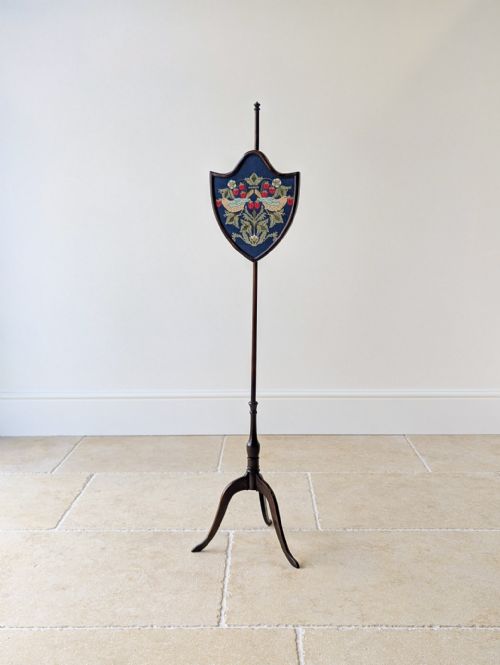
A dark mahogany screen encompasses various practical furnishings designed to block radiant heat from a hearth or divide a larger interior space. These pieces range from tall folding panels to adjustable pole screens balanced on tripod bases near the fireplace.
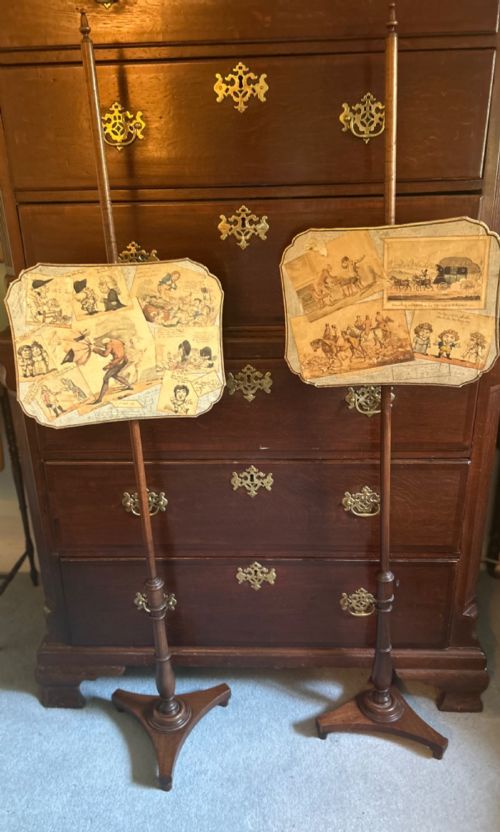
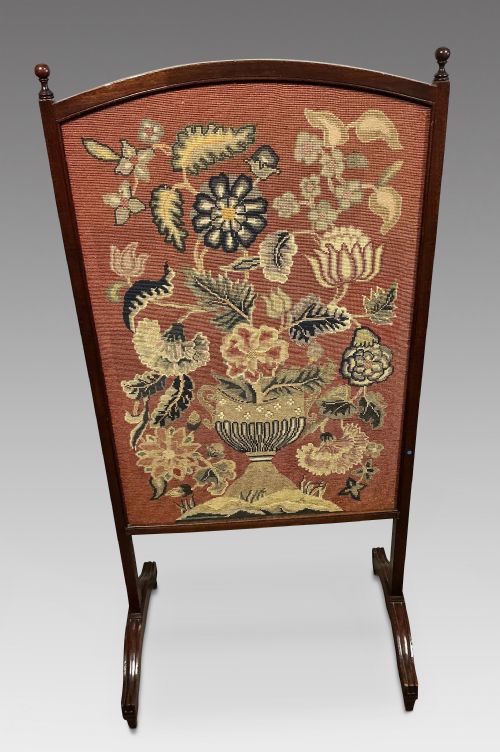
The selections span multiple eras, showing the enduring appeal of dense tropical timber through Georgian, Regency, William IV and Victorian periods. Buyers frequently encounter pole screens fitted with needlepoint or satirical prints alongside multi-fold room dividers.
Originating in English workshops and country houses, these dark mahogany screen examples often display deep reddish-brown tones and traditional joinery. They serve as functional antique furniture that adapts easily to contemporary interior layouts.
Materials and construction
Makers utilised solid mahogany and occasionally goncalo alves for the primary framing and structural supports, ensuring sturdy uprights and folding hinges. Secondary woods provided internal stability while the dark external surfaces received polished wax finishes.
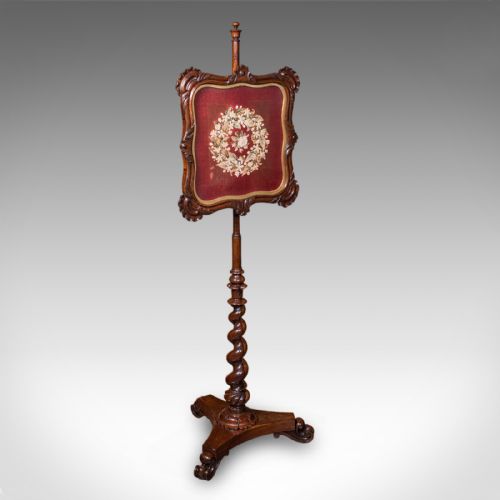
Panels integrated diverse decorative arts including needlepoint, wool tapestry, embroidered silk, glass, brass fittings and paper scrap work. Pole screens often incorporated adjustable mechanisms allowing the central panel to slide vertically and tilt toward the heat source.
Some Georgian pole screens feature witty satirical prints instead of polite embroidery, proving that ancestors enjoyed a quiet joke by the fireplace.
Distinctions in craftsmanship
Superior examples of a dark mahogany screen demonstrate exceptional carving on the tripod bases or precise joinery across multiple folding leaves. The depth of the timber grain and the complexity of the integrated textile art, such as detailed needlepoint or heraldic coats of arms, elevate the piece.
Proportion and utility define the higher tiers, where adjustable brass hardware moves smoothly and panels remain fully reversible or balanced without wobble. Inferior or later adaptations may lack the crispness of period carving and the rich patina found on untouched workshop surfaces.
The Dark Mahogany Screen Glossary
- Pole screen
- A freestanding wooden stand with a vertically adjustable panel mounted on a central shaft, historically positioned near a fireplace to deflect radiant heat from a person's face.
- Needlepoint
- Stitched yarn work on a stiff canvas mesh, frequently mounted within the frames of Georgian and Victorian pole screens to display heraldic motifs or floral scenes.
- Tripod base
- A three-legged support structure commonly found beneath the upright shaft of pole screens, often terminating in carved paw or pad feet.
- Room divider
- A multi-panel folding screen designed to partition large spaces or provide privacy, constructed with hinged sections that fold in alternating directions.
Dark Mahogany Screen: Frequently Asked Questions
Where were these screens used?
These furnishings stood in principal entertaining rooms, parlours and libraries of large country houses where hearths provided the primary source of warmth. Tall folding versions managed draughts and created private seating areas within expansive open spaces.
In smaller chambers, pole screens sat close to the fireplace seating. Their mobility allowed servants or residents to reposition them easily throughout the day.
How do I clean dark mahogany?
Maintain the polished timber surface using a soft, lint-free cloth and occasional applications of quality beeswax to nourish the wood grain. Avoid harsh chemical cleaners or excessive moisture which can damage antique polish and delicate joinery.
For integrated textiles or paper elements within the panels, rely on gentle dusting with a soft brush. Keep the furniture away from direct sunlight and severe temperature fluctuations to prevent timber movement.
What defines the Regency style?
Regency design draws inspiration from classical antiquity, featuring clean structural lines, elegant turned supports and rich dark timbers like mahogany. Pieces from this era often balance restraint with refined decorative brass accents.
Craftsmen during this period focused on proportion and sophisticated shaping rather than heavy ornamentation. This aesthetic creates a lighter visual presence compared to earlier Georgian forms.