
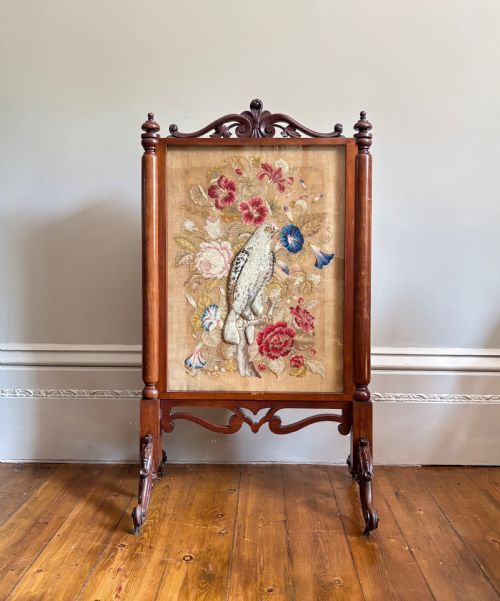
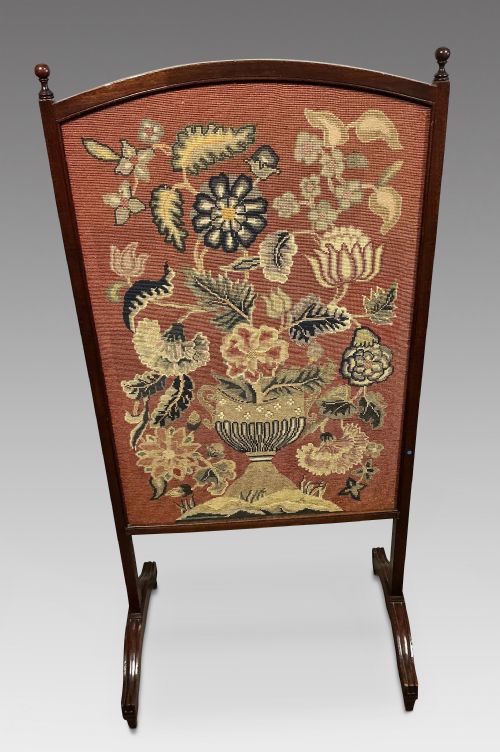


Carved Mahogany Hearth Screen
These carved mahogany hearth screen examples bring period warmth and practical draft protection, combining rich timber frames with intricate needlework panels.
Carved Mahogany Hearth Screen
When you search for a carved mahogany hearth screen, you encounter standing furnishings designed to shield the face from the intense radiant heat of an open fireplace. These items appear primarily in Victorian, Regency, and Georgian iterations across the evidence.
The most frequent form on this page is the pole screen, featuring a vertical turned shaft on a carved base that holds an adjustable embroidered or tapestry panel. Other variants include large fixed glass panels and textile screens depicting heraldic coats of arms like the Clan Maclellan.
Originating in English workshops from the eighteenth and nineteenth centuries, these screens bridge functional room accessories and decorative textile displays. They survive in pairs and individual pieces, retaining original wool, canvas, and brass components.
Materials and construction methods
Makers utilised solid mahogany and rosewood for the structural framework, turning shafts and carving decorative bases with bobbin-turned or foliate details. Brass fittings allow the central needlework panels to slide and adjust along the vertical poles.
The inset panels display Berlin wool work, embroidery, and needlepoint tapestry stretched over canvas backings. Some variations incorporate glass shields or textile inserts to deflect heat and frame decorative needlework.
Listings feature mahogany, rosewood, and brass alongside wool textiles, tapestries, and glass panels spanning the Georgian, Regency, and Victorian periods.
Distinctions in quality and execution
Superior examples demonstrate crisply carved mahogany bases with complex turning and deep relief work rather than simple, plain timber shafts. The complexity of the carved base and the stability of the adjustable pole mechanism indicate the maker's original investment of time.
The fineness of the needlepoint tapestry or Berlin work panel distinguishes finer specimens, particularly those featuring detailed heraldic depictions or intricate botanical wool work. Original fabric retention and intact brass adjustment screws elevate the integrity of the piece.
The Carved Mahogany Hearth Screen Glossary
- Pole screen
- A standing fireplace screen with an adjustable panel that slides up and down a vertical turned shaft. This design allows the user to raise or lower the textile shield against the heat.
- Berlin work
- A type of coloured wool embroidery popular in the nineteenth century, worked on canvas from printed gridded patterns. These vibrant panels form the central decorative element of many screens.
- Needlepoint
- A form of canvas work stitched with yarn using a tent stitch to create dense, durable pictorial designs. It appears frequently on adjustable fireplace panels.
- Bobbin turned
- A method of woodturning that creates a series of rounded, spool-like shapes along the length of a support. This decorative profiling adorns the upright shafts of Victorian pieces.
- Reflector
- An alternate term for a screen designed to bounce warmth back into the room or shield the sitter from flames. These items utilise glass or fabric to manage fireplace radiation.
Carved Mahogany Hearth Screen: Frequently Asked Questions
What is a carved mahogany hearth screen?
These furnishings are nineteenth-century and eighteenth-century standing screens created to protect sitters from open hearth heat. They combine turned mahogany frames with adjustable embroidered or tapestry panels.
Most examples operate as pole screens where the textile shield moves vertically on a carved wooden base. They function as both practical hearth accessories and decorative displays for needlework.
How do you use a pole screen?
You place the screen between your chair and the fireplace to block excessive radiant heat from the fire. The adjustable panel slides up and down the central pole to target the shielding where needed.
In period interiors, they sat near the hearth and could be repositioned easily throughout the room. Today, collectors utilise them in drawing rooms as decorative focal points.
How do I date a mahogany fire screen?
Dating relies on examining the turning styles, wood choices, and textile types recorded across Georgian, Regency, and Victorian eras. Earlier Georgian and Regency items often feature restrained classical lines, while Victorian pieces lean towards elaborate bobbin turning and heavy carving.
The style of the needlework panel, such as Berlin work or heraldic tapestry, also helps narrow the manufacturing period. Brass hardware details provide further clues to the decade of production.
Are these screens adjustable?
Many of the pole screens listed feature adjustable mechanisms that allow the textile panel to slide along the vertical wooden shaft. Small brass thumbscrews or friction clips traditionally held the panel at the desired height.
Over generations of use, some adjustment mechanisms require careful handling to preserve the original timber and brass components. Buyers should check how the panel secures to the pole.