





Standing Fire Guard
A standing fire guard places a decorative barrier before an unlit hearth, combining utility with period craftsmanship.
Standing Fire Guard
A standing fire guard protects the room from stray embers while adding a decorative focus to the hearth. These pieces appear in varied forms across the periods represented, including folding spark guards and rigid panels.
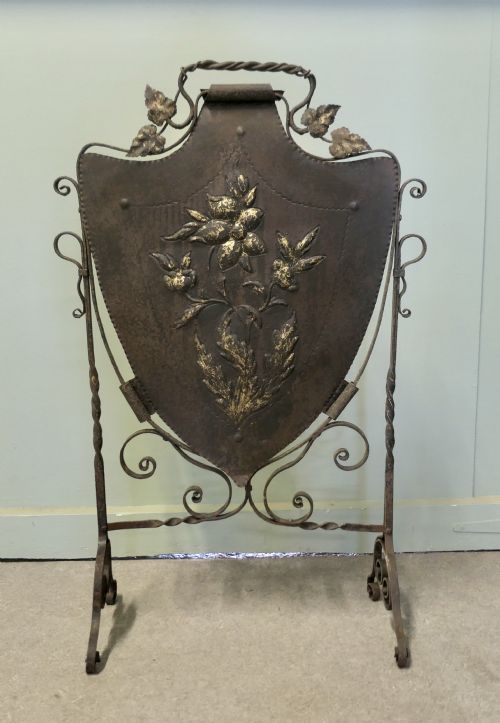
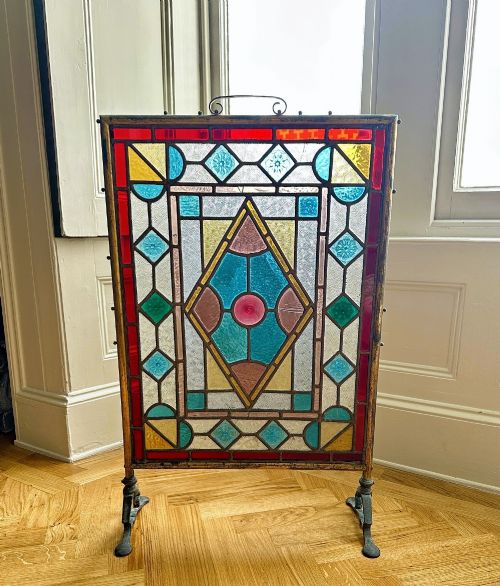
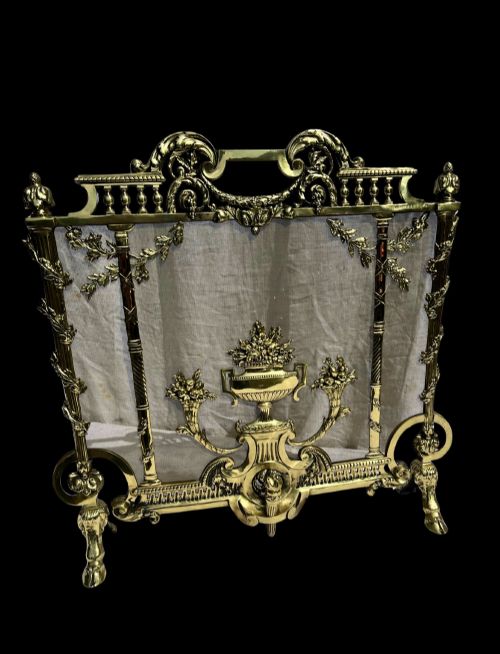
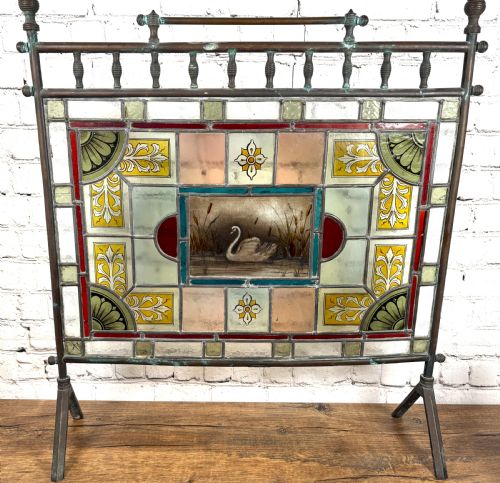
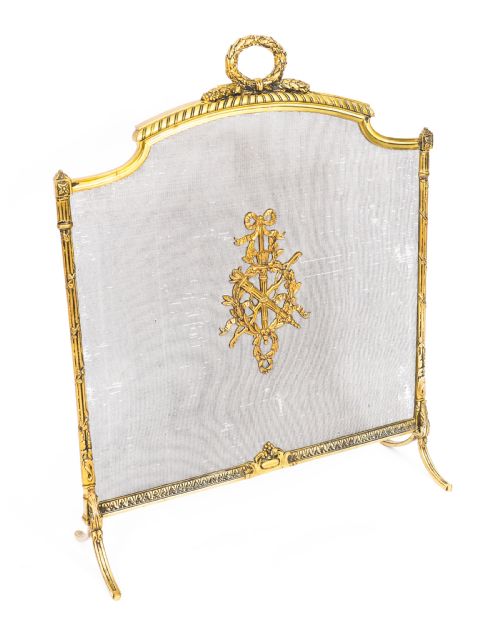
Victorian and nineteenth-century examples dominate the selection, often taking the form of firescreens or adjustable pole screens. Buyers frequently encounter brass frames, stained glass panels, and needlework inserts within this range.
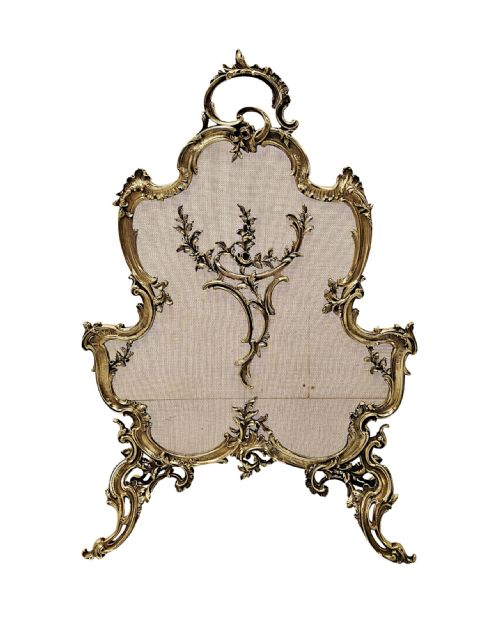
The selection encompasses diverse stylistic revivals, from Gothic and Arts and Crafts to French Rococo and Empire. Oak, walnut, rosewood, and wrought iron provide the structural support for these hearth accessories.
How they were made
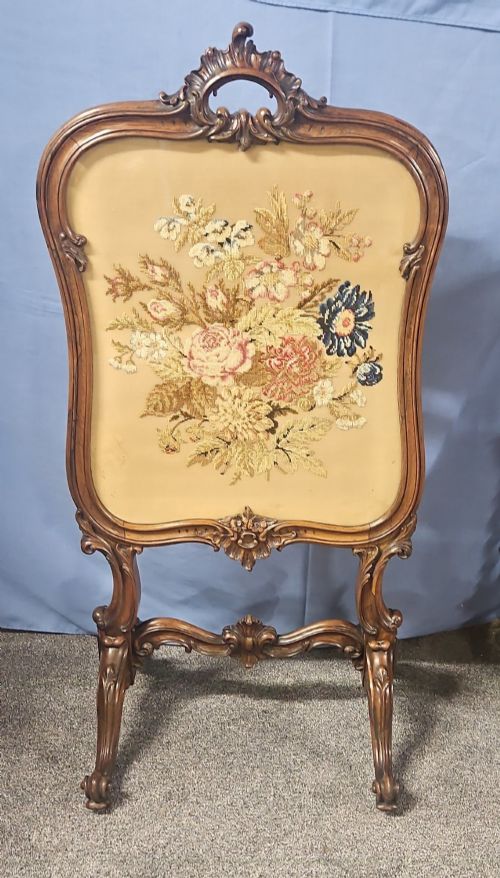
Metals such as brass, copper, and wrought iron form the structural framework for many pieces, shaped through casting and hammering. Wooden frames utilise timbers like mahogany, rosewood, walnut, and oak to support glazed or fabric panels.
Decorative panels incorporate diverse techniques including stained glass work, needlework, tapestry, and silk embroidery. Adjustable mechanisms allow specific screens to alter their height or position relative to the hearth.
Styles recorded span Victorian, Regency, Gothic Revival, Arts and Crafts, and French Rococo Revival.
What varies in quality
The choice of materials and the execution of decorative elements determine the standing of an individual piece within its period. Fine needlework panels, intricate cast brass ornament, and precise joinery distinguish more ambitious examples.
Proportion and the integrity of the original frame or stand dictate the overall success of the design. Pieces retaining undisturbed historic glass, textiles, and metal patination hold particular interest.
The Standing Fire Guard Glossary
- Needlework
- Hand-stitched textile work used to create decorative pictorial panels within wooden frames. It appears frequently on nineteenth-century examples.
- Spark guard
- A fine mesh or metal barrier designed specifically to contain embers flying from an active fire. These often take semi-circular or demi-lune forms.
- Gilt bronze
- Copper alloy treated with a gold-coloured finish, seen on decorative mountings from revival periods. It provides a bright metallic sheen to the frame.
- Palisander
- A dense, dark timber resembling rosewood, utilised for cabinetwork during the Regency period. Its rich grain enhances structured frames.
Standing Fire Guard: Frequently Asked Questions
What is a standing fire guard?
A standing fire guard is a movable barrier placed before a fireplace to manage heat and contain embers. They range from simple brass spark guards to elaborate framed screens.
Designs vary across the Georgian, Victorian, and Edwardian eras, incorporating materials like wrought iron, stained glass, and embroidered silk.
How were pole screens used?
Pole screens allowed people to adjust a sliding panel vertically to shield their faces from the intense heat of an open fire. They stood near seating areas in principal rooms.
The adjustable panel often displayed intricate needlework, tapestry, or painted decoration set upon a turned wooden shaft and tripod base.
What materials are common?
Common materials include brass, wrought iron, copper, and cast bronze for the metal frames and spark guards. Wooden elements frequently utilise oak, walnut, rosewood, and mahogany.
Panels incorporate textiles such as wool needlework, tapestry, and silk embroidery, alongside stained or clear glass inserts.
How do I date a fire screen?
Dating relies on identifying the prevailing style, construction methods, and materials associated with specific periods like the Regency or Victorian era. Stylistic revivals provide clues through characteristic motifs.
For example, Arts and Crafts pieces show hand-worked copper and oak, while French Rococo revival examples display elaborate cast brass frames.