
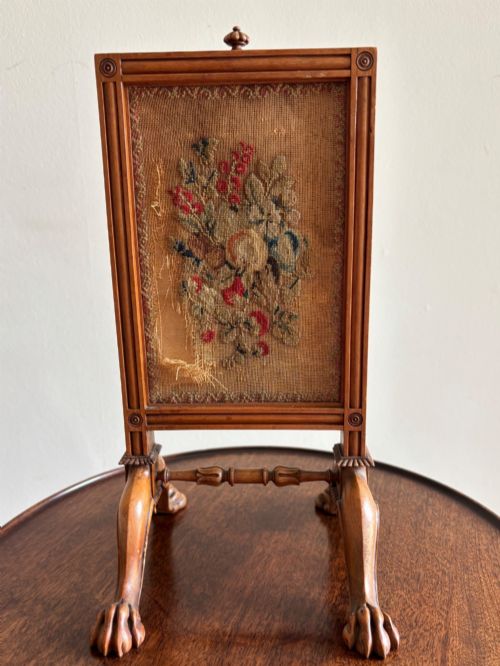


Brown Embroidered Screen
These brown embroidered screen pieces bring warmth and texture to an interior, functioning as both movable room dividers and fireside panels.
Brown Embroidered Screen
A brown embroidered screen takes form primarily as a fireside screen or a folding room divider, appearing in variations from single-panel pole screens to large four-panel privacy barriers. Buyers examining this page encounter pieces originating across the Georgian, Regency, William IV, and Victorian eras, reflecting centuries of domestic textile display.
The dominant forms on this page include adjustable pole screens mounted on tripod or pedestal bases alongside multi-panel room dividers. These objects combine wooden frames with textile inserts, serving specific functional roles in period rooms while displaying hand-worked decorative panels.
Materials and construction
Frames are constructed from dense timbers such as mahogany, walnut, and general hardwoods, frequently shaped through carving and turning. These wooden structures support the central textile components.
The decorative surfaces utilise wool, silk cotton, and tapestry work executed in needlepoint and embroidery. Metal elements like brass appear in adjustable pole mechanisms and hardware fixtures.
The listings on this site span the eighteenth, nineteenth, and early Victorian periods, utilising walnut, mahogany, needlepoint, and tapestry.
Assessing quality and execution
The distinction between standard examples and finer pieces lies in the crispness of the timber carving and the complexity of the needlework panel. Finer items exhibit detailed hand-worked tapestry and robust framing woods such as figured mahogany or carved walnut.
Proportion and mechanism integrity also define the upper tier, particularly in adjustable pole screens where the movement must remain secure and balanced. The precision of the joinery and the original state of the textile panel govern the overall standing of the piece.
The Brown Embroidered Screen Glossary
- Pole screen
- A vertical stand supporting an adjustable sliding panel designed to block radiant heat from a fireplace. The panel moves up and down on a central shaft.
- Needlepoint
- A type of canvas work embroidery stitched by hand using wool or silk threads. It forms the pictorial or geometric panels seen within these frames.
- Reflector
- An alternative term for a fire screen panel designed to deflect heat away from the room occupants. It often includes an adjustable mounting.
Brown Embroidered Screen: Frequently Asked Questions
What is a pole screen?
A pole screen is a tall, slender stand featuring a sliding panel that can be adjusted in height. It was placed near a fireplace to shield a person's face from the direct heat of the fire.
The central panel typically contains an embroidered or needlework design held within a wooden frame. These pieces combine practical heat deflection with decorative textile display.
How were room dividers used?
Room dividers functioned to create private areas within large draughty rooms or to block cold air coming from doors and windows. Multi-panel folding versions could be repositioned easily across a floor space.
They also served as decorative backdrops for photography or general interior zoning. Their textile panels added warmth and colour to nineteenth-century domestic interiors.
How do I identify a Regency screen?
Regency screens often display classical restraint in their woodwork, featuring clean lines and restrained mahogany or walnut framing. They date from the early nineteenth century and frequently take the form of pole screens or privacy dividers.
The needlework panels from this period often lean towards classical motifs or simple geometric samplers. Construction details like turned pedestals and brass fittings help confirm the era.
What woods were used for frames?
Makers utilised hard timbers capable of taking fine carved detail and supporting the weight of the frame and panel. Mahogany and walnut appear frequently across the listings on this page.
These woods were often polished to a deep finish that complemented the surrounding furniture. Lesser structural elements utilised general hardwoods hidden beneath the primary show wood.