



Victorian Pine Workbench
These robust victorian pine workbench examples offer practical surfaces built for hard labour.
Victorian Pine Workbench
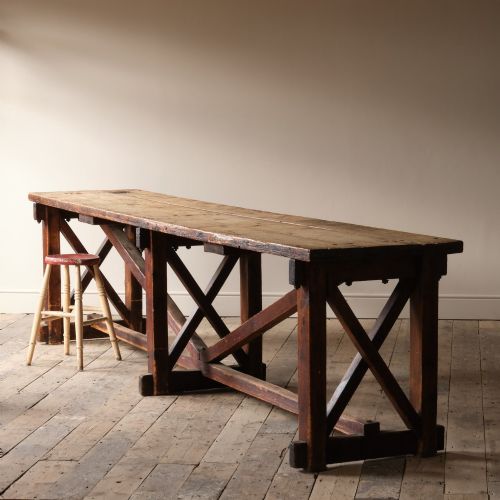
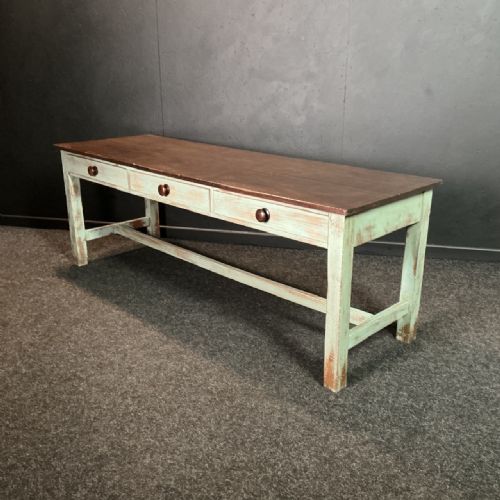
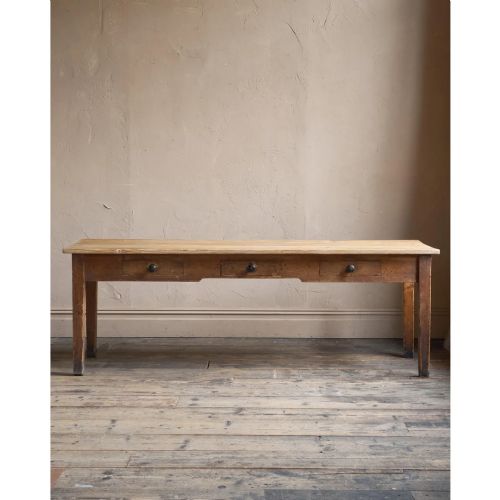
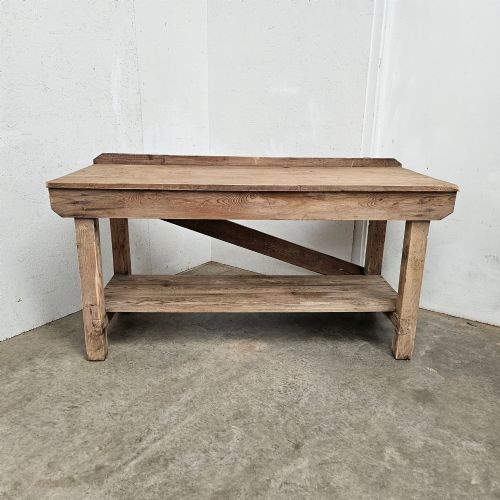
A victorian pine workbench or related heavy table serves as a sturdy foundation for practical labour or everyday kitchen use. These pieces appear across various forms such as scullery tables, kitchen preparation tables, and heavy industrial foundry pieces.
The versions most commonly met on this page date from the nineteenth century, including specific years like eighteen fifty, eighteen seventy, eighteen eighty, nineteen hundred, and nineteen twenty. They bridge domestic utility and industrial purpose with straightforward designs.
Construction and materials
Construction relies primarily on solid pine and wood, frequently paired with robust cast iron frames or legs to withstand heavy work. Some examples incorporate additional materials like mahogany, brass, or historical layers of paint.
Makers focused on utility, using thick scrubbed wooden tops and sturdy stretchers. Metal components such as cast iron provide structural endurance for industrial applications.
Victorian Pine Workbench Retail Price Guide 2026
Typical asking prices for victorian pine workbench among the pieces listed under this phrase on Sellingantiques today, from the lower quarter to the upper quarter. They describe what is for sale here now, not the wider market.
Object types include dining tables, scullery tables, potting tables, and heavy industrial foundry tables.
Assessing quality and character
Quality rests upon the thickness and durability of the timber top, alongside the integrity of the base frame. Heavy cast iron supports and solid pine planks indicate a more substantial build.
Patina and evidence of working life distinguish exceptional examples from simpler ones. Traces of original paint, scullery wear, and substantial proportions elevate the presence of the piece.
The Victorian Pine Workbench Glossary
- Scrubbed top
- A wooden surface cleaned repeatedly with water and scrubbing brushes, leaving a pale, smooth finish. This treatment creates a clean surface suited for food preparation.
- Foundry table
- A heavy-duty work surface originally used in metalworking or industrial settings. These pieces combine thick wooden tops with robust cast iron bases.
- Scullery table
- A utility table designed for messy kitchen tasks like washing and food prep. They often feature drawers and durable pine construction.
- Cast iron
- A strong, heavy alloy used for machine bases and table legs. It provides the necessary weight and rigidity for industrial workbenches.
Victorian Pine Workbench: Frequently Asked Questions
What is a victorian pine workbench?
A victorian pine workbench is a heavy-duty utilitarian table built from solid pine, often featuring a thick wooden top and sturdy legs of wood or cast iron. These pieces were designed for rigorous tasks in workshops, sculleries, and industrial settings.
Today, they function well as kitchen prep surfaces, dining tables, or statement pieces in rustic interiors. Their construction reflects the practical needs of nineteenth-century trade and domestic work.
How were these tables used?
These tables served various practical roles ranging from food preparation in sculleries to heavy labour in industrial foundries and potting sheds. Their robust surfaces endured constant daily use.
Many examples show the marks of their working history through stains, scars, and sturdy construction. This functional origin gives each table a distinct utilitarian character.
How do I live with a workbench?
Integrating a work table into a modern home requires embracing its rugged surface and substantial proportions. They work well as kitchen islands or large dining tables where daily wear adds to their character.
Protecting the wood with appropriate oils or waxes helps maintain the scrubbed pine surface without erasing historical marks. Their neutral tones and straightforward lines complement both rustic and industrial interiors.
How can I tell the period apart?
Dating relies on observing construction methods, materials, and the presence of period-specific hardware like cast iron bases. Nineteenth-century examples often feature solid pine planks and hand-finished details.
Stylistic cues range from Victorian country aesthetics to heavier industrial taste designs. Examining the wear on the wooden top and the composition of the frame helps determine the era of manufacture.