

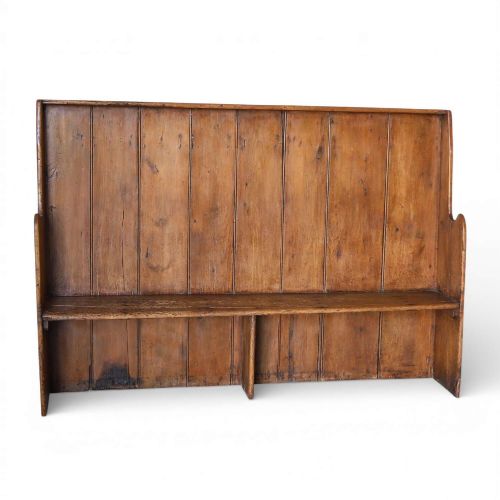
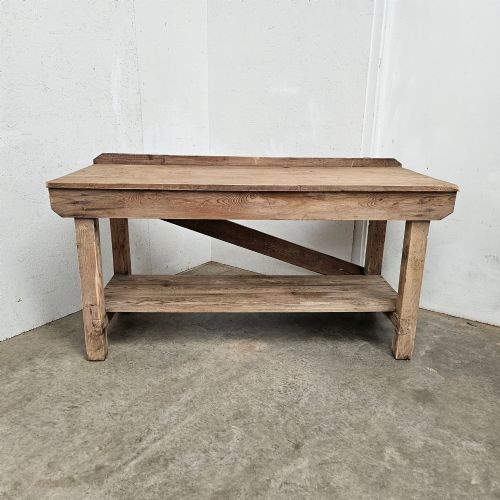


English Pine Bench
An English pine bench brings honest utility and vernacular character to a hallway, kitchen or garden.
English Pine Bench
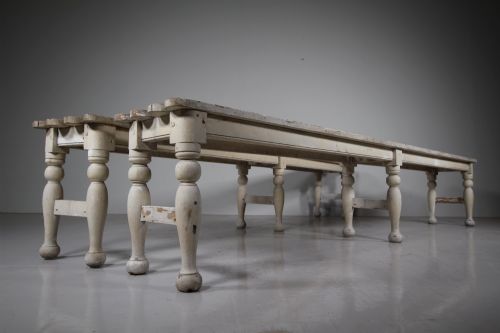
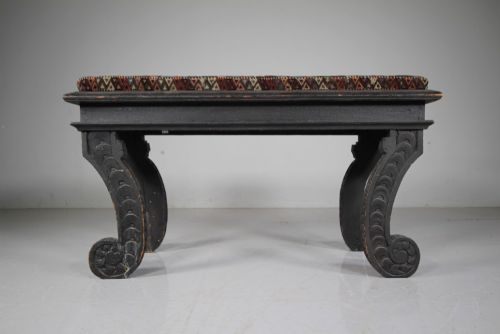
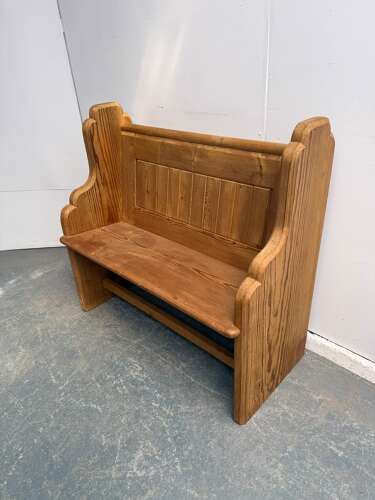
An English pine bench spans utilitarian workshop seating, church pews and domestic settles originating across the nineteenth century and the Edwardian era. You will frequently encounter heavy church pews, painted tavern settles and long garden or hallway seats shaped by practical use.
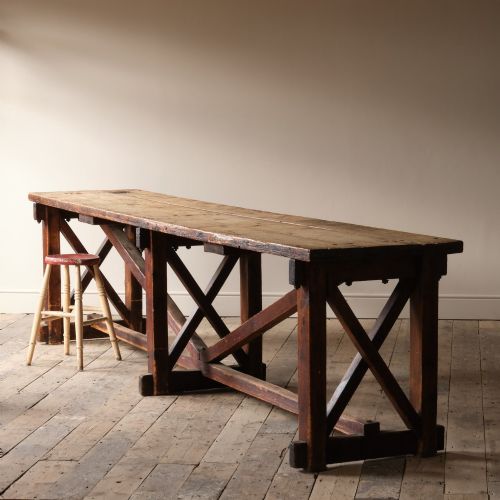
The category encompasses high-back settles with enclosed storage, slatted gym or billiard room benches, and simple trestle or workshop tables adapted for seating. These pieces originate in English country houses, rustic farmhouses and industrial workshops.
Makers utilised resilient timber to build items ranging from small window seats to ten-foot pews designed to seat multiple people. The forms reflect specific historical contexts, from ecclesiastic furniture to industrial foundry tables.
How they were made
Carpenters constructed these seats using solid pine and pitch pine timber, often combining iron brackets, nails or textile elements for structural stability. Surfaces received coats of paint, protective wax or natural weathering through exposure.
Joinery techniques prioritised durability over ornamentation, yielding sturdy frames capable of withstanding heavy domestic or commercial service. Original painted finishes and honey brown patinas accumulated through decades of handling.
English Pine Bench Retail Price Guide 2026
Typical asking prices for english pine bench among the pieces listed under this phrase on Sellingantiques today, from the lower quarter to the upper quarter. They describe what is for sale here now, not the wider market.
Several pews measure a generous ten feet, proving that Victorians took community seating very seriously indeed.
What varies in quality
Quality separates through the survival of original painted surfaces, authentic patination and untouched structural timber rather than generic condition metrics. Pieces retaining their original church, tavern or railway context command distinct character.
Proportions and length dictate utility, with longer ten-foot pews and symmetrical pairs differing significantly from single domestic window seats or hall benches. The integrity of the grain, visible ironwork and honest surface wear define the standing of each individual example.
The English Pine Bench Glossary
- Settle bench
- A high-backed wooden seat with solid sides designed to block draughts in traditional interiors. These frequently include storage compartments beneath the seat.
- Pitch pine
- A durable, resinous variety of pine timber utilised for heavy church pews and institutional seating due to its strength. It develops a distinctive warm hue over time.
- Vernacular
- Architecture and furniture rooted in local traditions and practical needs rather than academic architectural styles. English country vernacular items prioritise utility above all.
- Patina
- The surface sheen and colour acquired by timber and paint through age, handling and exposure. A natural patina indicates uncompromised historical depth.
- Tavern settle
- An enclosed bench placed in public houses to provide shelter and comfortable seating near firesides. Original painted examples survive from the nineteenth century.
English Pine Bench: Frequently Asked Questions
Where should I place a pine bench?
An English pine bench suits hallways, farmhouse kitchens, boot rooms and covered garden areas.
Their sturdy timber construction handles daily foot traffic and practical domestic use with ease.
How do I care for waxed pine?
Maintain waxed pine surfaces by applying natural beeswax periodically to nourish the dry timber.
Avoid placing antique wooden furniture near direct heat sources or in damp environments.
Are these benches suitable for outdoor use?
Certain pieces originate as garden or railway benches designed specifically for exterior conditions.
Indoor items require protection from moisture and frost to preserve their timber and painted finishes.