



Industrial Trestle Table
An industrial trestle table brings sturdy metal frames and honest timber surfaces together for hard daily use.
Industrial Trestle Table
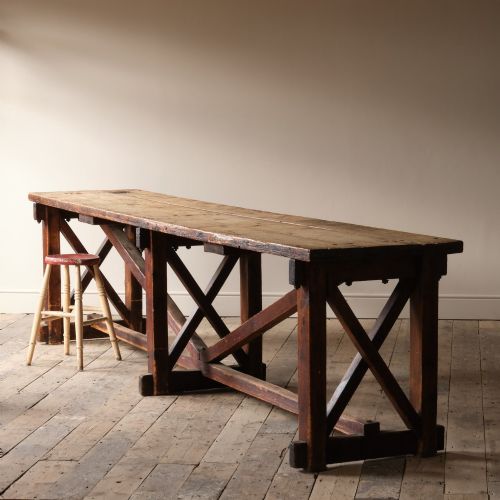
An industrial trestle table is a robust utility piece built around a metal base and a thick wooden top, designed for serious work or communal dining. When you search for an industrial trestle table, you encounter Victorian, 19th Century, and early 20th century examples originating from workshops, gardens, and French country interiors.
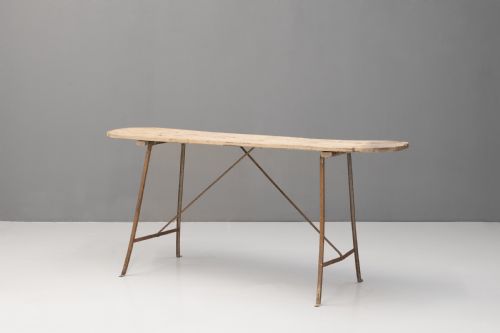
The forms span console tables, dining tables, workbenches, and folding tables, showing how adaptable these utilitarian frames proved to be. You are most likely to meet pine-topped farmhouse tables, steel-topped garden tables, and heavy iron bases paired with solid timber.
Stylistically, these pieces cross industrial, rustic farmhouse, and French country categories, reflecting both British workshop origins and continental metalwork. Each example balances heavy cast iron, wrought iron, or steel supports with practical wooden surfaces.
Materials and Construction
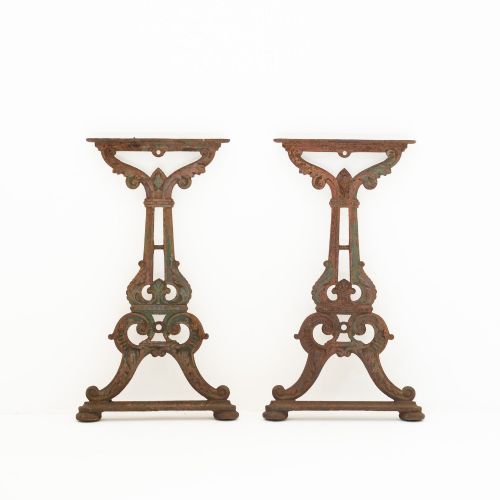
The structural foundations rely on cast iron, wrought iron, and steel frameworks, often salvaged from Victorian factories, foundries, and gardens. These metal bases provide immense weight and stability, frequently featuring folding mechanisms or heavy bracing designed to withstand constant workshop demands.
The tops utilise solid pine, oak, and timber planks, chosen for durability and joined simply to create wide, flat surfaces. Carpenters and builders secured these wooden tops directly to metal frames using heavy fixings, marrying industrial metalwork with traditional woodworking.
Industrial Trestle Table Retail Price Guide 2026
Typical asking prices for industrial trestle table among the pieces listed under this phrase on Sellingantiques today, from the lower quarter to the upper quarter. They describe what is for sale here now, not the wider market.
The listings here combine pine, oak, and timber tops with cast iron, steel, and wrought iron bases from the Victorian era and the early twentieth century.
Judging Quality
Quality rests in the proportion between the heavy metal base and the timber top, along with the integrity of the original industrial components. Better examples display honest patination on cast iron and well-chosen timber boards that have aged through genuine utility rather than artificial distressing.
The distinction between ordinary workshop salvage and finer pieces lies in the sophistication of the metal casting and the joinery of the wooden surface. Heavy foundry bases and authentic folding mechanisms elevate a piece above standard utilitarian furniture.
The Industrial Trestle Table Glossary
- Trestle
- A structural framework consisting of a horizontal beam supported by two pairs of sloping legs. This design allows for maximum legroom and exceptional stability under heavy loads.
- Cast iron
- An iron-carbon alloy poured into a mould to create complex, rigid shapes. It provides the heavy, decorative, or utilitarian bases characteristic of Victorian industrial furniture.
- Wrought iron
- Iron that is heated and hammered into shape by hand rather than cast in a mould. It offers superior tensile strength and a fibrous texture visible in older metalwork.
- Foundry table
- A heavy-duty work table originating from metal casting works. These pieces were built for extreme industrial environments and feature exceptionally robust iron components.
- Farmhouse table
- A large utility table featuring a substantial wooden top, often made of pine. They served central roles in domestic and agricultural settings.
Industrial Trestle Table: Frequently Asked Questions
What is an industrial trestle table?
An industrial trestle table combines a heavy metal support structure with a durable wooden top, originally built for workshops, factories, or agricultural use.
Today, these tables serve as striking dining surfaces, desks, or central kitchen islands in domestic interiors.
How do I date an industrial table?
Dating relies on examining the manufacturing techniques of the metal base, such as cast iron versus modern steel, and the cut of the timber.
Victorian and early 20th-century pieces often show foundry marks, hand-forged bracing, and timber boards secured with period fixings.
Are these tables suitable for everyday dining?
These tables were originally constructed for heavy daily labour, making them exceptionally sturdy for daily family use.
The robust metal trestle bases also provide generous legroom, which accommodates dining chairs comfortably.
Where were these tables originally used?
Many examples originated in British and French factories, foundries, and large country houses where durable utility furniture was essential.
Others served outdoors in gardens or functioned as functional workbenches before entering the antique market.