



Large Pine Kitchen Island
These large pine kitchen island pieces give any room a working heart, built from solid wood to handle daily preparation.
Large Pine Kitchen Island
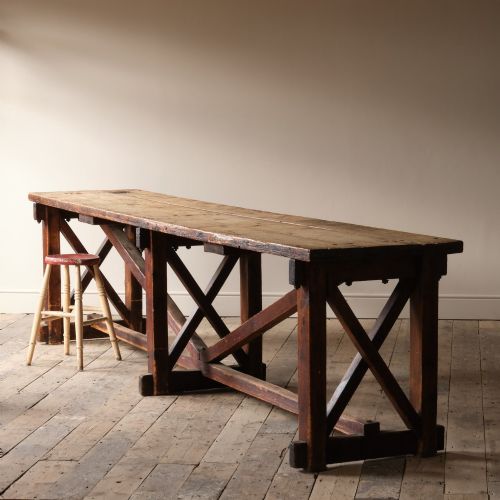
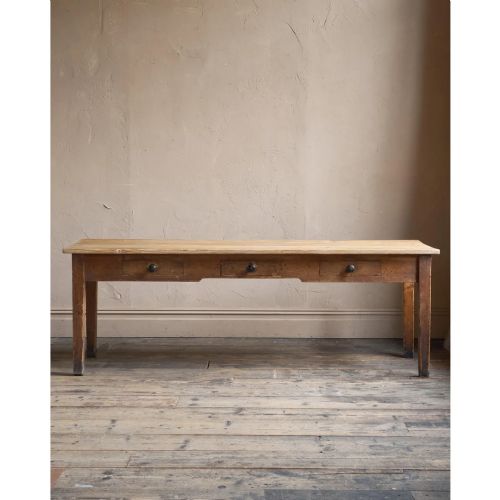
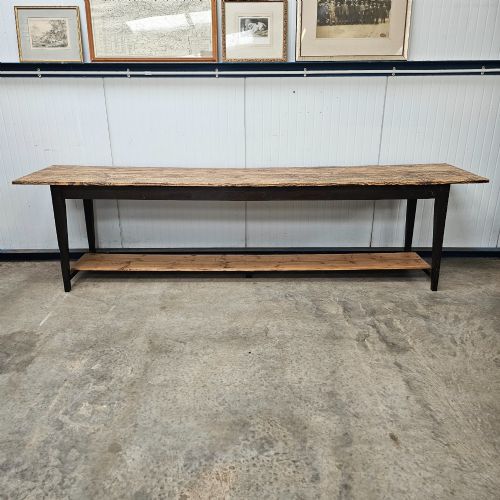
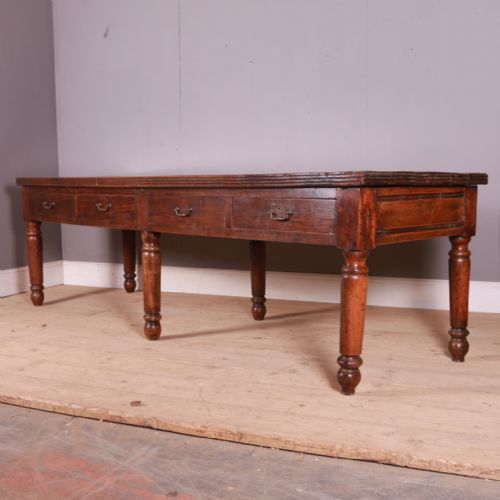
A large pine kitchen island brings substance and utility to a domestic interior, drawing on utilitarian forms from the nineteenth century onwards. Buyers searching for a large pine kitchen island will encounter robust work tables, harvest tables, drapers tables, and dresser bases suited to heavy use.
Most examples originate from the nineteenth century, including Victorian pieces alongside Scandinavian, French, and English country variants. These tables often feature drawers or lower tiers, reflecting their original functions in sculleries, shops, and farmhouses.
Construction and materials
Construction relies primarily on solid pine, frequently combined with oak for structural elements or work surfaces, and finished with paint where appropriate. Joinery is straightforward and utilitarian, built to endure continuous service in workshops, shops, and kitchens.
Surfaces show the marks of past labour, often preserved through waxing or historic paint finishes applied to the wood. Brass fittings appear selectively on drawers, while elm and ceramic elements occasionally supplement the primary pine framework.
Large Pine Kitchen Island Retail Price Guide 2026
Typical asking prices for large pine kitchen island among the pieces listed under this phrase on Sellingantiques today, from the lower quarter to the upper quarter. They describe what is for sale here now, not the wider market.
Listings feature nineteenth-century pine, oak, and elm alongside painted wood surfaces across dining tables, prep tables, and work tables.
Assessing quality
Quality rests on the integrity of the timber and the honesty of the wear accumulated over generations of practical use. Pieces retaining their original proportions, uncompromised structural joints, and authentic surface patination stand apart from altered examples.
The distinction between standard utility items and finer regional pieces lies in the subtlety of the proportions and the character of the grain. Generous scale combined with well-balanced drawers or lower tiers marks the more accomplished survivors.
The Large Pine Kitchen Island Glossary
- Scullery table
- A heavy utilitarian table traditionally used for messy kitchen tasks, typically constructed in solid pine with a robust top. These pieces were designed purely for utility.
- Drapers table
- An elongated work table originally utilised in fabric shops for measuring and folding cloth, featuring a low shelf or multiple drawers. Their narrow proportions suit modern domestic spaces.
- Harvest table
- A long dining or preparation table traditionally built to accommodate large working groups during seasonal agricultural gatherings. They are characterised by exceptional length and sturdy framing.
- Dresser base
- The lower section of a storage unit, featuring drawers and cupboards beneath a flat working surface. These provide substantial storage capacity alongside a preparation area.
- Work table
- A general designation for plain-surfaced tables built for workshop or kitchen tasks rather than formal dining. They prioritise functional strength over decorative detailing.
Large Pine Kitchen Island: Frequently Asked Questions
How do I use a large pine kitchen island?
These pieces function primarily as central preparation surfaces and gathering points within a kitchen space. Their solid construction easily supports everyday culinary tasks.
Lower tiers and drawers provide practical storage for cookware and utensils, keeping surfaces clear. Their generous scale anchors an open room layout effectively.
Are these tables suitable for daily food preparation?
Historic work tables and prep surfaces were built specifically for heavy domestic and commercial use. The thick timber tops handle chopping and food assembly reliably.
Maintaining the wood with appropriate waxes protects the surface against moisture and everyday wear. The natural antibacterial qualities of softwood help preserve a hygienic work area.
How do I distinguish nineteenth-century pieces from later items?
Nineteenth-century examples display hand-cut joinery marks and timber patination developed through decades of hard service. The weight and density of the pine often reflect older growth trees.
Hardware, such as brass pulls or wooden drawer runners, conforms to period manufacturing techniques rather than modern standards. Tool marks left by saws and planes remain visible across the undersides and framing.
How do I care for a painted pine base?
Painted surfaces require gentle cleaning with mild soap and water to avoid lifting historic layers. Avoid abrasive pads that might strip the underlying finish.
Applying a clear natural wax periodically protects both the painted areas and exposed wood grain. This maintenance preserves the character accumulated over the life of the piece.