


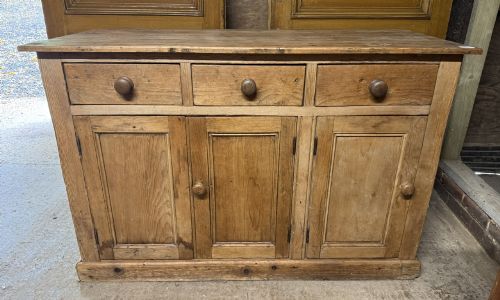
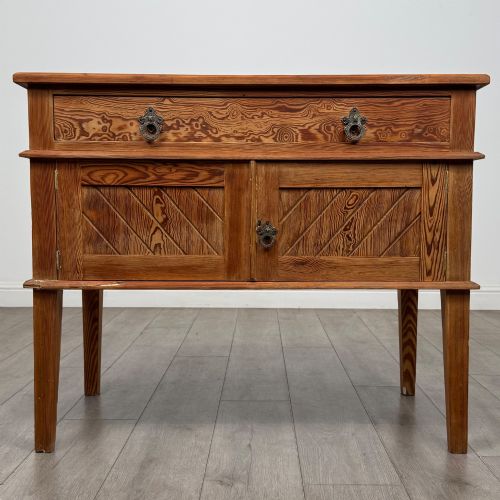
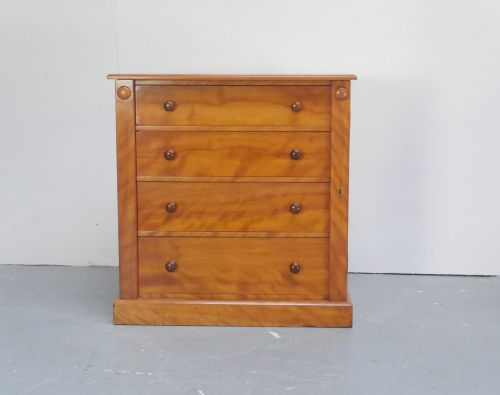
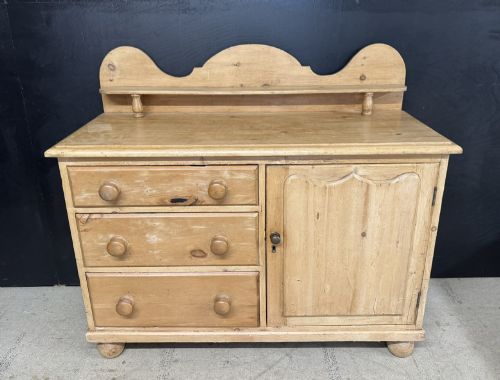
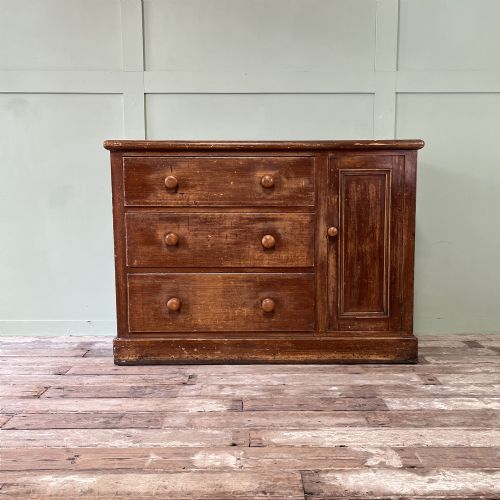
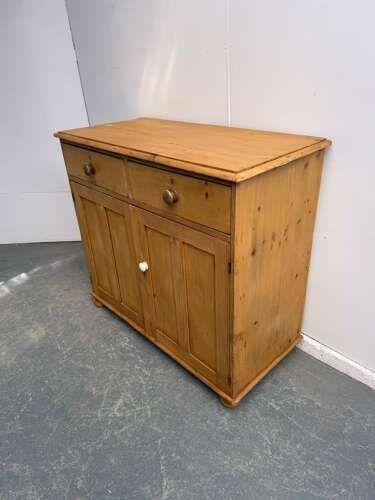
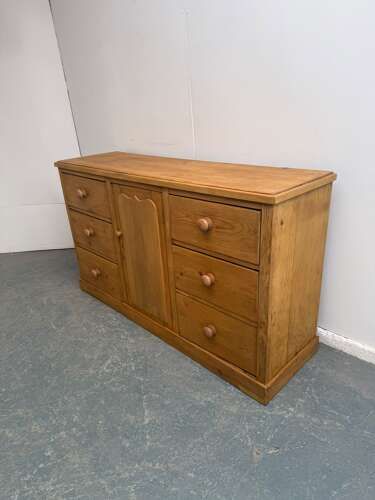
Victorian Pine Dresser Base
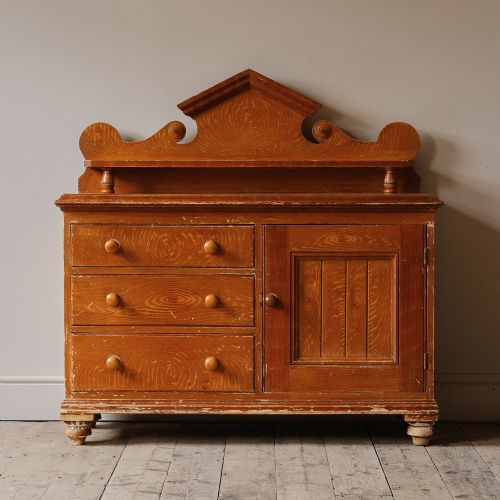
A victorian pine dresser base brings working domestic history directly into a modern interior through honest storage and sturdy timber construction.
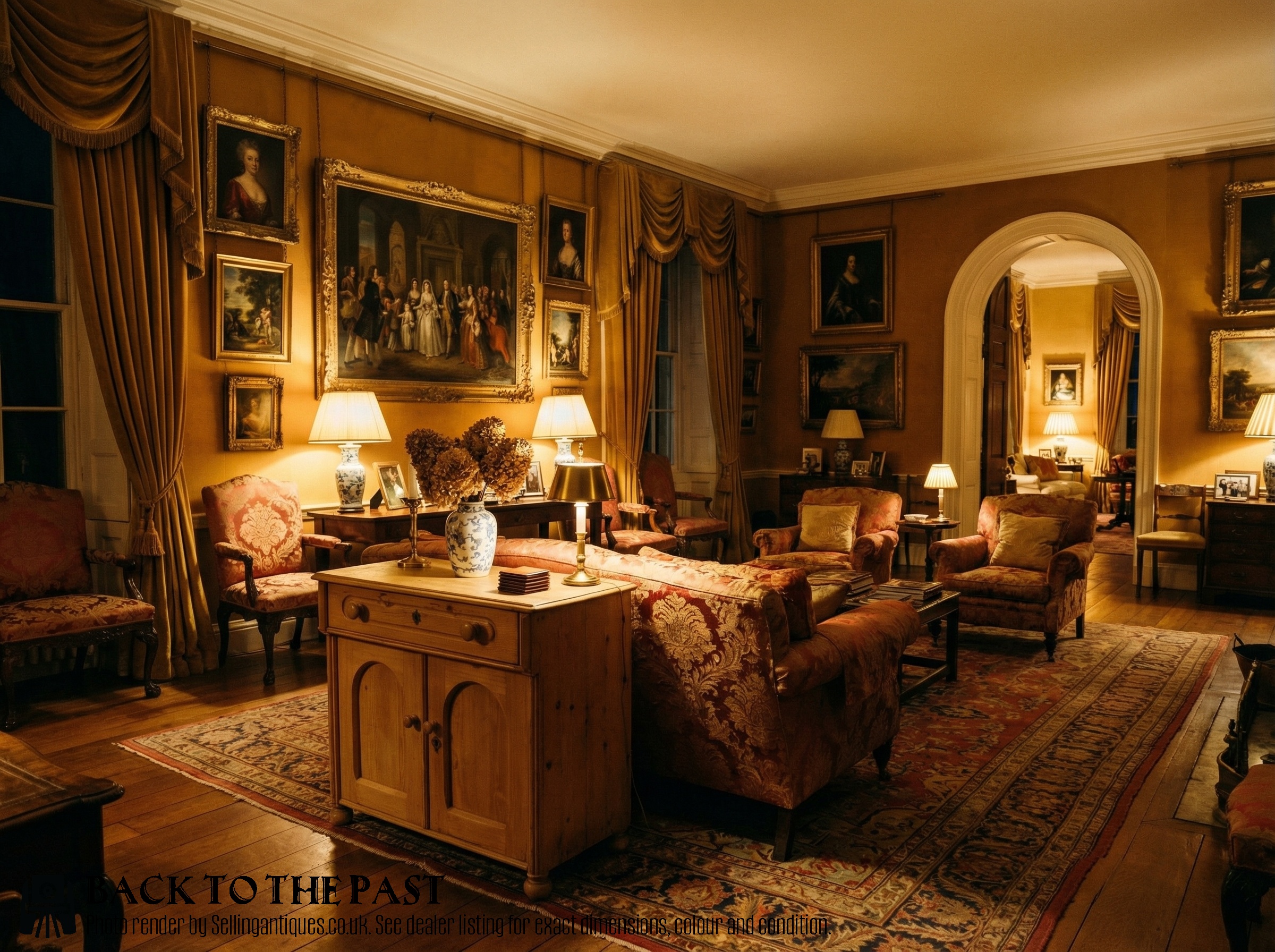
Victorian Pine Dresser Base
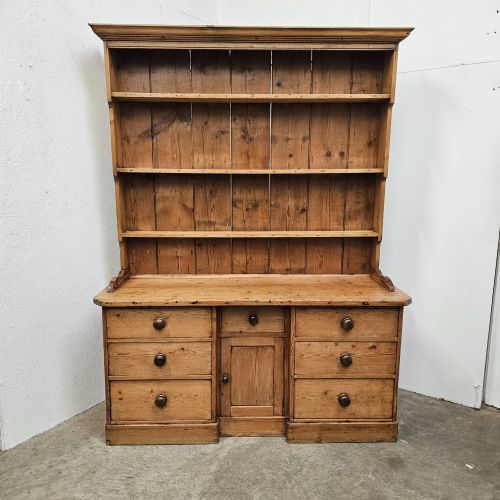
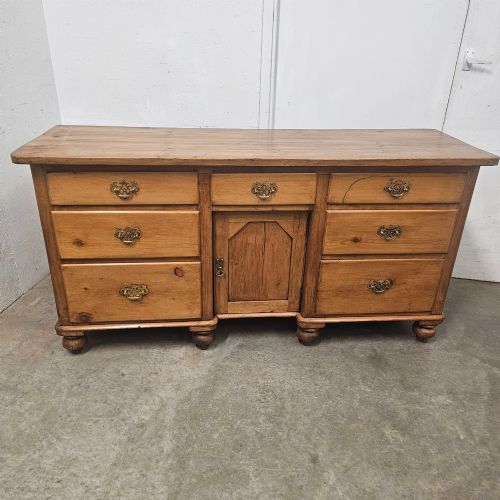
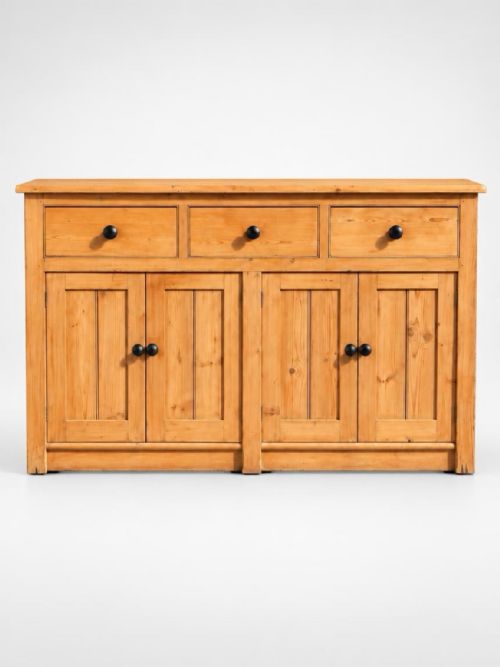
A victorian pine dresser base is a heavy lower storage unit, frequently equipped with drawers and cupboards, designed for utilitarian use in nineteenth-century kitchens and pantries.
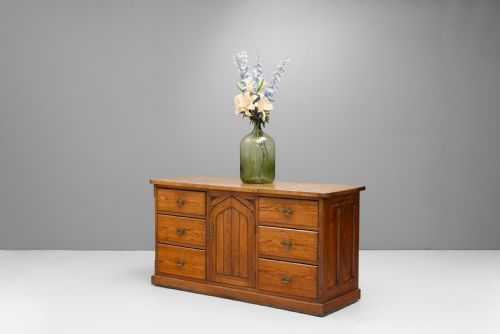
The version most commonly met on this page is the two-door and two-drawer configuration, often shaped by English or Scottish country cabinet makers using softwoods.
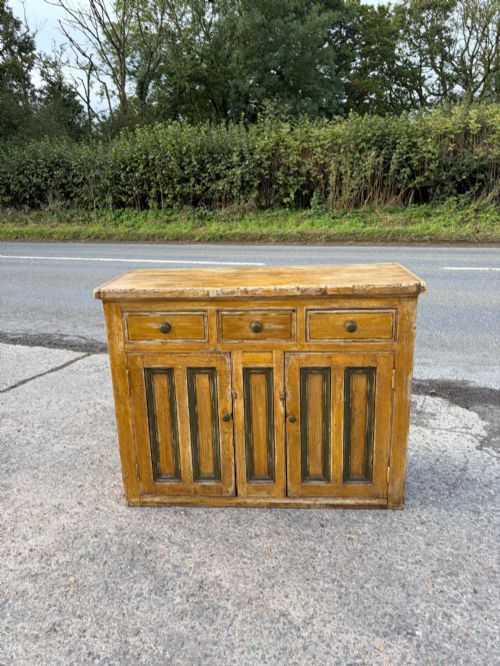
Pieces range from simple waxed timber surfaces to heavily painted finishes, including regional variations such as Welsh formats or continental painted examples.
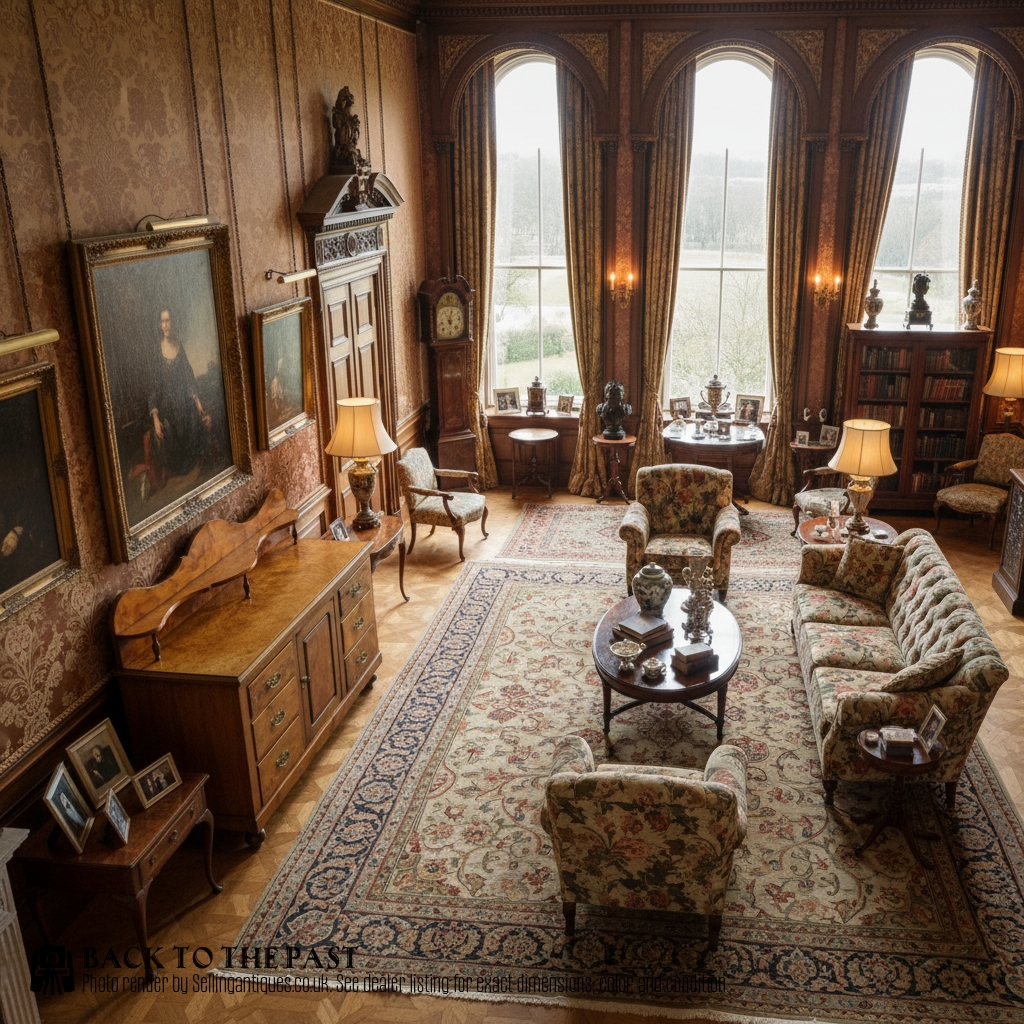
How They Were Made
Makers constructed these carcasses predominantly from solid pine, occasionally combining it with harder woods like sycamore or pitch pine for working surfaces that required extra resilience.
Iron and brass fittings such as hinges, handles, and escutcheons secured doors and drawers, while finishes relied on traditional wax applications or layers of historic paint.
Joinery techniques prioritised practical utility over ornamentation, though regional pieces frequently incorporated carved panels, bun feet, or dog kennel sections.
Victorian Pine Dresser Base Retail Price Guide 2026
Typical asking prices for victorian pine dresser base among the pieces listed under this phrase on Sellingantiques today, from the lower quarter to the upper quarter. They describe what is for sale here now, not the wider market.
Listings feature items from the eighteenth century through to the end of the nineteenth century, utilising pine, painted timber, and sycamore.
What Varies in Quality
The integrity of the original timber and the survival of early or untouched paint surfaces dictate the upper tier of the range, separating domestic utilitarian items from ordinary workshop pieces.
Proportion and scale influence value, where smaller cottage dimensions or monumental country house proportions demonstrate greater architectural presence.
The retention of original hardware, working drawers, and sound secondary woods like sycamore tops marks the distinction between standard examples and those of superior character.
The Victorian Pine Dresser Base Glossary
- Dresser base
- A low kitchen storage unit featuring a flat top surface above drawers and cupboards, historically used for food preparation and storing tableware.
- Pot shelf
- An open lower tier positioned between the legs of a dresser, originally intended for storing heavy pots and pans off the floor.
- Pitch pine
- A dense, resinous softwood sourced from pine trees, noted for its durability and distinct grain pattern in heavy furniture.
- Bread slide
- A pull-out wooden shelf integrated into the cabinetry, historically used for cooling bread or expanding workspace in busy kitchens.
- Dog kennel
- A central open recess situated between cupboards beneath the counter level, designed originally to house working dogs in country houses.
Victorian Pine Dresser Base: Frequently Asked Questions
What is a victorian pine dresser base?
It is a heavy nineteenth-century lower storage unit built with drawers and cupboards for use in domestic kitchens and pantries.
These pieces served as practical work surfaces and storage hubs before fitted kitchens replaced them.
How were they used historically?
Households utilised the flat timber top for food preparation and serving meals while storing utensils and provisions in the drawers and cupboards below.
Pot shelves and bread slides provided additional functional space for kitchen equipment.
How do you live with one today?
These units function well as sideboards, kitchen islands, or media stands in modern living spaces due to their generous storage capacity.
Their sturdy timber surfaces adapt easily to both contemporary and traditional interior schemes.
How do you tell periods apart?
Earlier pieces from the eighteenth and early nineteenth centuries often display hand-sawn timber marks and simpler, robust proportions.
Later Victorian examples from the eighteen-eighties and nineties frequently incorporate machine-cut elements and more elaborate regional carving.