
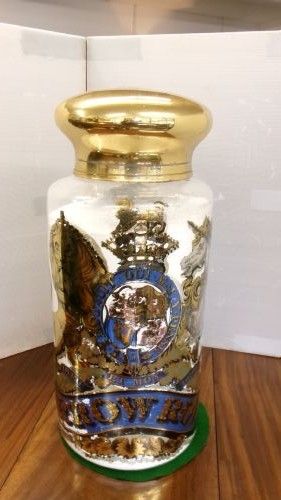
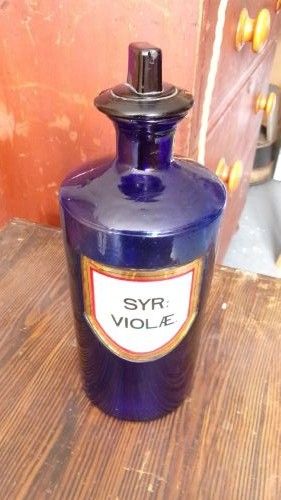


Victorian Pharmacy Jar
A Victorian pharmacy jar brings nineteenth-century dispensary utility into modern rooms with deep-toned glass and clear paper labels.
Victorian Pharmacy Jar
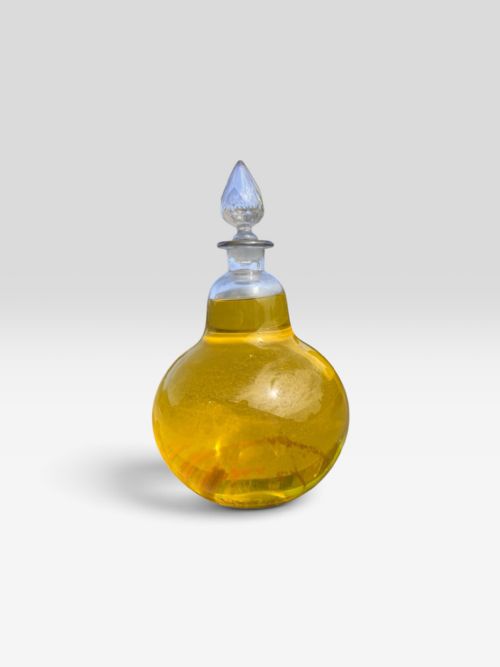
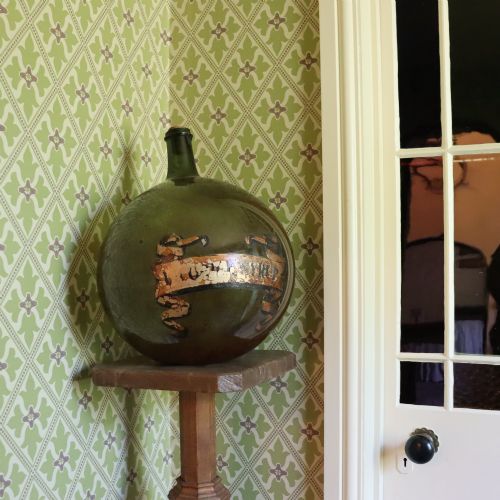
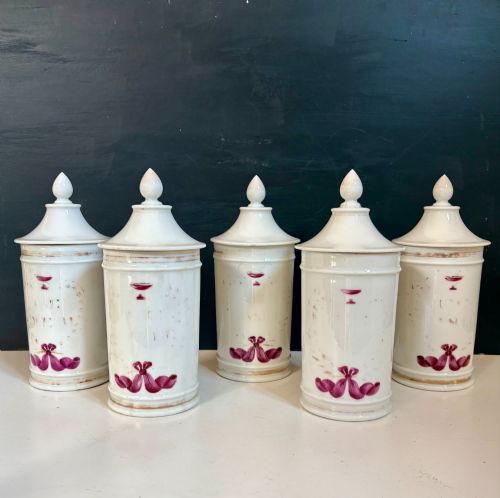
A victorian pharmacy jar takes the form of blown glass carboys, chemist bottles with lollipop stoppers, and ceramic vessels designed to hold medical ingredients. These pieces originate from nineteenth-century apothecary and chemist shops, appearing both as single vessels and matching sets.
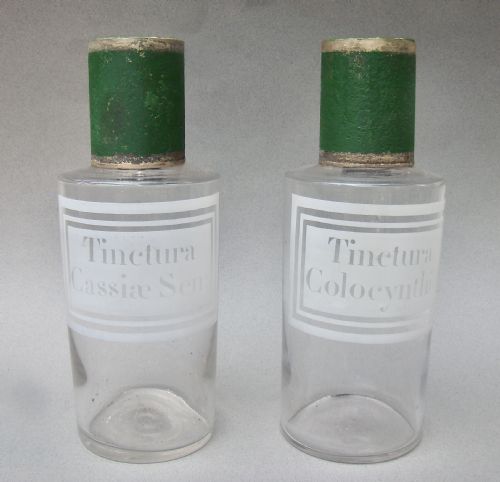
The version most commonly met on this page is the glass apothecary jar, often featuring painted paper labels or etched surfaces. Examples range from large display carboys to smaller drug bottles in Bristol blue, green, and clear glass.
Display jars with matching covers served shop windows, while smaller pharmacy bottles sat on timber shelves. Collectors also encounter box wood chemist jars alongside ceramic containers bearing maker inscriptions.
Materials and construction methods
Makers produced these vessels using hand blown glass, ceramic, and box wood, shaping the bodies with traditional tooling techniques. Glass forms display characteristic pontil marks and surface bubbles from nineteenth-century production methods.
Decoration involved applied gold leaf, hand-painted paper labels, and surface etching to identify specific medical contents such as arrowroot or gelatine. Brass elements sometimes appear on adapted pieces like table lamps.
Glaze finishes protected ceramic bodies, while fitted glass stoppers sealed the contents of chemist bottles against moisture and air.
A nineteenth-century apothecary jar once held your headache cure, and now it just holds your attention.
Quality factors in apothecary vessels
Quality rests on the integrity of the original label, the depth of colour in the glass, and the presence of a matching cover or stopper. Intact paper labels with clear hand-painted lettering elevate a piece significantly above unmarked examples.
The weight and clarity of the hand blown glass distinguish superior carboys and display jars, alongside the crispness of etched lettering on French nineteenth-century pieces. Sets matched in size and form show greater uniformity than assembled groups.
Samuel Alcock and Co
The Victorian Pharmacy Jar Glossary
- Carboy
- A large globular glass bottle or jar used in apothecaries to hold liquids or display shop contents. These vessels often sit in protective frames or feature heavy glass bases.
- Lollipop stopper
- A flat, circular glass closure shaped like a confectioner's lollipop, fitted to the neck of a chemist bottle. This design allows easy removal while sealing the contents securely.
- Bristol blue
- A deep cobalt blue glass produced in the Bristol area during the eighteenth and nineteenth centuries. Chemist bottles utilise this colour to protect light-sensitive contents.
- Pontil mark
- A rough scar on the base of blown glassware where the pontil rod was detached. Its presence confirms hand manufacturing methods.
- Box wood
- A dense, pale hardwood utilised for turned nineteenth-century chemist jars and containers. This material provides a durable, splinter-resistant housing for dry drugs.
Victorian Pharmacy Jar: Frequently Asked Questions
What did pharmacies store in these jars?
Apothecaries stored dried herbs, powders, resins, and liquid medicines inside these vessels for daily dispensing. Specific contents included dry ingredients like arrowroot and gelatine, alongside various chemical compounds.
Larger carboys held distilled water or prominent liquid mixtures to attract customers from the street. Smaller bottles lined dispensary shelves in regulated rows.
How do I display a pharmacy jar at home?
Place glass carboys and display jars near windows to catch natural light through the coloured glass. Bristol blue and green vessels create strong visual points when illuminated from behind.
Group smaller chemist bottles in sets on open shelving or tabletops. Some pieces arrive converted into table lamps for functional room lighting.
Are the paper labels original?
Many nineteenth-century pharmacy jars retain their original hand-painted paper labels protected beneath varnish or glass overlays. These labels denote the specific medical contents of the container.
Some surviving bottles feature direct glass etching instead of paper labels. Both methods indicate commercial dispensary use.
How do I tell an 1850 jar from a 1900 jar?
Earlier mid-nineteenth-century examples display heavier hand-blown glass characteristics with deeper pontil scars on the base. The glass often shows subtle irregularities from manual production techniques.
Later Victorian and 1900 pieces tend toward more standardised machine moulding and cleaner finishes. Edwardian productions continue these refined manufacturing traits.