



Victorian Pedestal Occasional Table
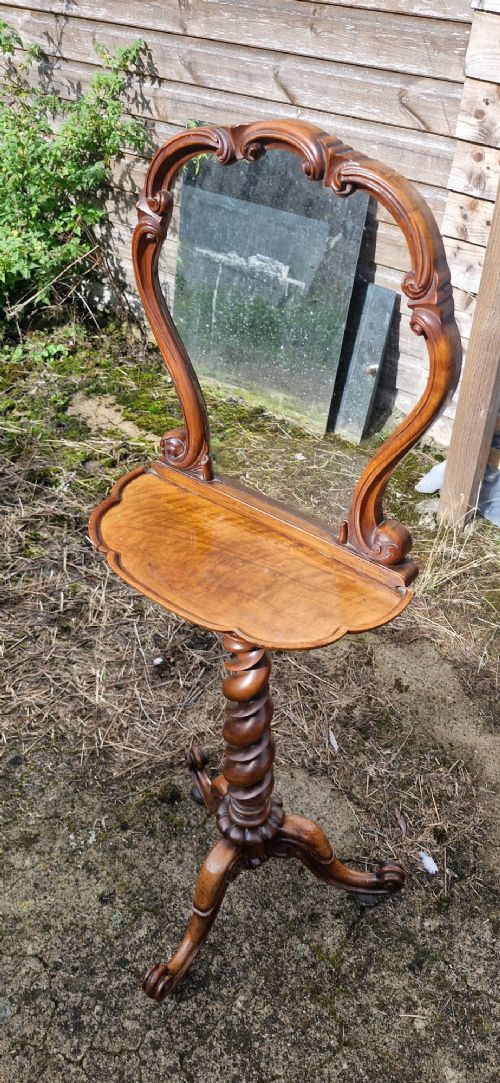
These Victorian pedestal occasional table pieces are compact nineteenth-century stands built to sit beside chairs or hold lamps.
Victorian Pedestal Occasional Table
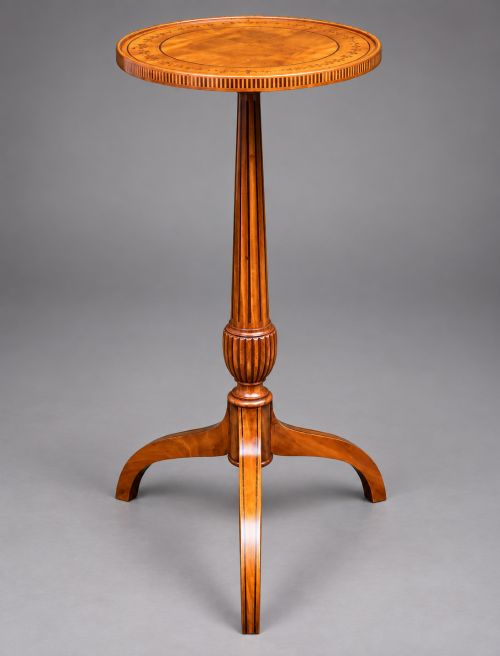
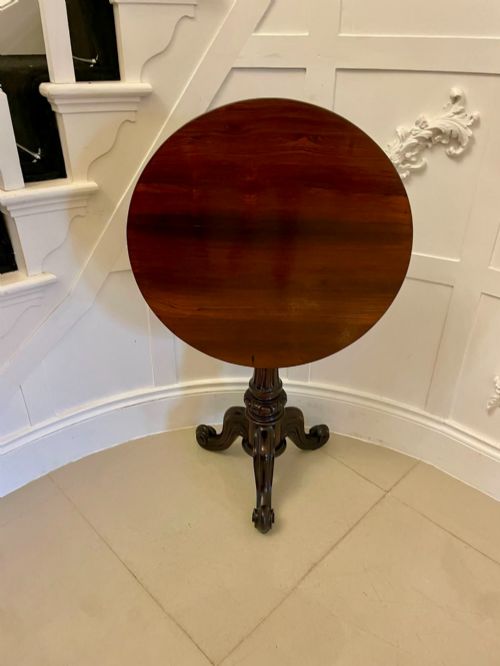
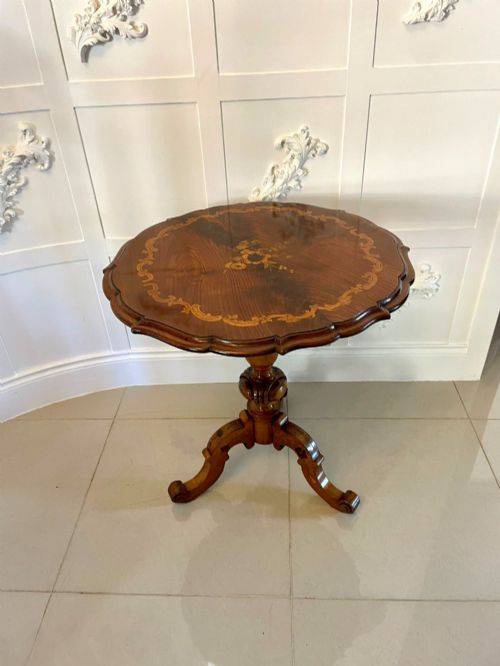
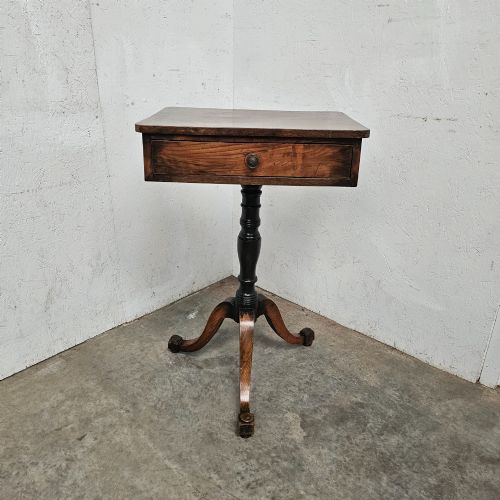
A victorian pedestal occasional table stands on a central column rather than four corner legs, making it easy to tuck beside seating. The selection here leans heavily towards circular lamp tables, wine tables, and sewing tables in mahogany and walnut.
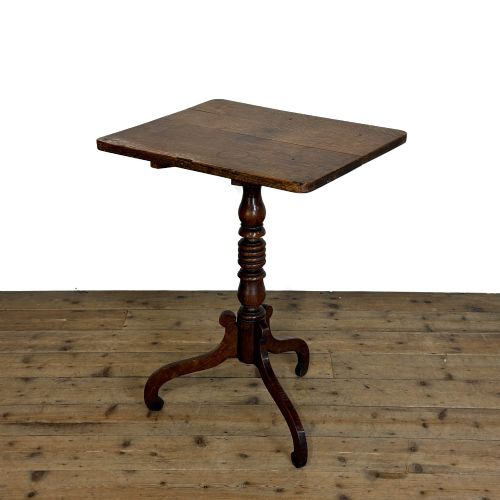
Most examples date from the nineteenth century, spanning decades from eighteen-fifty to eighteen-ninety. They appear in forms ranging from tilt-top tripod wine tables to larger marquetry-inlaid centre tables and freestanding display stands.
Materials and construction
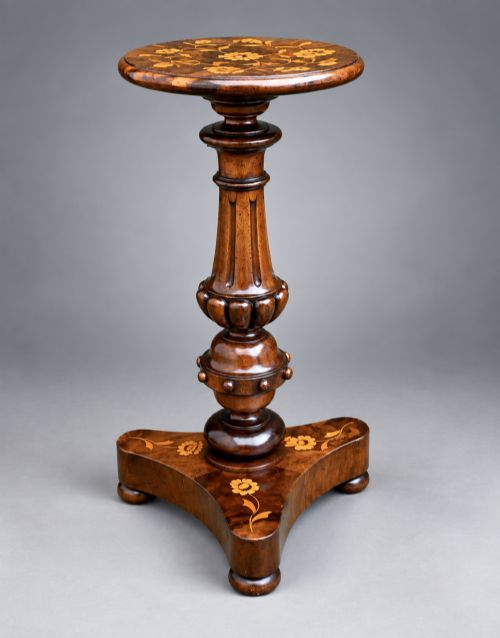
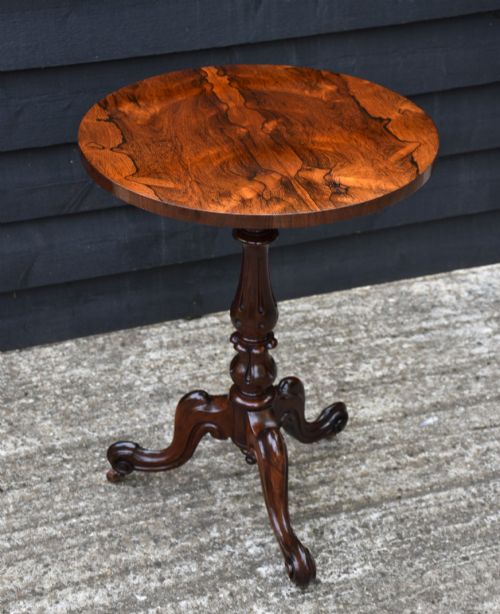
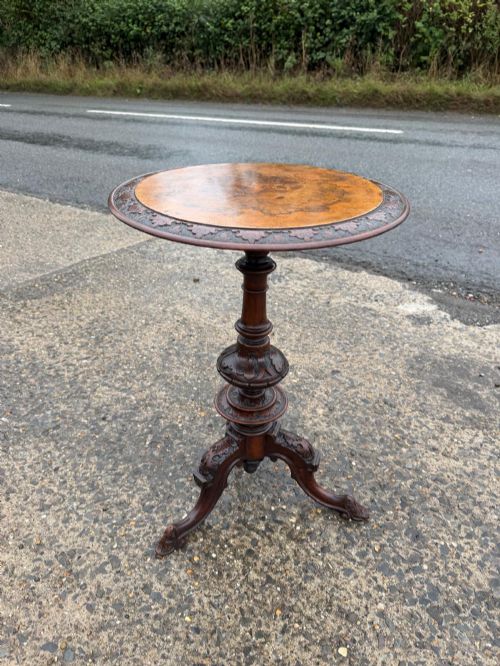
Cabinetmakers utilised rich timber veneers including burr walnut, rosewood, and figured mahogany over solid secondary woods. Tops often feature marquetry inlay, book-matched grain patterns, or inset marble slabs paired with gilded brass details.
The central columns rely on robust turnings supported by tripartite or quadrupartite pedestal bases. Tilt-top mechanisms employ hinged wooden blocks and brass catches that allow the surface to fold away flat when not in use.
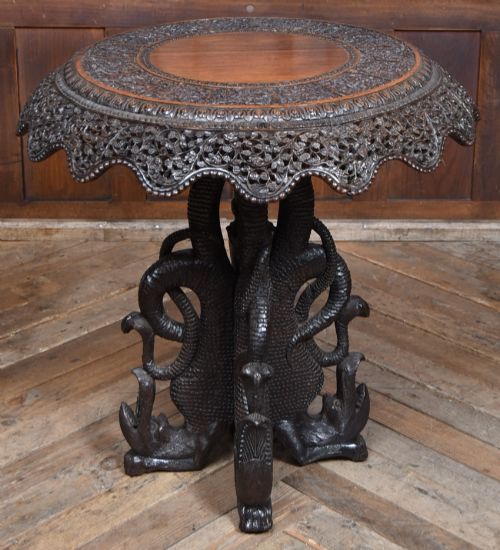
One late Victorian piece includes an elephant table featuring painted wooden tusks.
Markers of quality
Quality rests in the choice of timber and the precision of the cabinetwork rather than sheer scale. Finer pieces display deeply figured burr veneers, crisp hand-carving on the pedestal stems, and tightly fitted marquetry.
Structural integrity sets apart superior examples. A well-made pedestal base remains entirely rigid without wobble in the column, and tilt-top mechanisms engage securely without slack in the pivot.
Gillows·Druce & Co London·Shoolbred
The Victorian Pedestal Occasional Table Glossary
- Tilt-top
- A table mechanism allowing the circular surface to pivot ninety degrees vertical for storage against a wall. This format became popular for wine tables and candle stands in the nineteenth century.
- Burr walnut
- A prized timber harvested from the gnarled growth knots of walnut trees. It yields complex, swirling grain patterns highly sought after for Victorian table tops.
- Tripod base
- A pedestal support terminating in three curved feet. It provides stable floor contact on uneven older floorboards without rocking.
- Marquetry
- The art of applying small pieces of wood veneer to a structure to form decorative pictures or geometric patterns. Elaborate floral motifs frequently adorn high-end Victorian examples.
- Sewing table
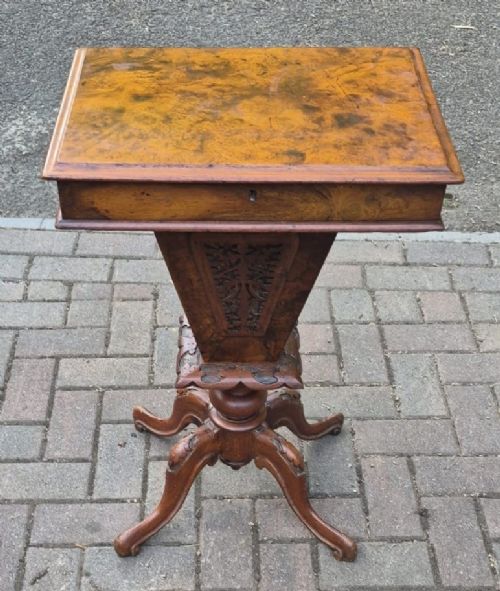
- A specialised occasional piece fitted with an internal compartment or fabric bag for needlework. These often feature octagonal or oval burr walnut tops.
Victorian Pedestal Occasional Table: Frequently Asked Questions
What were pedestal occasional tables used for?
These versatile stands served multiple domestic functions in Victorian parlours and drawing rooms. They held heavy oil lamps, teacups, reading materials, or needlework near seating.
Smaller wine tables and candle stands could easily be moved around a room as evening light shifted. Larger centre tables functioned as decorative display hubs for ornaments and albums.
How do I tell a tilt-top table's age?
Examine the pivot mechanism underneath the table top where the block meets the central pillar. Earlier nineteenth-century examples utilise hand-forged iron catches and closely fitted wooden boxes.
Later Victorian production often introduced cast brass latches and simpler pivoting brackets. The timber species and carving style on the pedestal base also offer strong chronological clues.
Where should I place an occasional table?
Their compact circular or oval footprints make them ideal companions beside armchairs, sofas, or empty hallway corners. A sturdy mahogany lamp table provides a functional surface without crowding a small room.
Avoid placing delicate rosewood or burr walnut surfaces in direct, strong sunlight to protect the aged timber and nineteenth-century polish.
Are pedestal tables stable on carpets?
Tripod and four-pillar pedestal bases generally sit firmly on thick carpets because three or four points naturally adjust to uneven pressure. However, tall or heavily laden lamp tables require careful placement to prevent tipping.
Heavier marble-topped variants offer a lower centre of gravity that naturally increases their overall physical stability.