



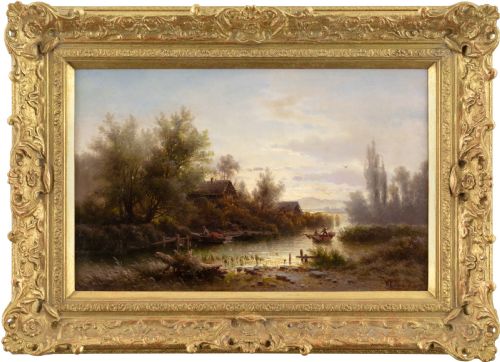
Victorian Pastoral Artwork
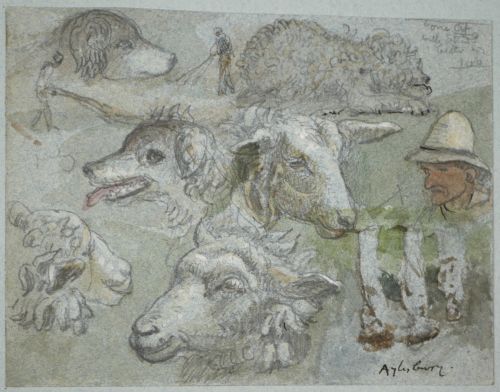
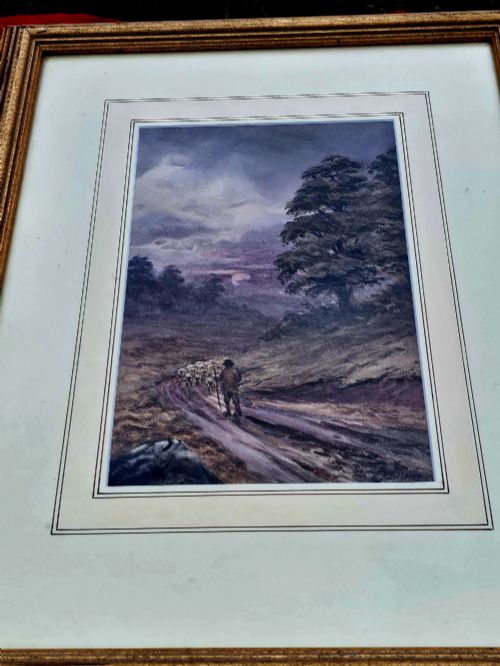
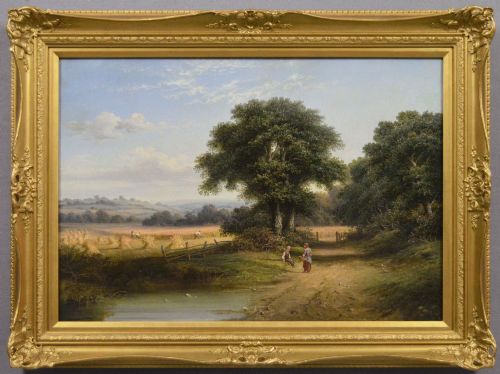
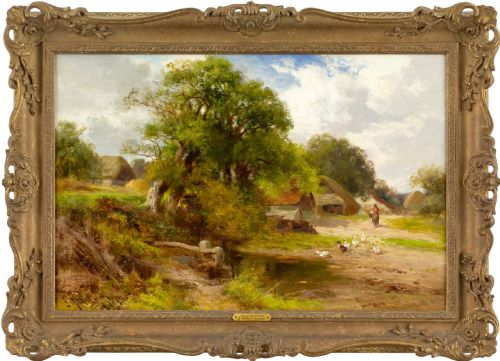
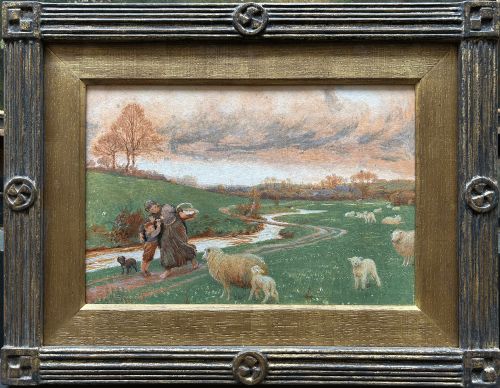
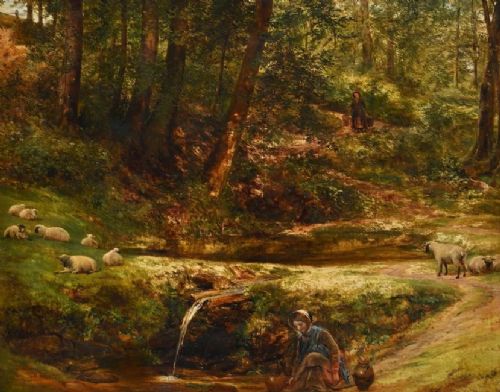
Victorian pastoral artwork captures the calm of the countryside through rural scenes of shepherds, livestock, and river landscapes.
Victorian Pastoral Artwork
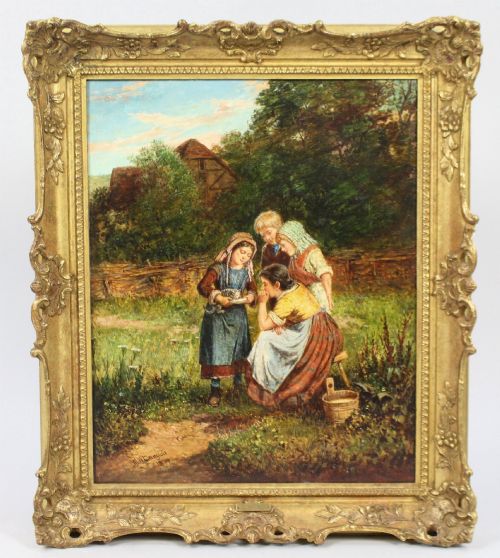
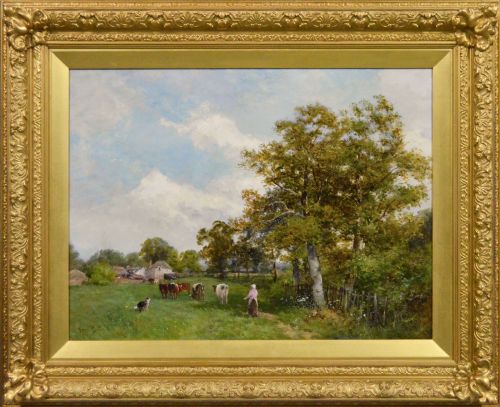
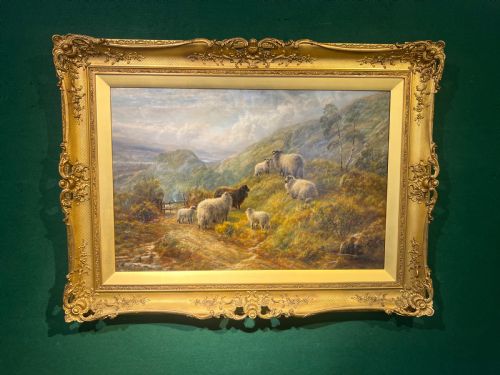
When you search for Victorian pastoral artwork, you encounter framed scenes depicting rural life, agricultural workers, and farm animals in British and European landscapes. These pieces record the nineteenth-century fascination with the countryside, ranging from quiet river banks to rugged highland pastures.
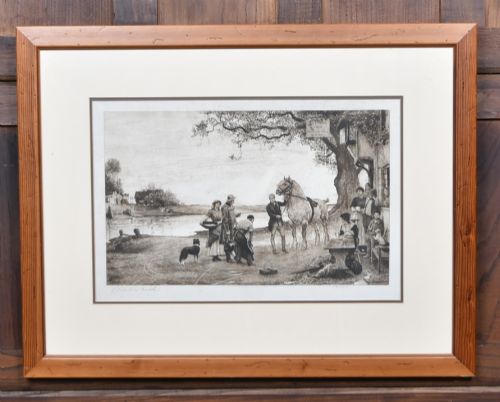
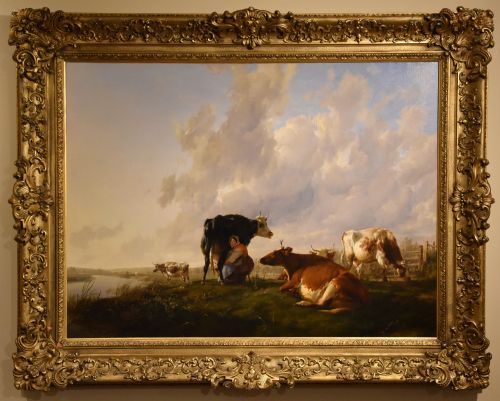
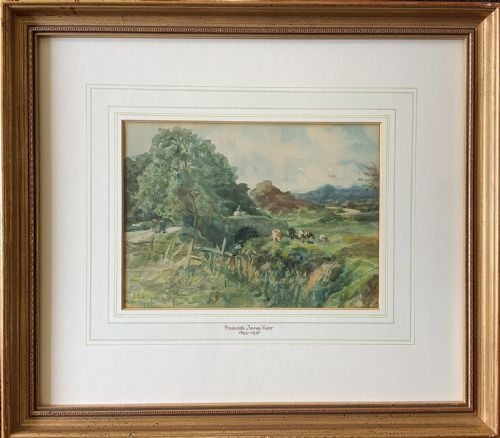
The selections available here lean heavily toward oil paintings on canvas and detailed watercolour paintings on paper. You will also find etchings, lithographs, and drawings that capture herds of sheep, cattle, and milkmaids at work.
Most examples date from the Victorian era and the decades immediately following, carrying stylistic influences from the British School, romanticism, and realism. These works bring a traditional, tranquil atmosphere to domestic interiors.
Materials and methods
Artists of this period worked primarily with oil paint on stretched canvas or board, applying rich pigments to build depth in skies, foliage, and animal coats. Watercolours on paper offered a lighter, more translucent medium suited to rapid sketching and atmospheric river views.
Framing played an integral role in presentation, utilising carved wood, gesso, and giltwood to create ornate borders that complemented the traditional subject matter. Many works retain their original glass and framing elements, preserving the piece in its historical context.
Victorian Pastoral Artwork Retail Price Guide 2026
Typical asking prices for victorian pastoral artwork among the pieces listed under this phrase on Sellingantiques today, from the lower quarter to the upper quarter. They describe what is for sale here now, not the wider market.
A remarkably patient shorthorn bull stands quietly while an artist captures its portrait for posterity.
Factors of quality
The skill of the brushwork and the anatomical accuracy of the animals set superior paintings apart from more formulaic studio output. Master artists rendered light, shadow, and texture with convincing naturalism, whereas lesser works rely on repetitive formulas for foliage and skies.
Composition and atmospheric depth distinguish exceptional compositions, drawing the viewer into the harvest field or river landscape rather than presenting a flat backdrop. The condition of the canvas, the preservation of the original pigments, and the quality of the giltwood frame also influence the overall standing of a piece.
Eugène Verboeckhoven·James Smetham·John Horace Hooper·Thomas Sidney Cooper·Frederick Walker·Richard Redgrave·Robert Watson·Albert Rieger·William Watson Jnr·Johann Friedrich Voltz·Henry H Parker·Miles Birkett Foster·Charles Henry Slater·Charles Edward Wilson·Frederick Hines·John Emms·Philip Richard Morris·Cornelius Pearson·William Henry Mander·Thomas Baker of Leamington·Franz van Severdonck
The Victorian Pastoral Artwork Glossary
- Oil on Canvas
- A painting technique using pigments suspended in drying oils applied to a woven fabric surface. This method allowed artists to achieve rich colour saturation and subtle blending.
- Watercolour Painting
- Artwork created using water-soluble pigments on paper. The technique relies on transparency and white paper showing through to create luminosity.
- Giltwood
- Wood that has been carved and coated with a thin layer of gold leaf or gilt powder. It was frequently used for framing nineteenth-century fine art.
- Gesso
- A paint mixture consisting of a neutral binder mixed with chalk, gypsum, or pigment. It served as a smooth ground for gilding and frame decoration.
- British School
- A loose grouping of artists working in Britain whose shared techniques and subjects defined national artistic standards. Their output spans portraiture, landscape, and pastoral scenes.
Victorian Pastoral Artwork: Frequently Asked Questions
What subjects define these pastoral scenes?
These works typically feature rural subjects such as shepherds tending flocks, cattle grazing in river valleys, and figures near harvest fields. Animals like shorthorn bulls and sheep are central to the composition.
Artists aimed to capture the peace of the nineteenth-century countryside, often highlighting agricultural labour and domestic animals within romantic or realistic landscapes.
How do I care for antique watercolours?
Watercolours on paper are sensitive to ultraviolet light, which can fade pigments and discolour the paper support over time. Hang them away from direct sunlight and damp environments.
Ensure the framing uses acid-free mounts and protective glass to prevent atmospheric pollution from damaging the delicate surface of the paper.
Are these paintings usually signed?
Many nineteenth-century pastoral paintings and watercolours bear the artist's signature, sometimes accompanied by a date or a title inscribed on the reverse. Signatures help attribute the work to specific members of the British School.
Some pieces remain unsigned or indistinctly signed, which is common for smaller studio works or copies produced during the period.
How should I display giltwood frames?
Giltwood frames require stable indoor humidity to prevent the gesso and wood beneath from cracking or shrinking. Keep them away from direct heat sources like radiators.
Dust the carved details gently with a soft, dry brush, avoiding liquid cleaners that can strip the delicate gold leaf finish.