


19th Century Rural Portrait
These 19th century rural portrait works capture the quiet gravity of farm life, and you buy them to bring rustic stillness into a room.
19th Century Rural Portrait
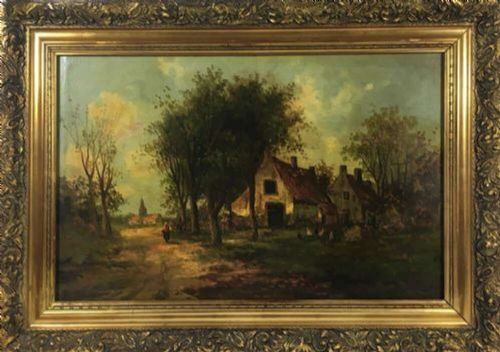
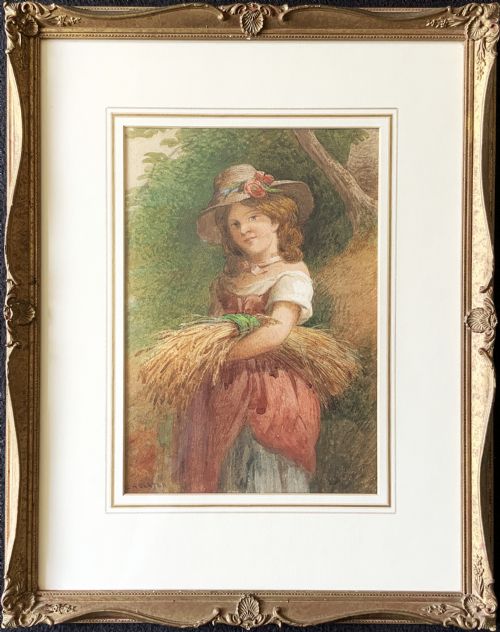
A 19th century rural portrait brings the countryside inside through depictions of farm workers, livestock, and agrarian landscapes from the Victorian era. The selection spans straightforward oil paintings on canvas alongside delicate watercolour paintings on paper, capturing scenes of milkmaids, sheep, and cattle near barns.
Most examples lean towards Victorian Realism and pastoral themes, reflecting a widespread 19th century fascination with rural labour and domestic animals. You encounter French farmyard landscapes alongside British country scenes, painted across decades stretching from eighteen-sixty to nineteen-hundred.
The subjects range from intimate portraits of women and grandmothers reading to sweeping studies of resting cattle and sheep in fields. These works serve as windows into a slower agrarian past, rendered through the distinct lenses of French and British realism.
How they were made
Artists painted these works primarily in oil paint on canvas or in watercolour on paper, utilising wooden supports and traditional stretchers. The application of pigment varies from smooth, detailed watercolours to heavier oil layers that capture the texture of wool, hide, and rustic wood.
Many surviving works retain their original giltwood or gilt wood frames, which add structural weight and a polished metallic boundary to the matte canvas surfaces. These frames demonstrate period moulding techniques that complement the earthy palettes of the paintings within them.
Listings feature works spanning the nineteenth century, including Victorian Realism, the Barbizon School, and pastoral landscape genres.
What varies in quality
The distinction between ordinary and superior pieces rests on the confidence of the brushwork and the anatomical accuracy of the figures and animals. Master painters capture the heavy drape of fabric and the true posture of resting livestock with an economy of line that lesser hands miss.
Framing and preservation also dictate standing, as original giltwood frames with intact moulding command greater appreciation than later replacements. The stability of the canvas and the clarity of the underlying oil paint or watercolour dictate how well the piece has weathered the decades.
Charles Henry Slater·William Henry Mander·Thomas Sidney Cooper·James Kyd·Heinrich Harder·Ralph Hedley RBA·Daniel Pasmore·A Davis·Thomas Blinks
The 19th Century Rural Portrait Glossary
- Canvas
- A heavy woven fabric stretched across a wooden frame to serve as a durable surface for oil painting. It provides the primary support for many Victorian works.
- Giltwood
- Wood carved and covered with a thin layer of gold leaf or gold paint. This material forms the ornate frames frequently paired with 19th century paintings.
- Watercolour
- A paint consisting of pigment suspended in a water-based solution, applied to paper. It creates luminous, translucent effects distinct from heavy oil layers.
- Genre painting
- The pictorial representation of scenes from everyday life, ordinary people, and domestic activities. These works focus on common human experiences rather than grand historical narratives.
- Barbizon School
- A French art movement of the mid-nineteenth century dedicated to realism in landscape painting. Painters of this circle drew inspiration directly from rural French scenery and farm life.
19th Century Rural Portrait: Frequently Asked Questions
How do I date these paintings?
Dating relies on stylistic clues, artist signatures, and framing materials that match nineteenth-century manufacturing methods. Canvas types and stretcher construction also provide chronological markers.
Many pieces carry specific dates within their titles or signatures, ranging from eighteen-sixty to nineteen-hundred. Comparing dress and agricultural tools helps narrow down the decade of creation.
Where should I hang a rural portrait?
These works suit dining rooms, libraries, or living spaces decorated with traditional or rustic furnishings. Their earthy tones pair naturally with wood panelling and neutral wall colours.
Keep them away from direct sunlight and damp walls to protect the canvas and paper. Proper placement ensures the giltwood frame remains secure.
How do I tell oil from watercolour?
Oil paintings feature thicker, textured paint layers on canvas with a slight sheen and visible brush marks. Watercolours appear flat and translucent on paper, protected beneath glass.
Oil paint allows for heavier blending and richer dark tones. Watercolour relies on the white of the paper to create brightness and light.