




Victorian Portrait of Girl
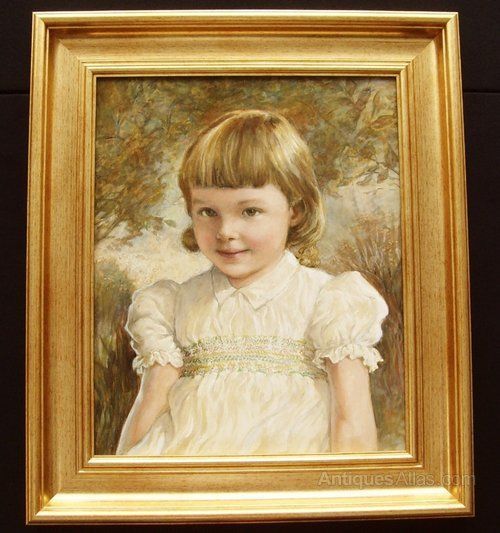
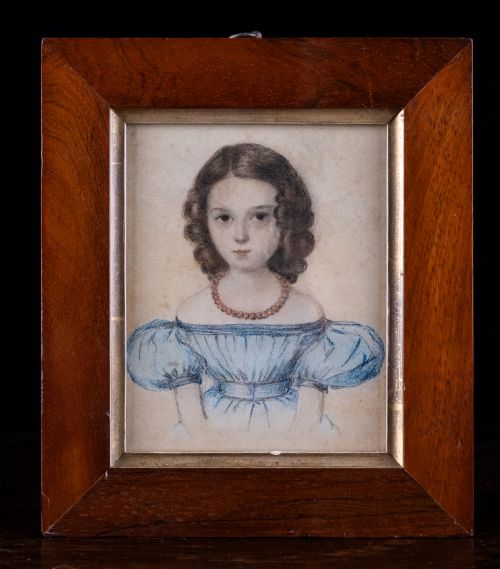
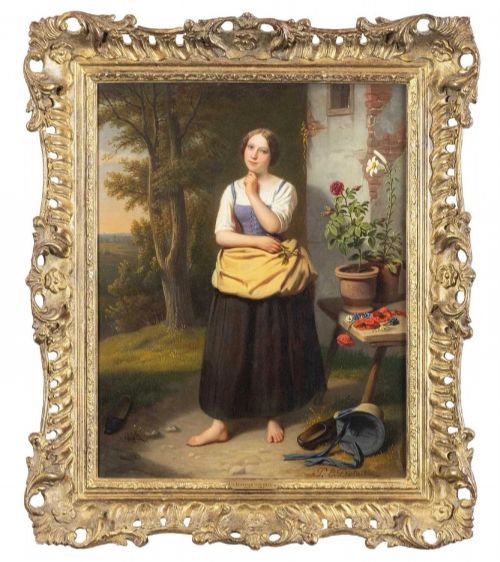
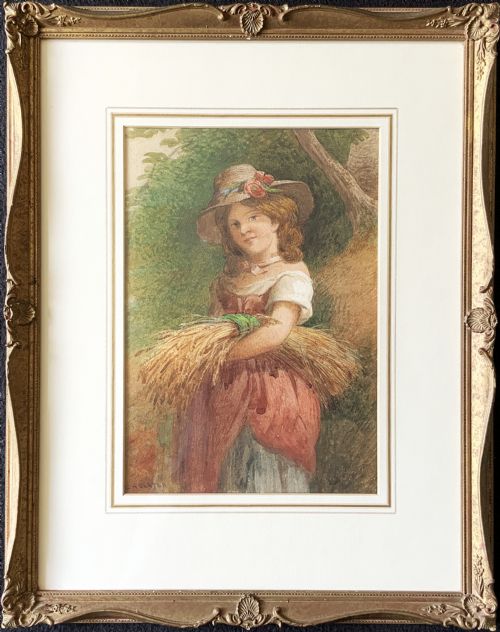
A victorian portrait of girl captures the likeness of a young subject through oil, watercolour, and carved stone, offering an intimate window into past lives.
Victorian Portrait of Girl
A victorian portrait of girl encompasses varied representations of female children and youths produced primarily across the nineteenth and early twentieth centuries. These works record subjects through multiple artistic mediums including oil paint on canvas or board, delicate watercolours, cut paper silhouettes, and carved marble or alabaster busts.
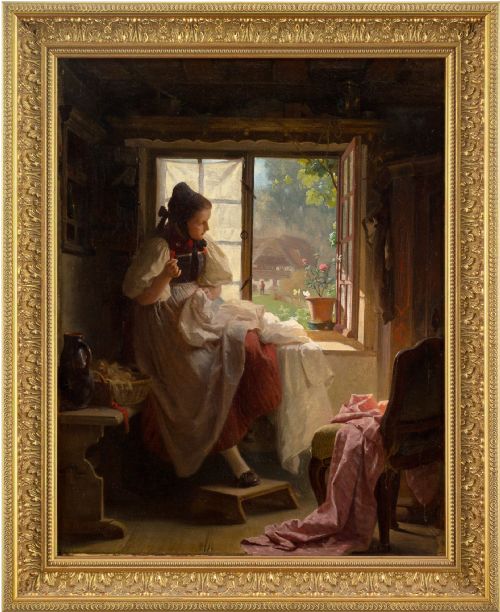
The selections available here range from formal oil paintings set in architectural or landscape backgrounds to intimate miniature watercolours and genre scenes depicting girls with animals, flowers, or domestic objects. Buyers encounter pieces spanning early Victorian realism through to Edwardian and Regency periods, reflecting shifting aesthetic preferences across British and European art.
Many examples capture specific named sitters with documented histories, while others remain charmingly naive or anonymous representations of youth. The physical formats vary from large framed canvases to small oval prints and detailed pencil or pastel drawings housed in period frames.
Materials and Techniques
Artists utilised traditional oil paints applied to canvas, board, or paper panels, often building rich layers of colour to render textile textures, lace, and skin tones. Watercolours on paper offered a lighter medium, frequently combined with gum arabic or bodycolour for added opacity and detail.
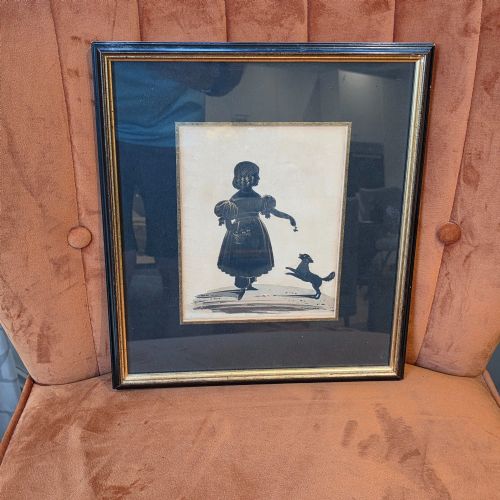
Sculptural representations employed carved Carrara marble, alabaster, and cast gesso within frames, while silhouette artists utilised precision-cut black paper highlighted with watercolour and gilt detailing. Many works remain preserved behind glass within period ebonised, burr maple, or swept gilt frames.
Support structures typically involved stretched canvas over wooden frames or thick paper mounted securely within protective borders. The framing materials often incorporate hand-carved wood and gilt finishes characteristic of nineteenth-century workshop practices.
Victorian Portrait of Girl Retail Price Guide 2026
Typical asking prices for victorian portrait of girl among the pieces listed under this phrase on Sellingantiques today, from the lower quarter to the upper quarter. They describe what is for sale here now, not the wider market.
The listings span multiple centuries of portraiture, recording works from the Regency era through to the Edwardian period in various media.
Assessing Quality and Execution
The preservation of the original medium and its housing significantly influences the overall integrity of the piece. Works retaining their contemporary gilded or ebonised frames provide a more complete historical context than those housed in later replacements.
Provenance and documented attribution to known nineteenth-century painters or sculptors elevate the standing of a work. The complexity of the composition, such as the inclusion of domestic animals, architectural elements, or detailed landscape backgrounds, distinguishes ambitious gallery pieces from simpler studies.
William James Hubard·Vittorio Reggianini·Max Kaltenmoser·Charles Henry Slater·Charles Burton Barber·Henry E Hobson·Vincenzo Irolli·Rowland Holyoake·Daniel Pasmore·Henry Weigall·Charles Sillem Lidderdale·Jane Maria Bowkett·Robert Kemp·Ethel Mortlock·Harold Arthur Burke·Fred Morgan
The Victorian Portrait of Girl Glossary
- Genre painting
- A representation of scenes from everyday life involving ordinary people. These works often depict children engaged in domestic activities, play, or quiet contemplation.
- Naive art
- Visual art produced by a person lacking formal professional training, often characterised by a charming simplicity in perspective and proportion.
- Silhouette
- A portrait represented as a solid shape of a single colour, usually black, cut from paper and mounted on a pale background. Detail is sometimes added with gold paint or watercolour highlights.
- Ambrotype
- An early photographic process on a glass plate, sometimes hand-tinted with colour. This technique produced a unique positive image popular during the mid-nineteenth century.
- Carrara marble
- A type of white or blue-grey marble mined in the city of Carrara in Italy. Sculptors favoured this material for its fine grain and durability.
Victorian Portrait of Girl: Frequently Asked Questions
How do I identify a Victorian girl portrait?
Examination of clothing styles, hairstyles, and framing materials often reveals the production era. Cotton and lace dresses with bonnets or specific Regency and Edwardian cuts provide reliable chronological clues.
Signatures, artist attribution labels on the reverse, and the construction of the wooden stretcher or backing boards also help confirm the period of creation.
Were these portraits painted from life?
Many professional commissions required formal sittings where the subject posed for the artist over multiple sessions. This approach ensured accurate facial likeness and realistic proportions.
Some genre scenes and informal watercolours relied on preparatory sketches or photographic studies, particularly as photography became more accessible during the latter half of the nineteenth century.
How should I care for antique watercolours?
Works on paper require protection from direct sunlight and high humidity to prevent fading of pigments and degradation of the paper support. Framing behind UV-filtering glass ensures long-term preservation.
Maintaining stable indoor temperatures prevents the expansion and contraction of paper and wood frames, which can weaken adhesives and structural joints over time.
What is the difference between oil and watercolour portraits?
Oil paintings utilise pigment suspended in drying oils applied to canvas or wood panels, resulting in a durable, textured surface with rich depth of colour. Watercolours use water-soluble pigments on paper, offering a luminous and delicate finish.
Oils are traditionally heavier and require robust wooden frames, whereas watercolours require glass protection to shield the paper from environmental moisture and atmospheric dust.
Why do some portraits feature animals?
Domestic pets such as dogs, kittens, and birds frequently appeared in nineteenth-century portraits to reflect the child's gentle nature and affluent upbringing. These elements added narrative charm and warmth to formal compositions.
Animals also served as compositional tools, helping to anchor the subject within the domestic or pastoral landscape setting.