

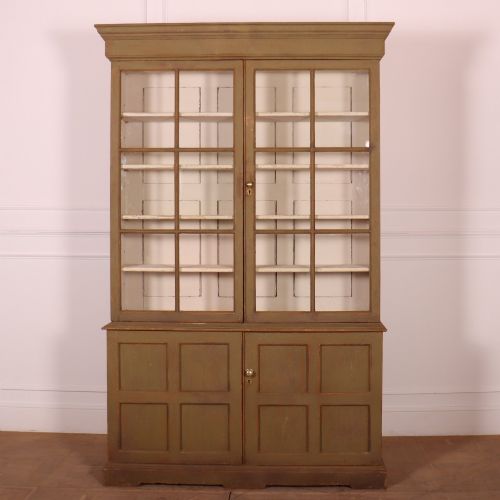

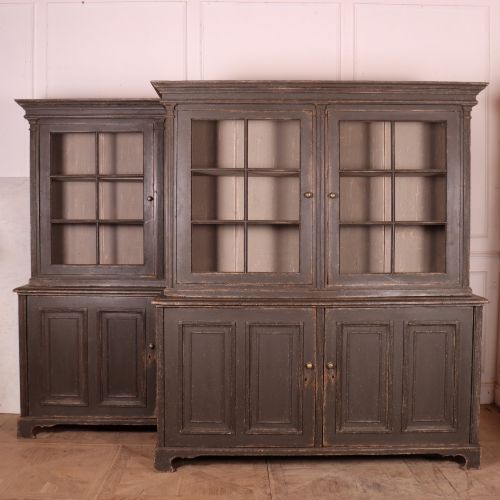
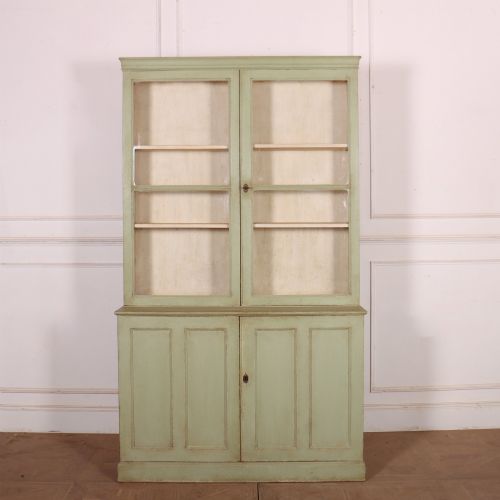
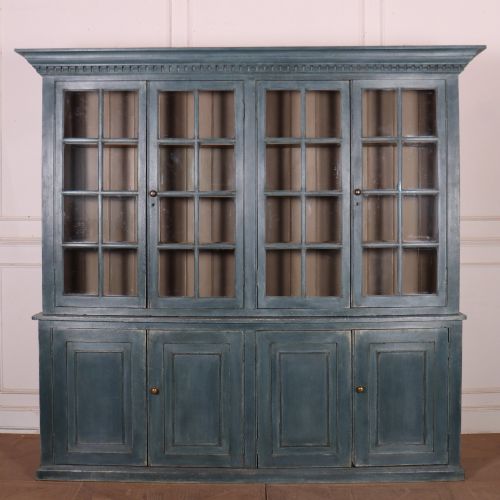
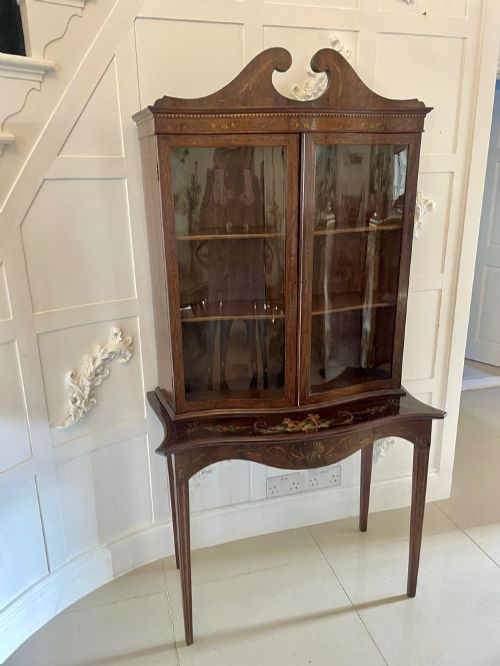
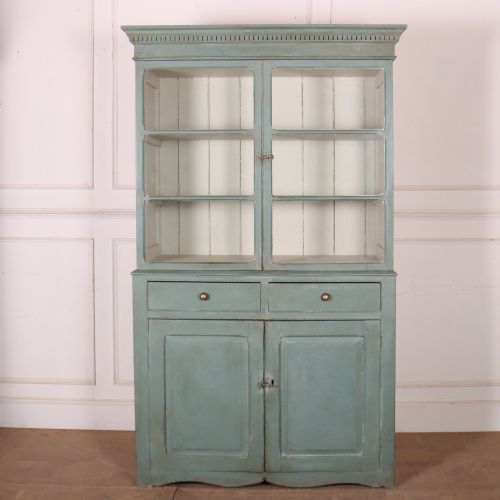
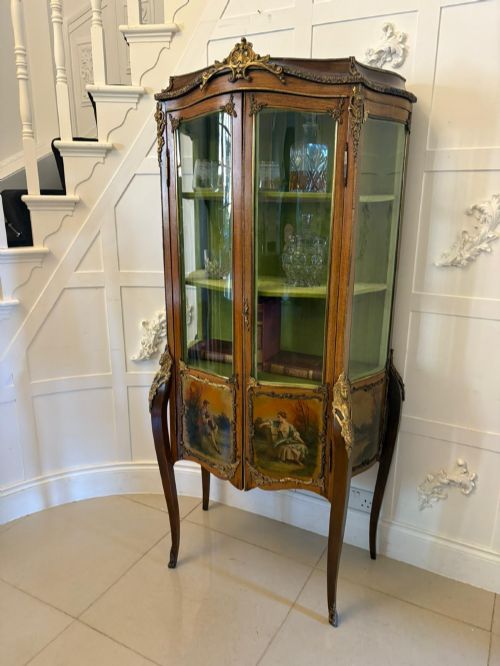
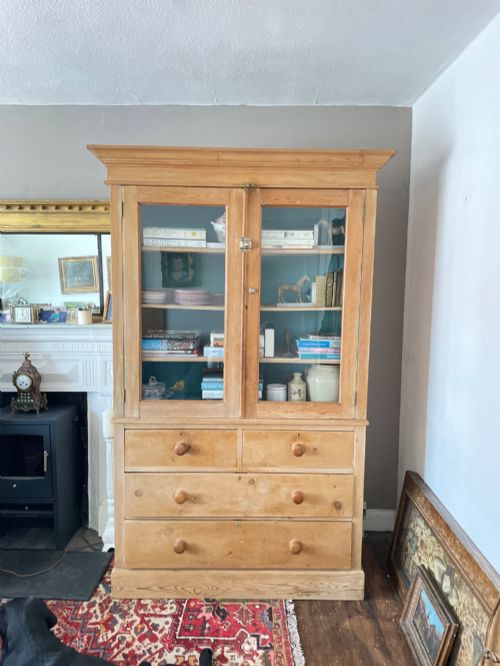
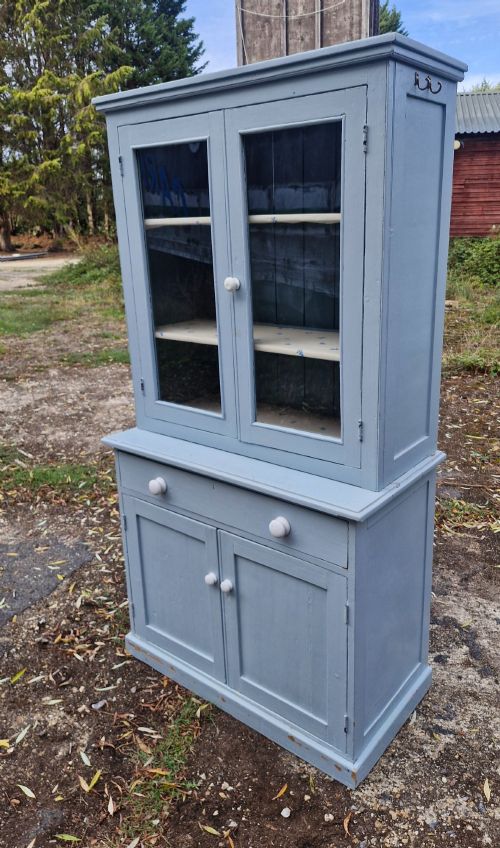
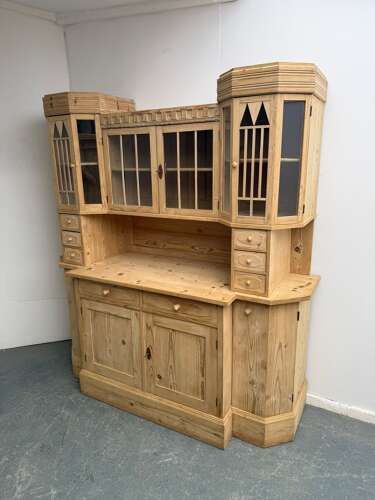
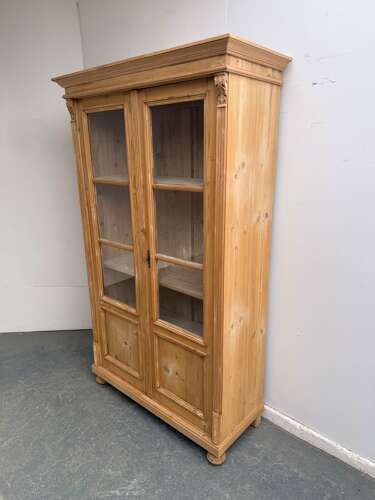
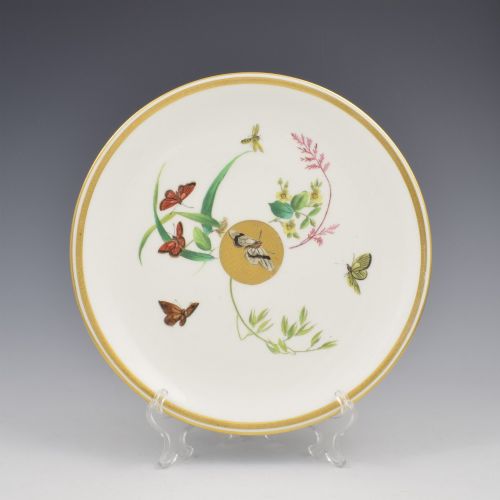
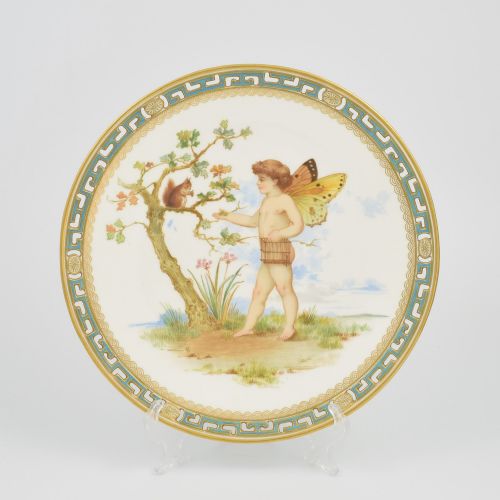
Victorian Painted Display Cabinet
These pieces combine functional storage with decorative painted surfaces, offering collectors a practical way to display ceramics and books.
Victorian Painted Display Cabinet
A victorian painted display cabinet serves to exhibit porcelain, books, and decorative objects behind glazed doors while adding colour and character to a room.
The selections span upright glazed bookcases, corner units, and kitchen dressers finished with painted decoration or original interior paint.
Originating across the nineteenth century, these cabinets reflect both formal salon tastes and vernacular country traditions.
Materials and construction
Carpenters utilised pine, mahogany, and satinwood for the main carcase, applying surface paint, enamel, and gold leaf for decorative effect.
Glazing bars hold glass panes securely within doors designed to protect contents from dust while maintaining maximum visibility.
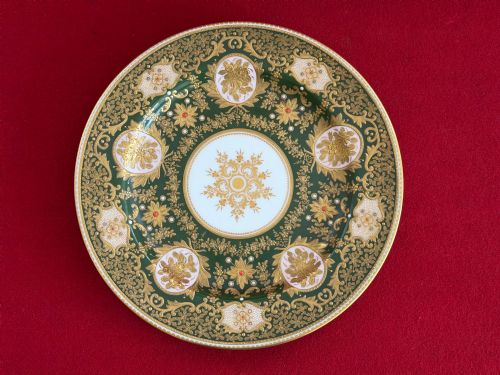
Interior surfaces often received contrasting coats of paint or stencilled decoration to enhance the display of cabinet plates and porcelain.
Victorian Painted Display Cabinet Retail Price Guide 2026
Typical asking prices for victorian painted display cabinet among the pieces listed under this phrase on Sellingantiques today, from the lower quarter to the upper quarter. They describe what is for sale here now, not the wider market.
Listings feature pine, mahogany, and satinwood carcases enhanced with glass, enamel, and original paint.
Evaluating craftsmanship and condition
The refinement of the timber preparation and the survival of original painted decoration separate standard utility pieces from fine salon examples.
Proportions, the weight of the glazing, and the crispness of any applied gilt work indicate the level of care taken during manufacture.
Meissen·Minton·Royal Doulton·Copeland·John Ridgway·Coalport·Aynsley·Doe and Rogers
The Victorian Painted Display Cabinet Glossary
- Glazed
- Fitted with glass panes to allow the contents of a cabinet to be viewed safely. This technique became standard for nineteenth-century bookcases and display furniture.
- Vitreous
- Relating to glass or having the shiny, non-porous surface characteristic of porcelain plates and cabinet dishes. It describes the fine ceramic wares typically housed inside these display units.
- Satinwood
- A hard, yellowish timber with a lustrous grain often utilised for high-status nineteenth-century furniture. It provides a pale, smooth background well-suited to delicate painted decoration.
- Reticulated
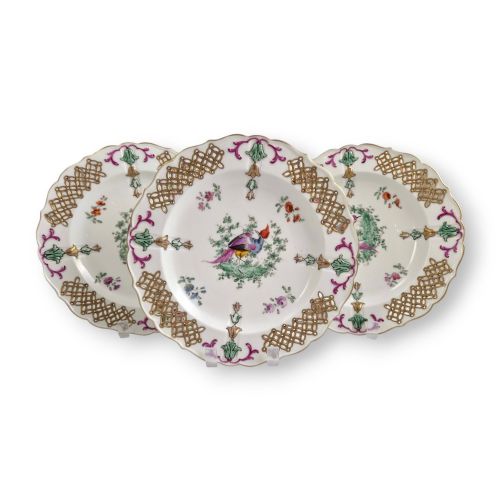
- Ornamented with an openwork network or mesh pattern, commonly seen on the borders of fine nineteenth-century porcelain dessert plates. This intricate piercing requires skilled ceramic manufacturing.
- Armorial
- Bearing a heraldic coat of arms, frequently hand-painted onto porcelain cabinet plates or commissioned for specific prominent families. These pieces often record specific lineages and crests.
Victorian Painted Display Cabinet: Frequently Asked Questions
How do I care for the painted surface?
Dust gently with a dry, soft cloth and avoid chemical cleaning products that might lift or soften historic paint layers.
Keep the cabinet away from direct sunlight and fluctuating humidity to protect both the timber carcase and the delicate interior decoration.
Can shelves be adjusted inside?
Many nineteenth-century examples feature adjustable shelving supported by wooden bearers or metal tracks to accommodate varying heights of porcelain and books.
Heavier display pieces require stable support, so check that shelf fixings remain secure before loading heavy ceramic plates or collections.
Where were these cabinets placed originally?
Formal variants stood in drawing rooms and parlours to showcase imported porcelain, cabinet plates, and prized literary volumes behind glass.
Utility or country versions served in kitchens and pantries, holding everyday wares while adding bright colour to domestic spaces.
How do I distinguish regional styles?
English country pieces often utilise simpler pine construction with straightforward painted finishes, whereas French and urban salon variants display satinwood or mahogany with elaborate gilt details.
Examining the underlying timber and the application of paint helps trace whether a piece originated from a rural workshop or a metropolitan cabinet maker.