


Victorian Oval Wall Frame
A victorian oval wall frame brings warmth and focused reflection to a room, holding either a mirror or a portrait.
Victorian Oval Wall Frame
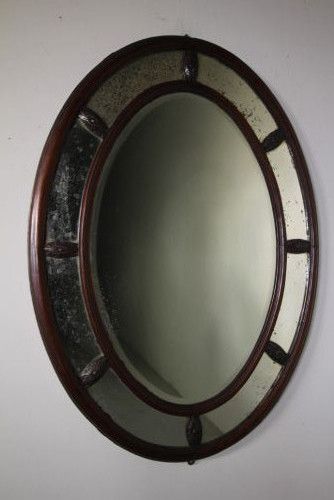
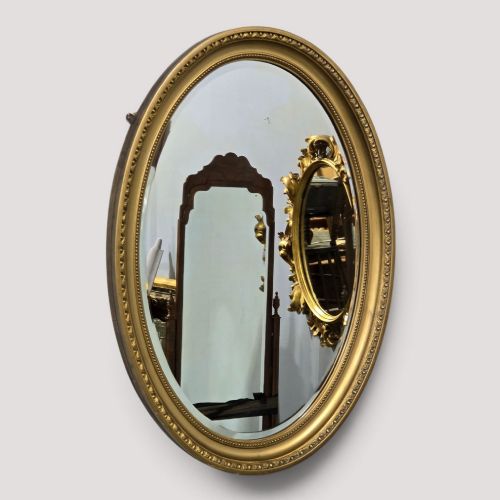
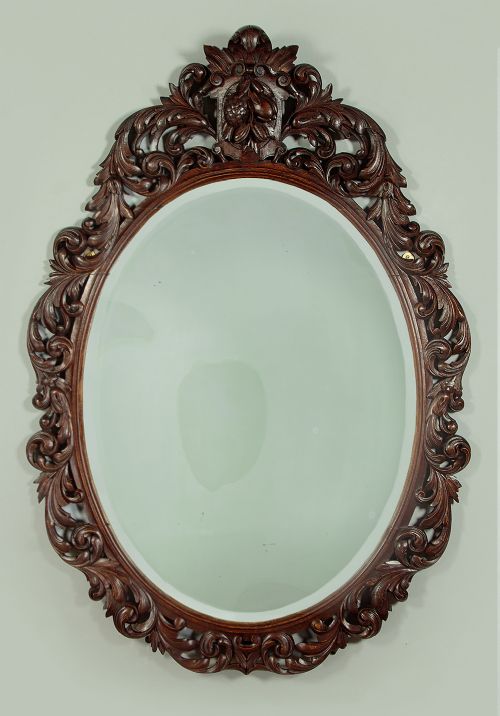
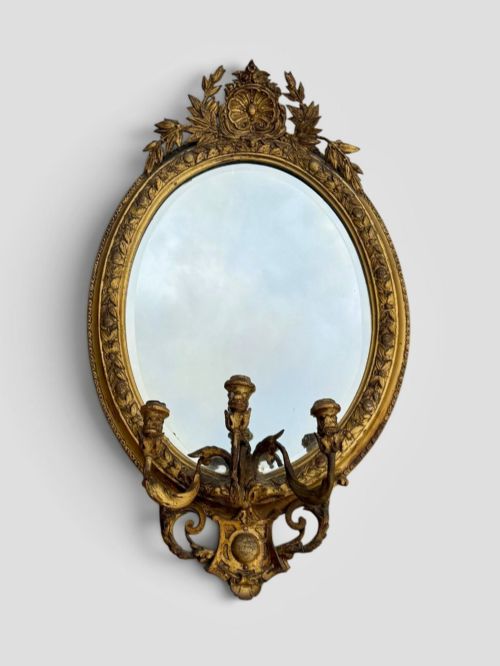
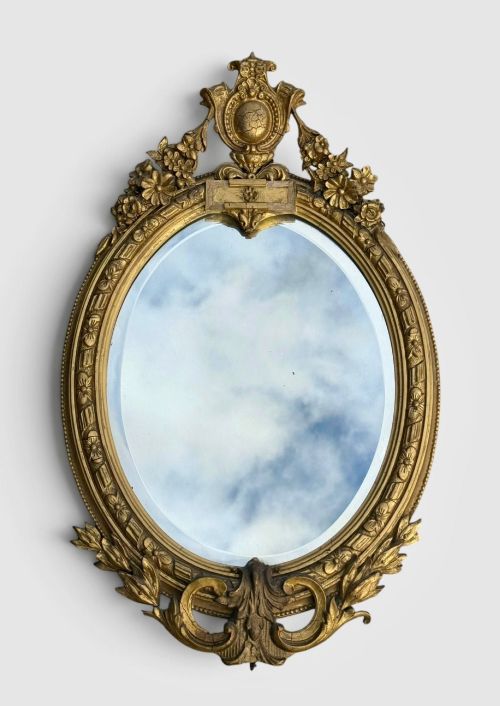
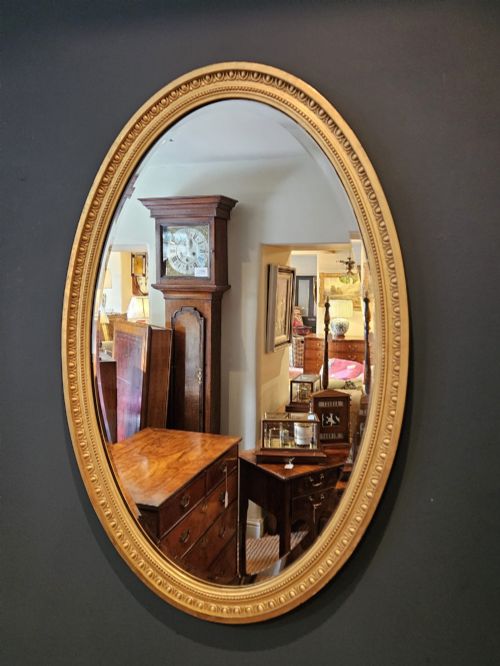
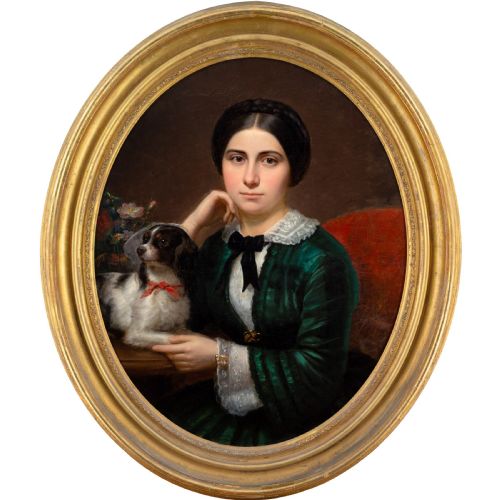
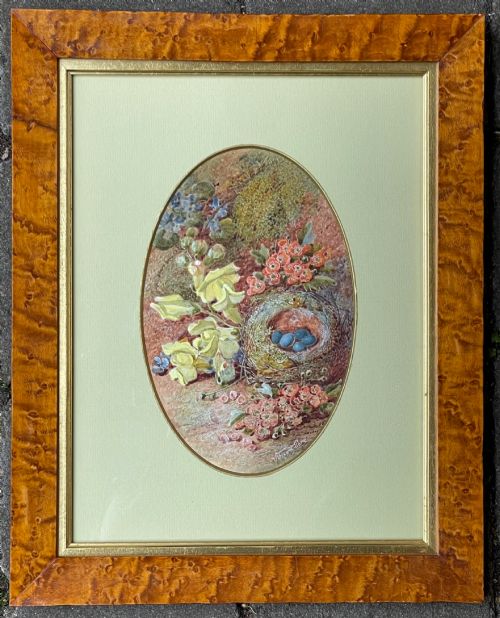
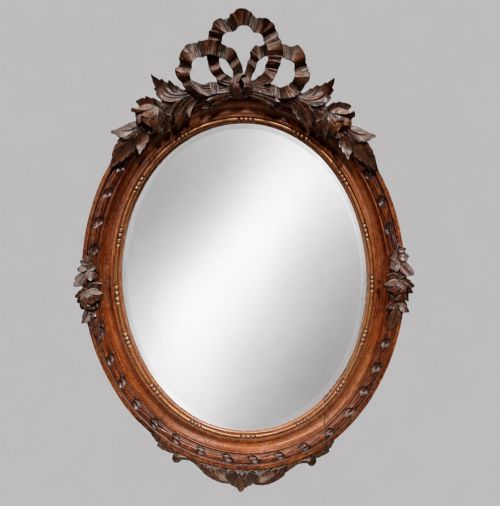
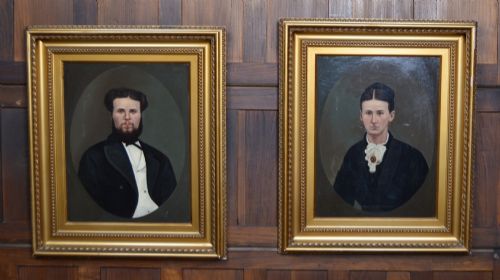
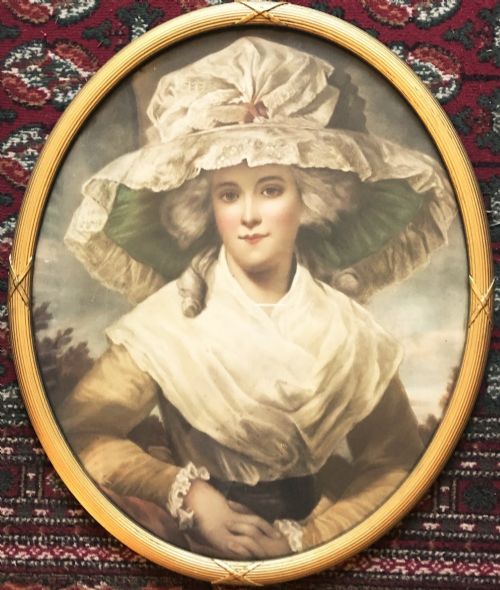
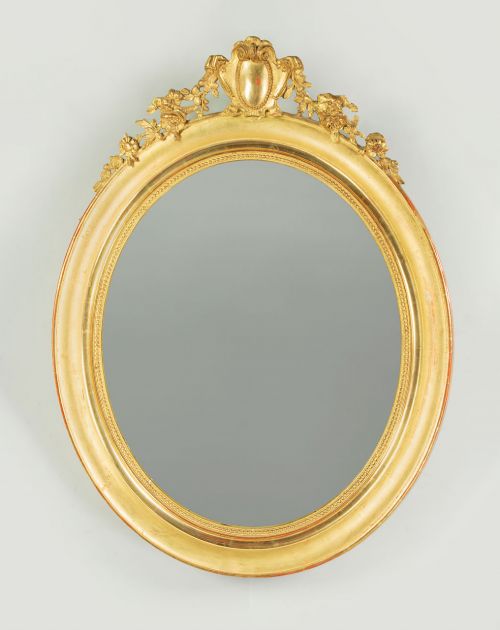
A victorian oval wall frame encompasses both the decorative surrounds housing oil paintings, watercolours and prints, and the ornate frames built specifically around wall mirrors. These pieces date principally from the nineteenth century, ranging from mid-century examples to later turns of the century.
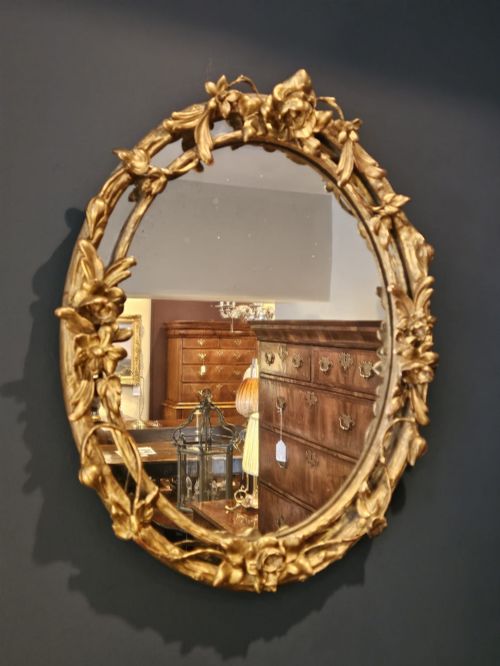
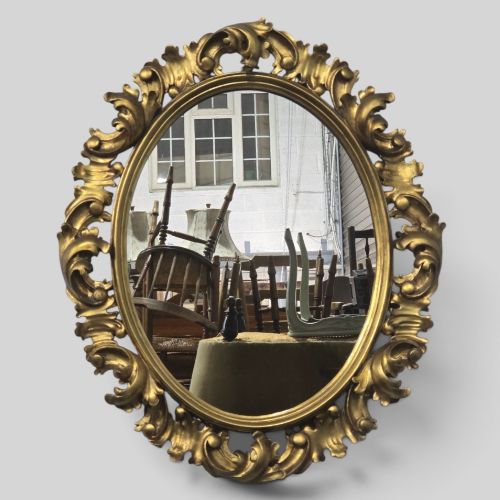
The version most commonly encountered on this page is the gilt wood and gesso mirror, often richly carved with decorative motifs such as vine leaves or styled in the French taste. Mahogany and ebonised timber frames also appear regularly, alongside glazed surrounds protecting portrait watercolours and oil paintings.
How They Were Made
Makers constructed the structural carcasses of these pieces from timber such as mahogany, oak, or ebonised wood, providing a solid foundation for hanging. Many ornate surrounds incorporated moulded gesso or composition applied over a wooden base to hold intricate relief decoration.
Guilders applied gold leaf or gilt finishes over the prepared surfaces, sometimes combining parcel-gilt details with dark painted timber. Mirrors utilised thick glass plates, while frames for artwork enclosed canvas, paper, or panel paintings under glass.
Several Victorian oval frames hold spirited portraits of young ladies wearing bonnets, accompanied faithfully by their dogs.
What Varies in Quality
The depth and crispness of the carving distinguish finer examples from simpler production, particularly where gesso ornaments meet the wooden rails. Deeply modelled foliage and scrollwork demonstrate superior craftsmanship compared to shallow, unrefined mouldings.
The integrity of the gilding and the preservation of the original surface finish dictate the standing of a piece. Hand-applied gold leaf retains a warmer lustre than later painted interventions, while untouched timber frames show superior ageing.
Dumini Leopoldo·Vincent Clare·J Bizo
The Victorian Oval Wall Frame Glossary
- Gesso
- A plaster-like mixture applied to wood frames to create a smooth surface for carving or gilding. It allows for intricate relief ornamentation.
- Giltwood
- Timber that has been coated with gold leaf. This finish defines many nineteenth-century decorative wall mirrors.
- Girandole
- A wall mirror featuring attached candle sconces. The reflective glass multiplies the flickering light of the candles.
- Parcel-gilt
- Partially gilded woodwork where only specific carved elements or raised details receive gold leaf against a contrasting painted ground.
- Cushion mirror
- A frame profile featuring a convex, sloping border that draws the eye inward toward the central glass plate.
Victorian Oval Wall Frame: Frequently Asked Questions
How do I hang a heavy antique oval mirror safely?
These heavy wooden and gesso frames require secure wall fixings distributed evenly across the hanging points on the back. Professional picture hangers use wall anchors suited to the specific masonry or plaster structure.
Ensure the original framing joints and hanging rings on the reverse remain stable before mounting the piece at eye level.
Can I place an oval wall frame in a bathroom?
The high humidity in bathrooms can damage nineteenth-century gesso, gold leaf, and exposed timber frames. Moisture causes the plaster composition to soften and the wooden joints to warp over time.
Display these pieces in drier reception rooms, hallways, or bedrooms where temperature and humidity remain stable.
How do I clean a giltwood frame?
Dust the carved surfaces gently with a soft, dry brush to remove particles without disturbing delicate gesso or gold leaf. Avoid liquid cleaners, polishes, or damp cloths, which strip fragile historic finishes.
Professional conservators should handle any deep cleaning or repair of flaking ornamentation.
How do I date an antique oval frame?
Examine the construction methods, backboards, and fastener types visible on the reverse of the frame. Nineteenth-century pieces often display hand-cut woods, early screw heads, or traditional gesso application techniques.
Stylistic cues such as rococo revival scrolls or ebonised finishes also point to specific decades within the Victorian era.