



Victorian Oval Accent Table
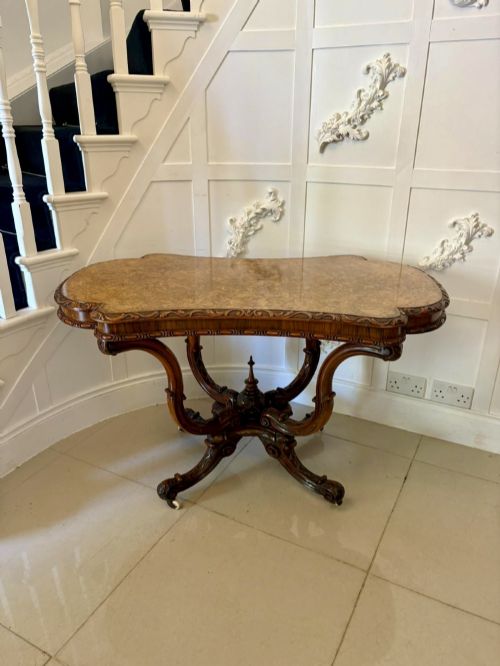
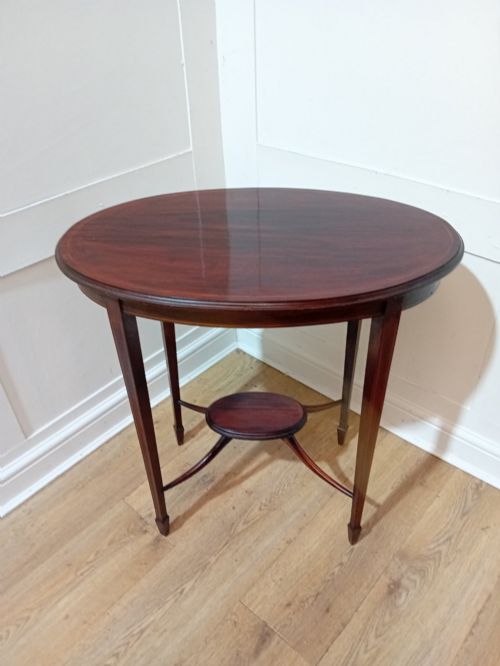
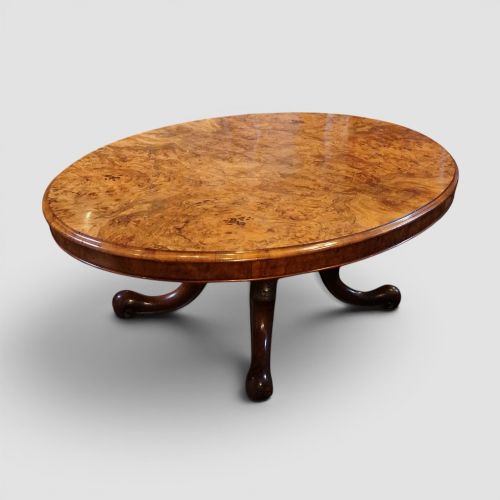
These Victorian oval accent table selections bring rich burr walnut and delicate marquetry into the home.
Victorian Oval Accent Table
A victorian oval accent table typically serves as an occasional, centre, or lamp table designed for parlor use. The walnut and mahogany versions appearing here reflect the domestic requirements of the nineteenth century.
Makers produced these pieces in various configurations, including drop-leaf Sutherland tables, tiered display stands, and static occasional tables. Walnut and burr walnut dominate the forms, frequently enriched with boxwood and satinwood inlay.
Materials and Technique
Cabinetmakers utilised figured timbers like burr walnut and mahogany over solid secondary woods, applying fine marquetry and floral inlay across the oval tops. Boxwood and satinwood stringing often borders the main panels.
Structural elements rely on traditional joinery, incorporating turned pedestals, stretcher bases, and gate legs for drop-leaf variants. Brass mounts and hand-carved foliate details appear on select examples from the period.
Victorian Oval Accent Table Retail Price Guide 2026
Typical asking prices for victorian oval accent table among the pieces listed under this phrase on Sellingantiques today, from the lower quarter to the upper quarter. They describe what is for sale here now, not the wider market.
Listings feature woods spanning walnut, mahogany, rosewood, and exotic specimen timbers alongside brass and ceramic components.
Judging the Standard
Depth of timber figure and crispness of marquetry inlay separate standard examples from finer works. The selection of burr walnut with rich grain patterns indicates superior material choice.
Hand-carved foliate details and the integration of secondary woods such as satinwood or boxwood demonstrate the maker's skill. Proportions and the stability of the central pillar or leg assembly dictate the overall integrity of the piece.
Edwards and Roberts
The Victorian Oval Accent Table Glossary
- Burr walnut
- Timber taken from the wart or burl of the walnut tree, showing intricate, swirling grain patterns. This highly prized veneer defines the aesthetic of many nineteenth-century centre tables.
- Marquetry
- Decorative woodwork where pieces of veneer are fitted into a ground material to form geometric or floral designs. It requires immense precision from the craftsman.
- Sutherland table
- A narrow drop-leaf table with hinged flaps supported by pivoting legs. This form maximises floor space when folded.
- Occasional table
- A small, movable table intended for auxiliary use in a reception room. These pieces appear frequently in various woods and revival styles.
Victorian Oval Accent Table: Frequently Asked Questions
What rooms suit these oval tables best?
These compact pieces fit comfortably beside seating in a living room or as a central display surface in a hallway. Their rounded edges soften the geometry of modern interiors.
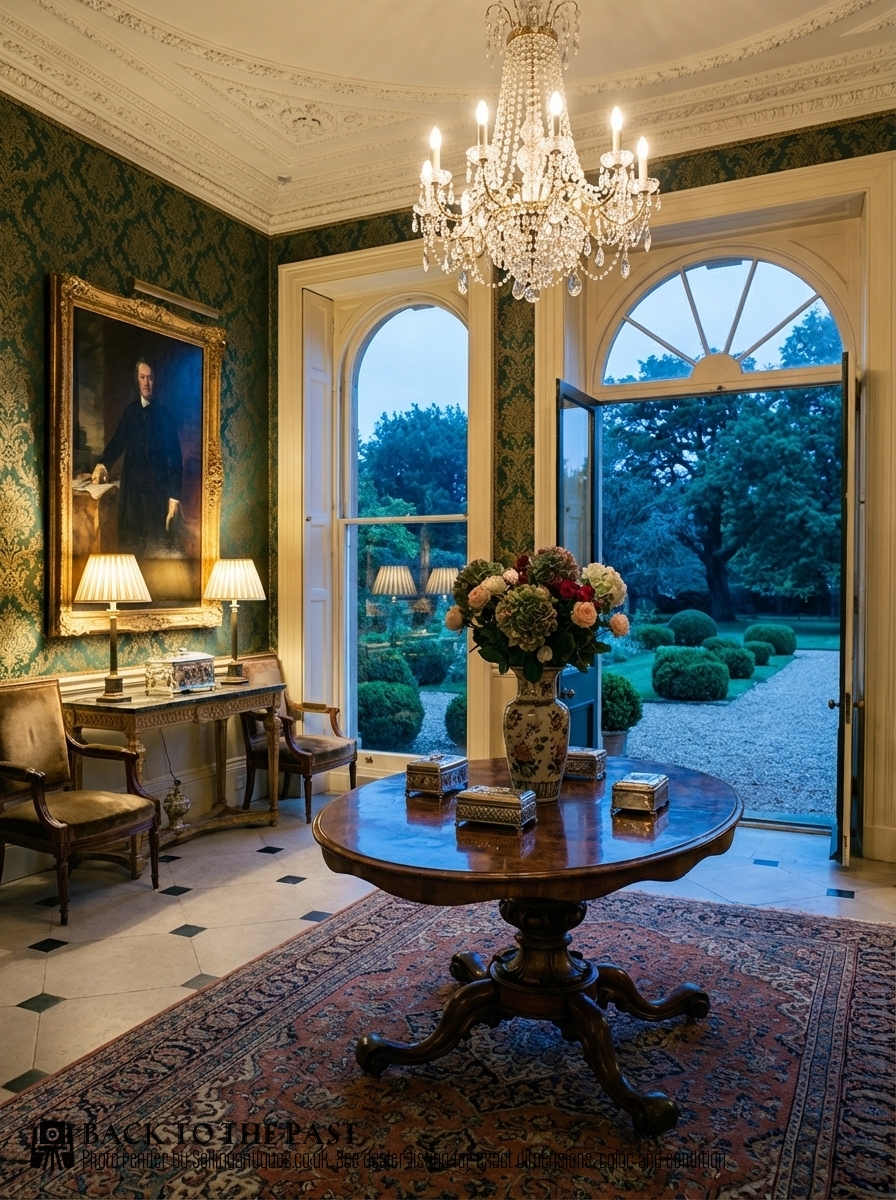
Larger centre versions anchor a room when placed upon a carpet, providing a stable platform for lamps or books.
How do I care for burr walnut veneer?
Keep walnut furniture away from direct sunlight and heat sources to prevent the delicate veneer from drying and lifting. Regular dusting with a dry, soft cloth maintains the polished finish.
Apply a traditional beeswax polish sparingly when the wood appears dry, buffing gently along the grain.
What is a Sutherland table?
A Sutherland table is a narrow drop-leaf design with gate legs that swing outward to support the folding flaps. This ingenious mechanism allows the table to fold flat against a wall when not in use.
Victorian examples often feature slender turned legs and castors for ease of movement.
How do Sheraton revival pieces differ?
Sheraton revival items adopt the lighter proportions and neoclassical motifs of the late eighteenth century. They frequently showcase satinwood and delicate stringing.
Original pieces from the nineteenth century retain the distinct patination and construction methods of the revival period.