



Victorian Oil Lamp Globe
These Victorian oil lamp globes are decorative glass shades that scatter soft light, bringing period warmth to any room.
Victorian Oil Lamp Globe
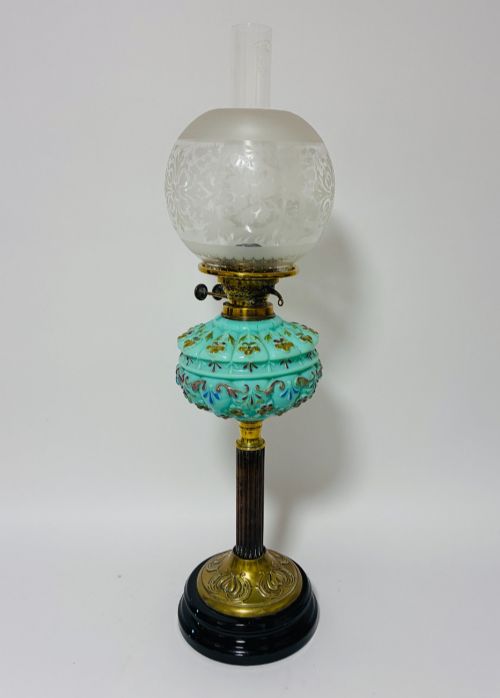
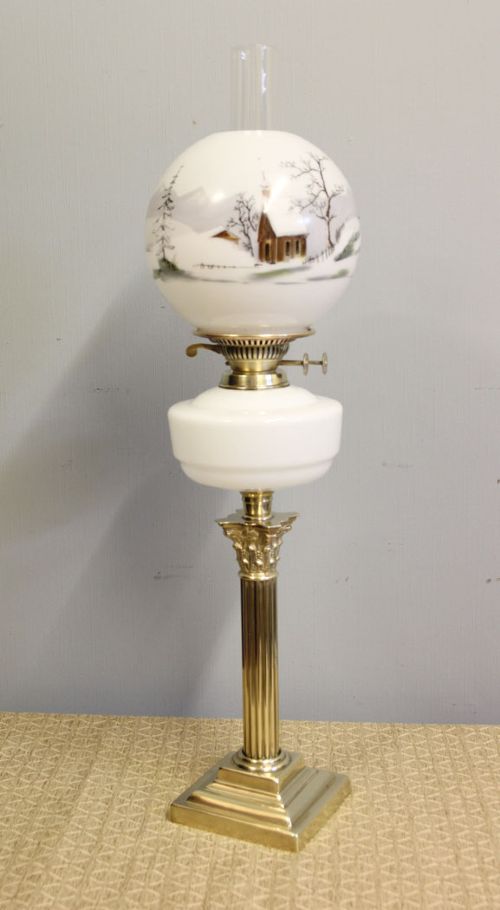
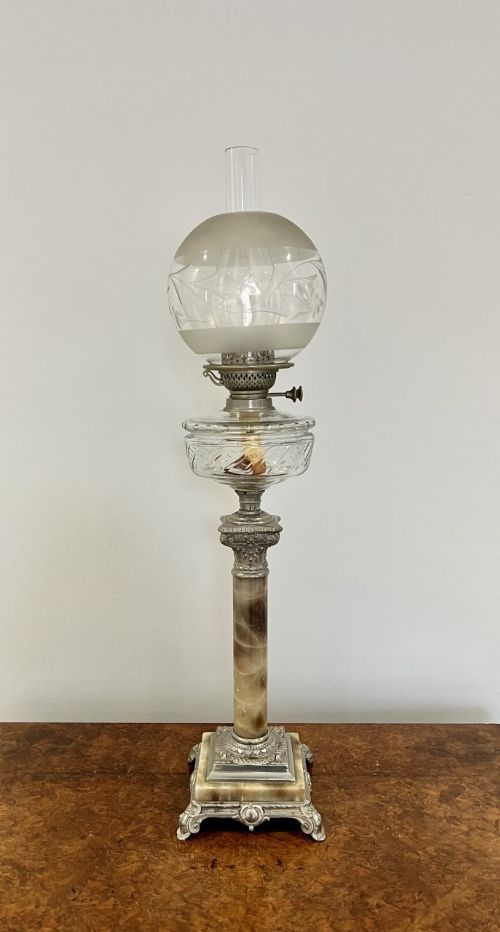
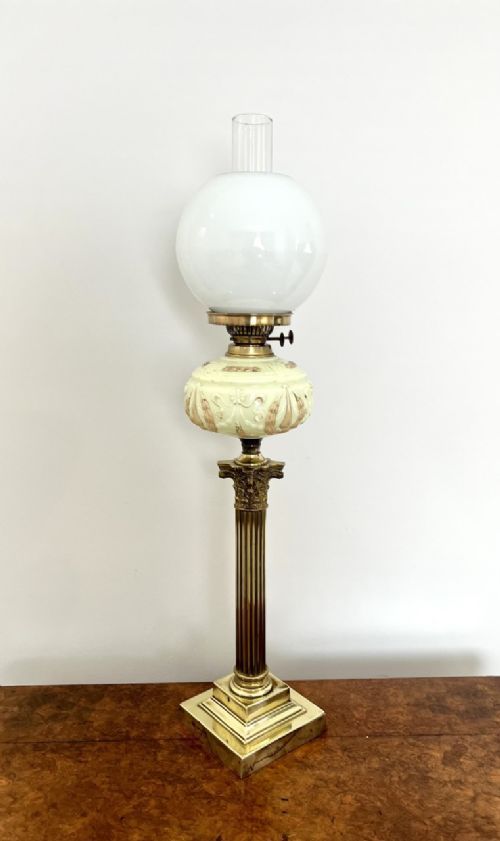
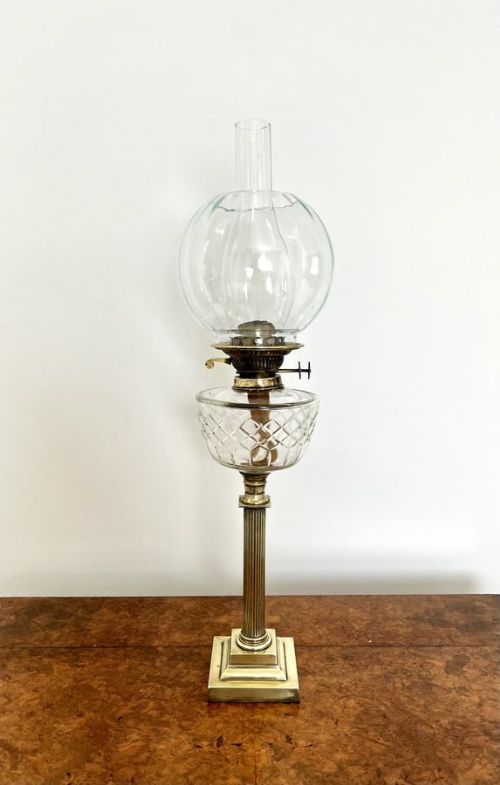
A victorian oil lamp globe is a decorative glass shade designed to fit above the burner of a period lighting fixture, diffusing the flame's glare. The pieces found here span the Victorian, Edwardian, and nineteenth-century periods, alongside later twentieth-century examples.
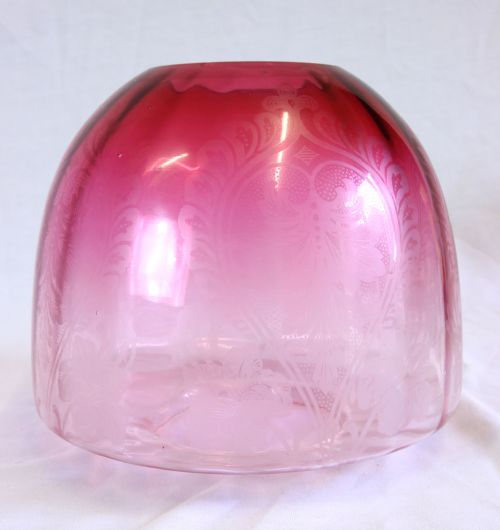
The materials reflect the tastes of the nineteenth century, ranging from simple opaline glass to deeply coloured cranberry and green glass. Styles shift from traditional Victorian designs to flowing Art Nouveau and Chinese Export motifs.
How they were made
Makers shaped these globes from glass, utilising techniques of mould-blowing and hand-etching to achieve varied opacity and surface pattern. Cranberry and green glass gained their distinctive hues through the addition of metallic oxides during the molten stage.
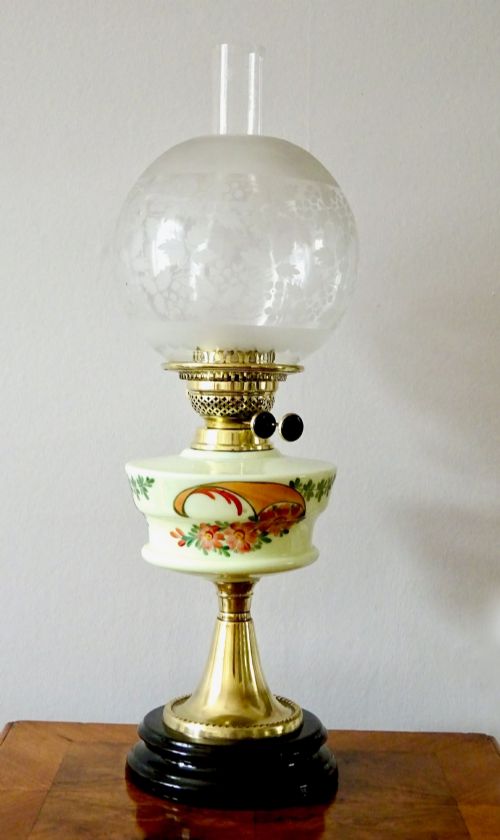
Brass, bronze, and ceramic components were cast, turned, and assembled to form the stands, fonts, and collars that support the delicate glass shades. Etched glass globes received their designs through wheel-cutting or acid-etching before final assembly.
Materials recorded across the inventory encompass opaline glass, cranberry glass, etched glass, brass, bronze, onyx, and faience.
What varies in quality
The distinction between standard and superior pieces rests on the weight of the metal stands and the depth of colour in the glass. Heavy brass bases and finely layered cranberry or opaline glass indicate a higher grade of manufacture.
Execution of decorative detail also separates tiers of quality, seen in crisp, hand-etched botanical motifs on the glass and cleanly cast bronze or brass mounts. Complete pairings of original font and matching shade command greater interest than assembled combinations.
Hinks of Birmingham·Messengers·Harrods·Gaggenau
The Victorian Oil Lamp Globe Glossary
- Cranberry Glass
- A rich red-pink glass coloured with gold chloride, popular for Victorian shades and vessels. It creates a warm, rosy glow when light passes through the glass.
- Opaline Glass
- A translucent white glass that diffuses light evenly without harsh glare. This material was widely utilised for Victorian and Edwardian lamp shades.
- Font
- The oil reservoir of the lamp, positioned beneath the burner and above the base. Fonts in the evidence utilise brass, ceramic, onyx, and coloured glass.
- Art Nouveau
- A decorative style characterised by flowing, organic lines and floral motifs. Pieces from this movement often incorporate stylised plant forms in bronze and glass.
- Terrestrial Globe Shade
- A spherical glass shade painted or etched to resemble a map of the earth. These uncommon globes sit atop nineteenth-century table lamps.
Victorian Oil Lamp Globe: Frequently Asked Questions
How do I clean a glass globe?
Wash the glass gently in warm soapy water using a soft cloth, avoiding harsh abrasives that might damage etched patterns or coloured surfaces.
Dry the piece thoroughly with a lint-free cloth before placing it back onto the brass collar of the lamp.
Can I use modern bulbs inside these?
Many of these lamps have been converted to electricity, allowing the safe use of low-wattage LED bulbs that mimic the warmth of an oil flame.
Check the internal wiring or consult a qualified electrician to ensure the fitting matches modern safety standards before plugging it in.
How do I match a shade to a base?
Look at the fitter rim diameter at the base of the glass globe to ensure it matches the gallery or brass ring of the oil lamp.
Consider the period and material of the base, pairing opaline or cranberry glass with brass or ceramic bodies from the corresponding decade.
What makes cranberry glass red?
Cranberry glass achieves its distinct pink-red coloration through the addition of a gold compound to the molten glass batch.
When heated and blown, the gold particles suspend within the glass matrix to produce the characteristic translucent tone seen on Victorian shades.