

Brass Burner Paraffin Light
These brass burner paraffin light pieces are nineteenth and early twentieth century lamps that bring functional period illumination into modern spaces.
Brass Burner Paraffin Light
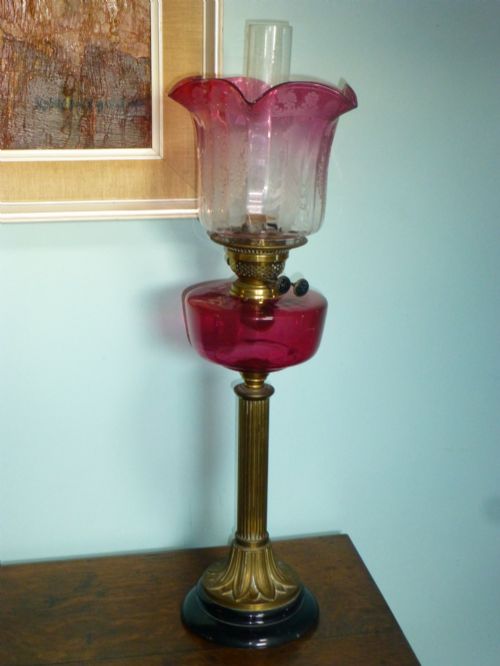
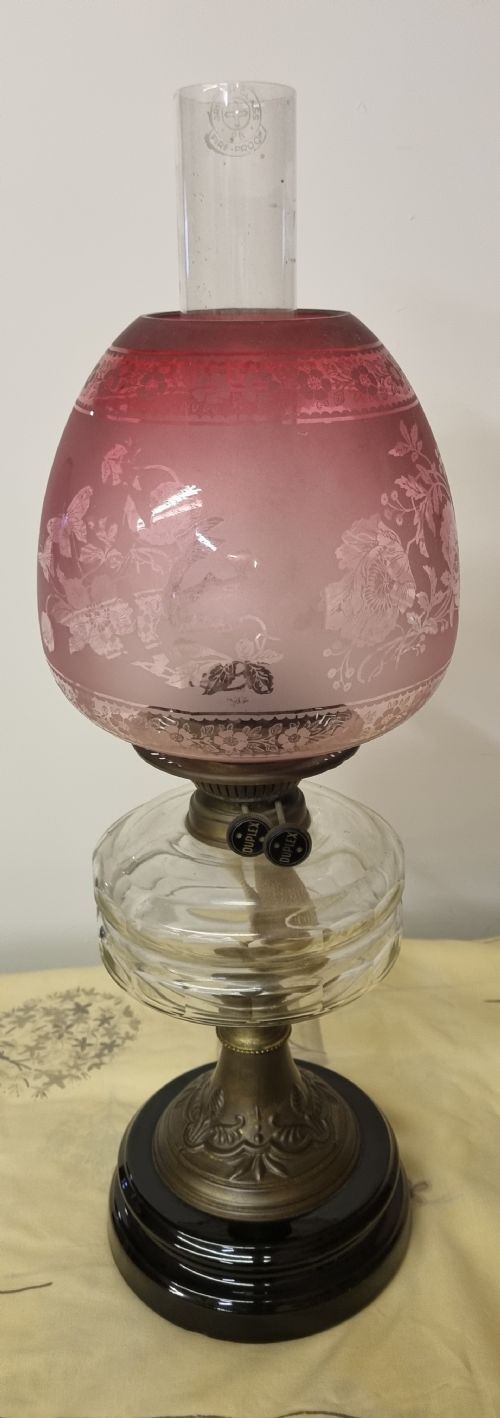
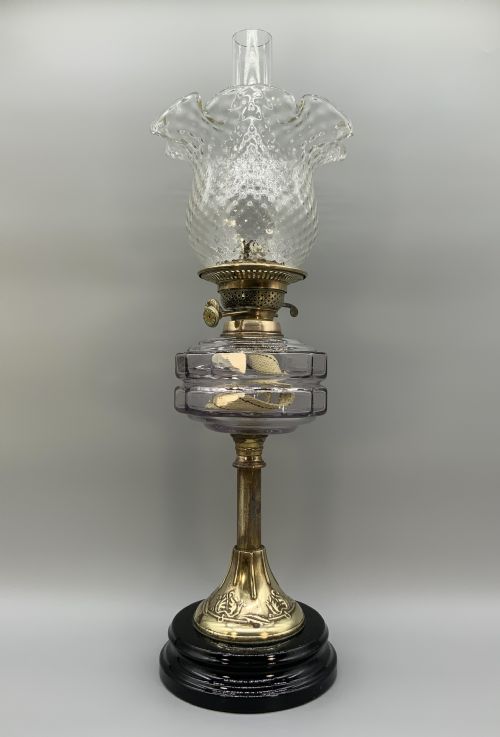
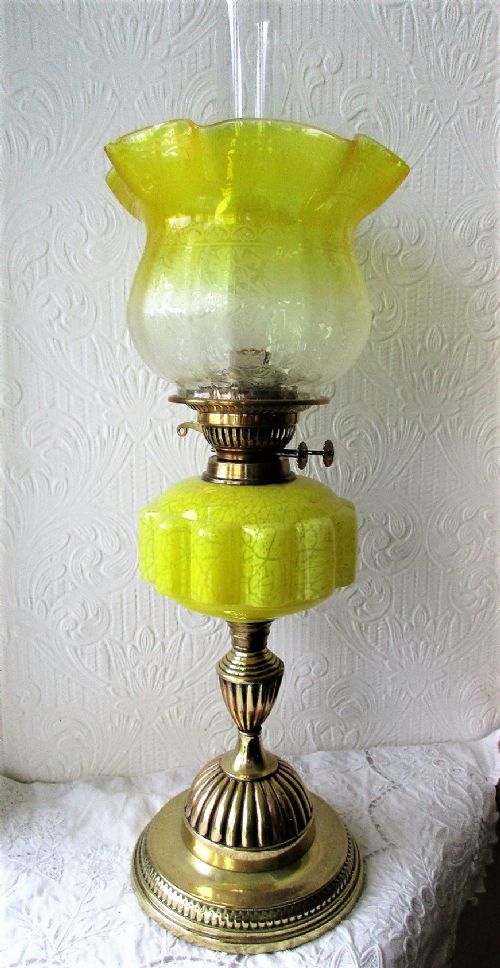
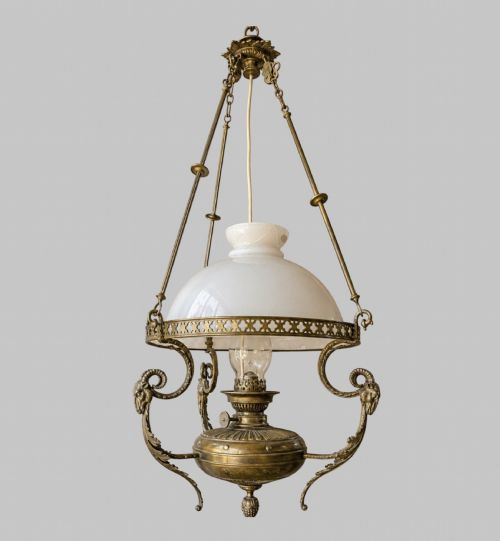
A brass burner paraffin light takes the form of table lamps, ceiling lights, and oil lamps originating across the Victorian, Edwardian, and Art Nouveau periods. These objects combine metal reservoirs and columns with decorative shades designed to burn paraffin oil safely.
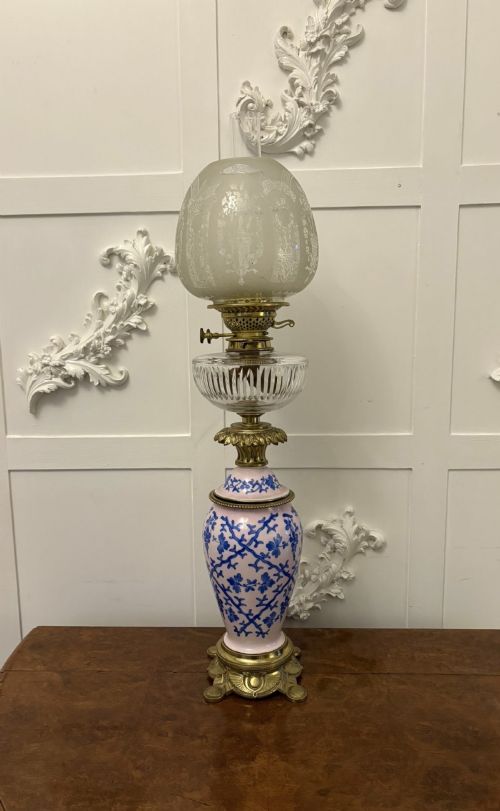
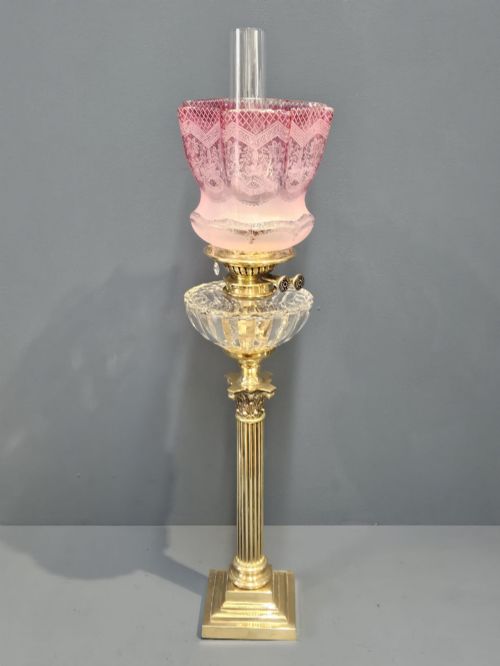
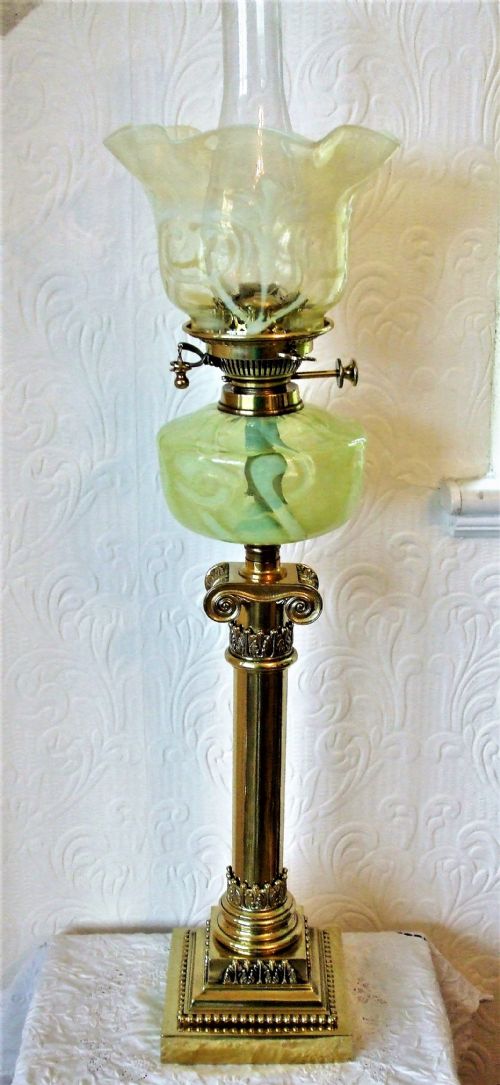
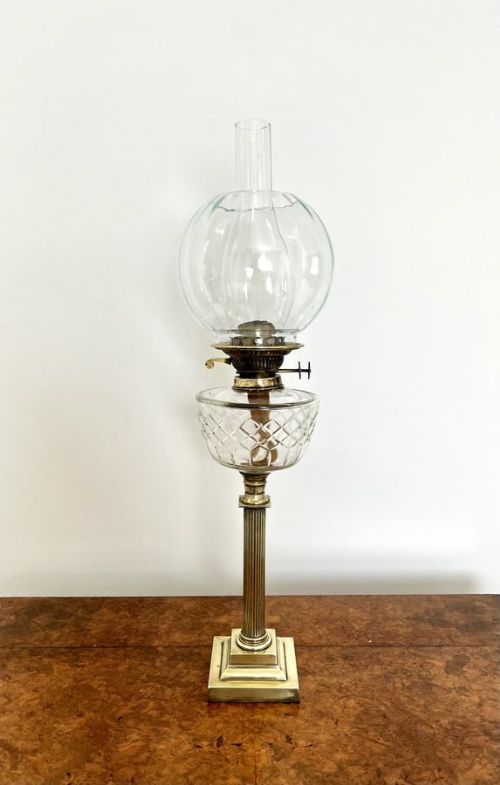
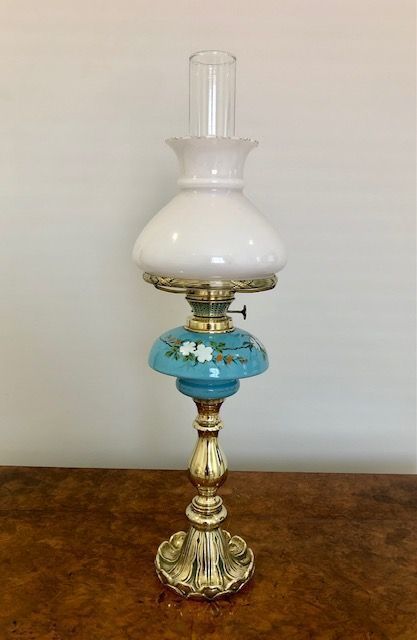
The most common examples encountered here are Victorian and Edwardian table lamps featuring classical Corinthian or Ionic brass columns paired with coloured glass fonts and shades. These pieces range from simple domestic lighting to large duplex double burner models designed for greater illumination.
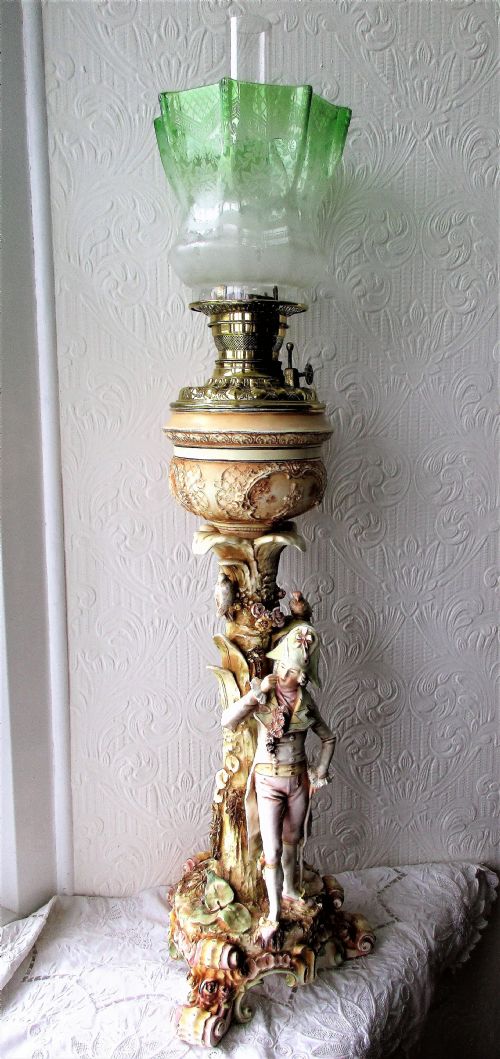
Form and material vary significantly, encompassing figural porcelain bases, telescopic brass stands, and pulpit heater styles alongside standard domestic oil lamps. Many pieces integrate specialised mechanisms and named burner assemblies from the nineteenth century.
Materials and construction methods
Makers constructed these lamps using heavy cast and spun brass for the structural columns, reservoirs, and burner mechanisms, frequently combining them with ceramic or copper elements. Metal components were often polished, turned, or plated to create varied reflective surfaces.
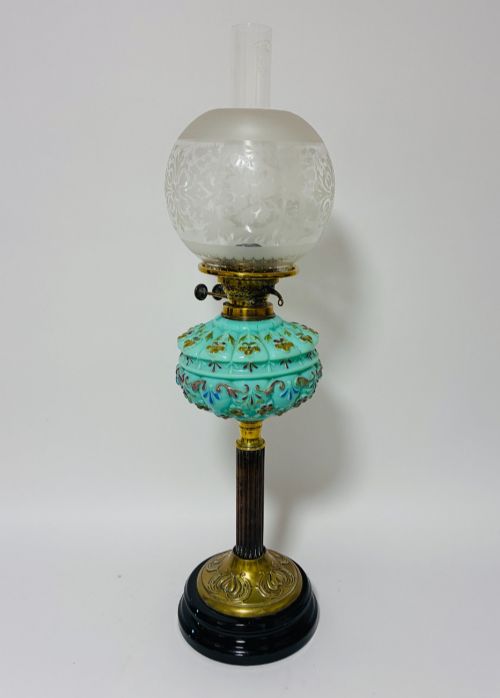
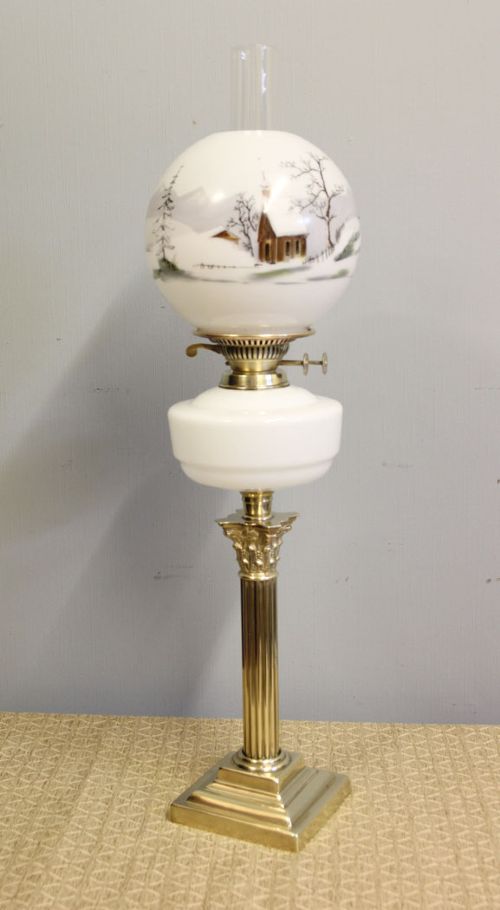
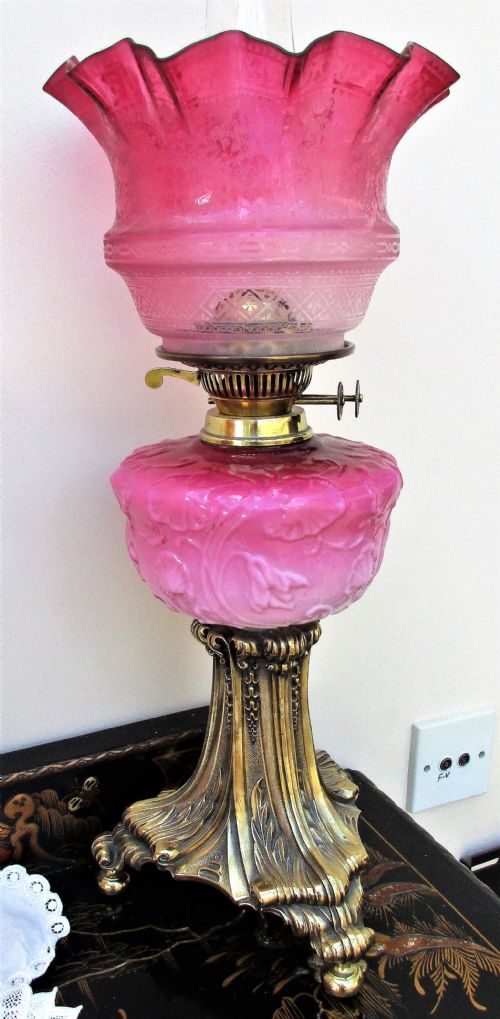
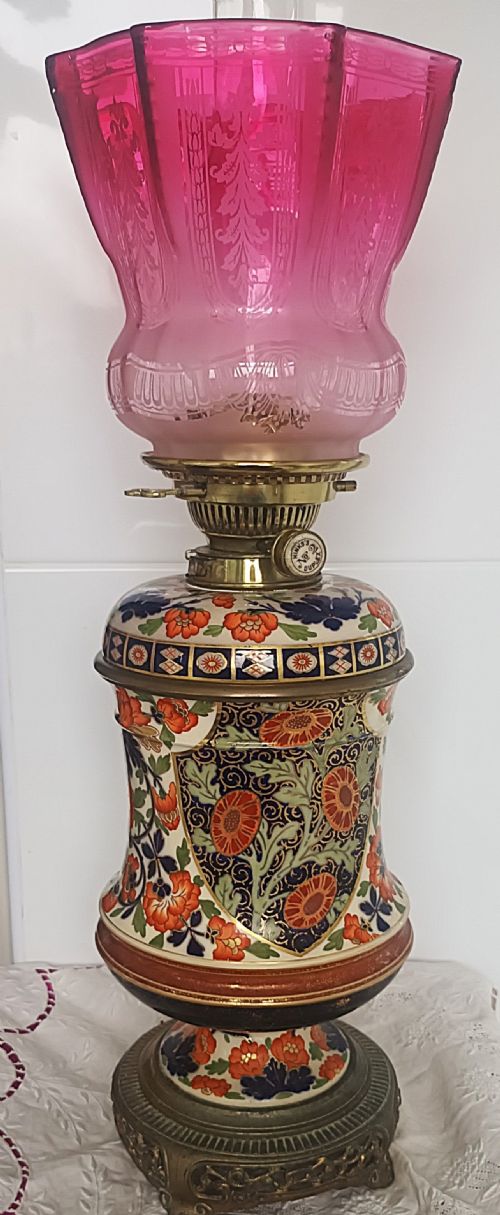
The reservoirs and shades utilise artisan glass techniques, including hand-blown cranberry glass, opaline glass, cut glass, and etched glass tulip designs. Botanical motifs, winter scenes, and solid colour tints were applied directly during the glassmaking process.
Some Victorian columns wear tiny manufactured acanthus leaves so sharp they could practically scratch an unwary thumb.
Assessing quality in period lamps
Quality rests upon the weight and crispness of casting in the brass columns, particularly in architectural details like Corinthian capitals and stepped bases. Superior examples maintain intact original burner mechanisms and well-matched components rather than later replacements.
The artistic merit of the glass font and shade elevates a piece, distinguishing standard clear glass reservoirs from hand-blown cranberry or finely etched tulip shades. Proportions, scale, and the retention of maker-stamped burners also differentiate finer manufacturing.
Hinks·Taylor Tunnicliff·Wild And Wessel
The Brass Burner Paraffin Light Glossary
- Duplex burner
- A double-wick burner system designed to provide greater light output than standard single-wick paraffin lamps. This mechanism requires two independent thumbwheels to raise and lower the wicks.
- Font
- The oil reservoir of the lamp, typically positioned above the base and below the burner. Fonts are frequently manufactured from coloured glass, porcelain, or matching brass.
- Corinthian column
- A classical architectural column style featuring ornate acanthus leaf decoration on the capital. This design is widely utilised in nineteenth-century brass oil lamp standards.
- Peg lamp
- A small oil lamp fitted with a tapered lower metal peg designed to drop directly into a candlestick or specialised base. These portable units allowed flexible placement around a room.
- Opaline glass
- An opaque, milky-white glass popular during the Victorian and Edwardian eras. It diffuses light softly and was frequently formed into shades for paraffin lamps.
Brass Burner Paraffin Light: Frequently Asked Questions
How do these lamps work?
These lamps draw paraffin oil up through a fabric wick via capillary action to a metal burner at the top. Turning the thumbwheel adjusts the exposed wick height to control the flame and light output.
Air is drawn through the gallery and beneath the glass chimney to ensure a steady, clean burn without excessive smoke.
Can I still burn paraffin in them?
While these items retain their original mechanical function, most collectors today convert or maintain them purely for decorative display. Using them as working lamps requires specialist safety checks on the fuel reservoir and wick condition.
Modern safety standards recommend treating vintage lighting as display objects rather than everyday household illumination.
How do I date a brass lamp?
Dating relies on stylistic clues such as the classical column orders of the Victorian era versus the flowing organic lines typical of Art Nouveau pieces. Burner patents and manufacturer stamps stamped into the metal also provide precise production windows.
Glass types, such as cranberry or satin glass, help narrow the period of manufacture alongside the presence of registration marks.
What is a duplex burner?
A duplex burner uses two parallel flat wicks housed side by side within a single large gallery to generate a brighter flame. This dual-wick system requires a wider chimney to properly manage the increased heat and combustion.
They appear frequently on larger nineteenth-century table lamps where maximum illumination was required.