


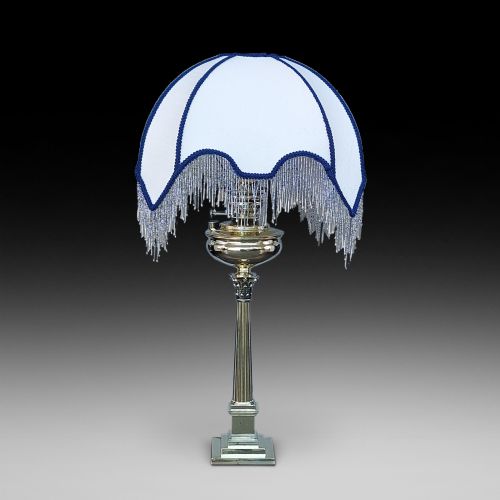


Late Victorian Oil Lamp
A late victorian oil lamp brings the warm glow of the nineteenth century into a modern room with substantial brass and coloured glass.
Late Victorian Oil Lamp
A late victorian oil lamp is a domestic lighting fixture designed to burn paraffin or other oils before the widespread adoption of electricity. You will frequently encounter heavy brass table models and tall floor standing standard lamps alongside examples featuring ceramic or coloured glass reservoirs.
The objects span the Victorian period into the early twentieth century, reflecting both traditional classical revivals and emerging aesthetic movements. Table and floor versions dominate the selection, often incorporating extending brass columns or decorative columns.
Origins range from English manufacture to French workshops, utilising materials that survived a century of use. Buyers seek these pieces for their combination of heavy metalwork and decorative glass components that capture period interior style.
Materials and construction methods
Makers built the structural components using cast and spun brass, copper, and silver plated metal, frequently mounting them on heavy black glass or metal bases for stability. Standard lamps often employed extending telescopic brass columns to adjust the height of the light source.
Reservoirs and shades utilised pressed, blown, and cut glass, including cranberry glass, yellow glass, and blue glass, sometimes embellished with applied glass beads or fabric shades. Ceramic and porcelain inserts provided contrasting colour and texture to the metallic framework.
The inventory records pieces incorporating brass, copper, silver plate, ceramic, and multiple shades of coloured glass.
Assessing quality and execution
Quality rests in the weight of the metal casting, the crispness of classical detailing such as Corinthian column capitals, and the depth of colour in the glass reservoirs. Superior pieces display substantial gauge brass and complex mechanisms rather than thin pressings.
The integration of mixed materials, such as combining gilt brass with porcelain or pairing copper with brass, dictates the level of ambition in the original manufacture. Examples bearing identifiable maker marks or specialist mechanisms demonstrate higher workshop status.
W Watson & Sons·Hinks·Palmer & Co·Evered
The Late Victorian Oil Lamp Glossary
- Standard lamp
- A tall floor standing lamp designed to illuminate a room from a standing position rather than resting on a table. These often feature weighted bases and extending telescopic shafts.
- Corinthian column
- A classical architectural column style featuring ornate acanthus leaves on the capital, frequently utilised for the stem of high quality metal lamps. This design reflects the nineteenth century fascination with classical antiquity.
- Cranberry glass
- A rich red transparent glass coloured with gold chloride during production, highly popular for Victorian tableware and lighting reservoirs. Its distinctive hue glows warmly when the lamp is lit.
- Reservoir
- The container that holds the lamp oil beneath the burner mechanism, usually fashioned from glass, ceramic, or metal. The visual appeal of the lamp often depends on the colour and cut of this specific vessel.
Late Victorian Oil Lamp: Frequently Asked Questions
How do I operate a late victorian oil lamp?
Operating these lamps involves filling the reservoir with modern liquid paraffin and trimming the cotton wick before lighting. You must handle the glass shade carefully to avoid thermal shock.
Most original burners feature thumb wheels to raise or lower the wick, controlling the size of the flame and preventing smoke. Modern users typically keep them unlit as decorative objects.
Are these lamps safe to use today?
Using them with burning oil requires caution due to the age of the brass components and delicate glass reservoirs. Many collectors choose to display them purely as decorative antiques.
If you intend to burn oil, inspect the inner reservoir for hairline cracks and ensure the burner mechanism fits securely. Professional rewiring is necessary if someone has converted the lamp to electricity.
What is a standard oil lamp?
A standard oil lamp is a tall floor standing lighting fixture designed to illuminate a room from a position beside furniture. They often incorporate extending brass columns to adjust the height.
These pieces required a heavy weighted base to remain stable on carpets and floorboards during the nineteenth century. Their substantial presence makes them prominent focal points in period interiors.
How do I identify the period of a lamp?
Dating relies on stylistic clues such as the transition from heavy rococo revival forms to cleaner art nouveau lines. Materials like cranberry glass and silver plated brass indicate late nineteenth century manufacture.
Maker names stamped on the brass burner thumb wheels provide the most accurate chronological anchor. Examining the construction techniques of the metal collar also reveals the period of production.