
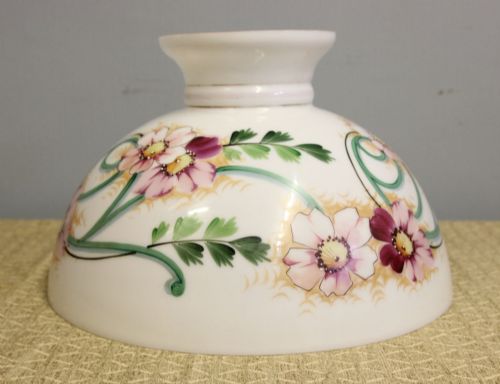


Milk Glass Oil Lamp
A milk glass oil lamp brings a soft, diffused glow to a room, combining opaque white glass with brass and ceramic components.
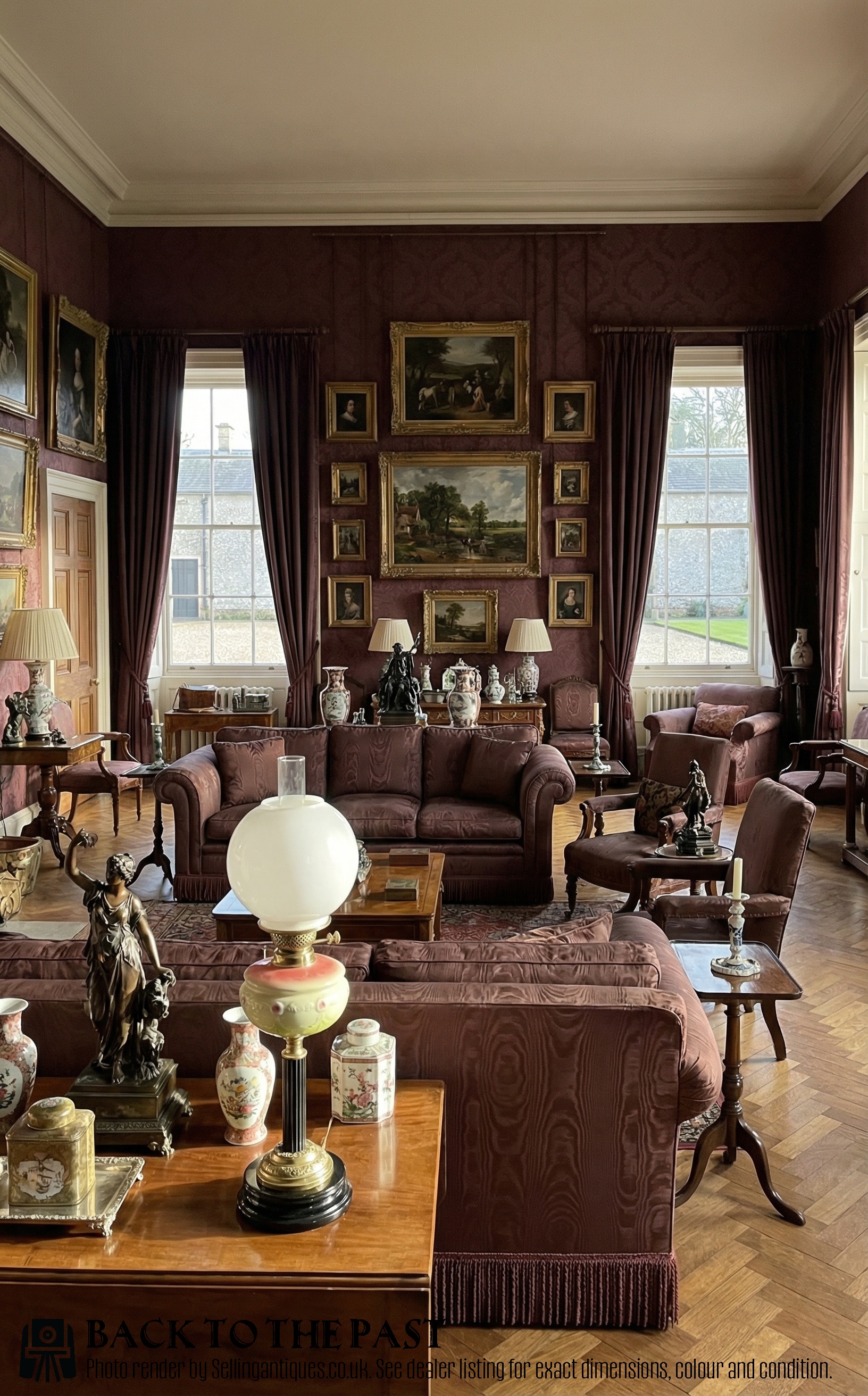
Milk Glass Oil Lamp
When you search for a milk glass oil lamp, you enter a field of nineteenth and early twentieth century lighting spanning the Victorian and Edwardian eras. These domestic lamps combine opaque white glass reservoirs or shades with sturdy bases of brass, ceramic, marble, or black glass.
The pieces on this page range from complete table lamps dating back to the 1870s and 1880s through to later examples from 1900 and 1910. You will also find related components including hand-painted opaline hanging shades, opaque globes with brass rings, and pineapple lamps.
Many items survive from the height of the Victorian period, whilst others show the transition into Edwardian and later 1920s forms. Some examples have been converted to electricity over time, adapting historical lighting for modern interior use whilst retaining their original aesthetic.
How they were made
Makers utilised mould-blown and pressed glass techniques to shape the opaque milk glass and opaline bodies, often pairing them with cast brass fittings. Ceramic and marble elements were frequently incorporated into the structural bases to provide stability and visual contrast.
Surface decoration on the glass elements commonly involved hand painting and enamelling, creating floral or decorative motifs across the shades and reservoirs. Brass components were polished or left with natural patination, supporting terrestrial glass globes and burners.
Pineapple lamps from 1920 bring a surprisingly tropical silhouette to the traditional world of Victorian paraffin lighting.
What varies in quality
Quality in these lamps rests on the crispness of the glass moulding and the weight of the supporting brass or ceramic base. Heavier, more substantial metal and marble mounts indicate a superior build intended for daily domestic service.
The finesse of the hand-painted enamel decoration separates standard production items from finer decorative pieces. Crisp detailing on opaline shades and well-finished brass rings demonstrate a higher grade of manufacture across Victorian and Edwardian workshops.
The Milk Glass Oil Lamp Glossary
- Milk glass
- An opaque white or translucent glass popular for nineteenth-century tableware and lighting. It diffuses light gently and takes enamel decoration well.
- Brass
- A copper and zinc alloy used extensively for the burners, collars, and structural columns of period lamps. It provides durability and a warm metallic sheen.
- Terrestrial globe
- A rounded glass shade enclosing the flame or bulb. These globes diffuse illumination evenly across the room.
- Enamel
- A fused glassy substance applied to the surface of the glass for decoration. Hand-painted enamel designs add colour and pattern to lamp reservoirs and shades.
Milk Glass Oil Lamp: Frequently Asked Questions
What is a milk glass oil lamp?
A milk glass oil lamp is a period lighting device featuring an opaque white glass reservoir or shade, often paired with brass, ceramic, or marble mounts.
These lamps date primarily from the Victorian and Edwardian eras, combining functional fuel containers with decorative glass art.
How do I date an oil lamp?
Dating relies on stylistic clues, material combinations, and manufacturing techniques recorded across the Victorian, Edwardian, and later periods.
Earlier 1870 and 1880 examples often feature heavier brass and ceramic bases, whilst 1910 and 1920 pieces introduce lighter opaline shades and alternative forms like pineapple lamps.
Were these lamps converted to electricity?
Many surviving lamps have been professionally adapted for electrical use to allow safe everyday operation in modern homes.
Such conversions retain the original antique glass and brass components whilst replacing the burner mechanism with modern wiring and lamp fittings.
What materials are used besides glass?
Construction frequently incorporates cast brass for stability and burners, alongside glazed ceramic and polished marble for the lower bases.
Black glass is also found on specific Victorian bases, creating a striking contrast against the opaque white milk glass reservoirs.