
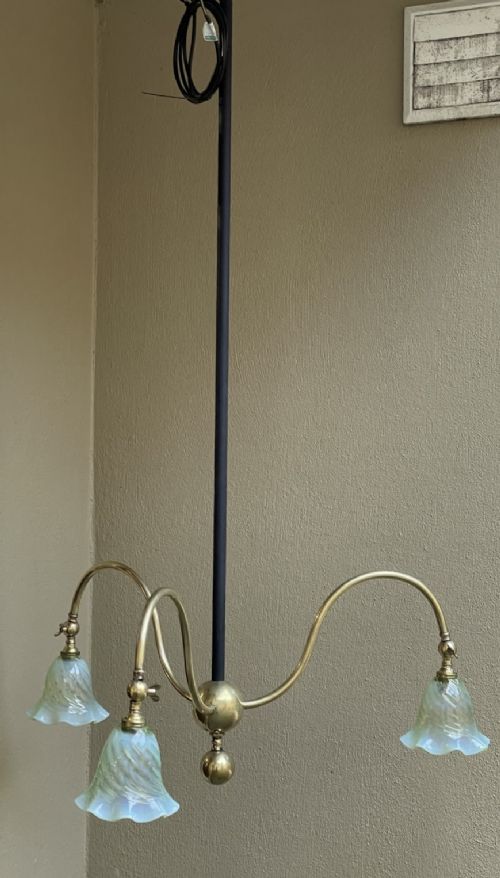
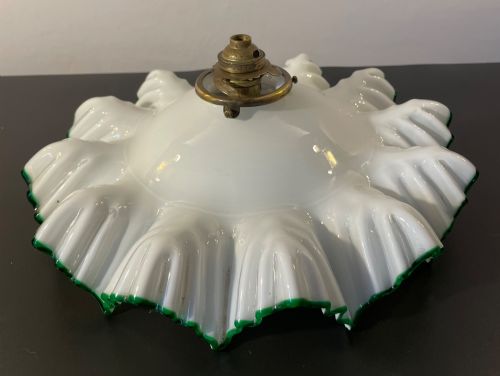
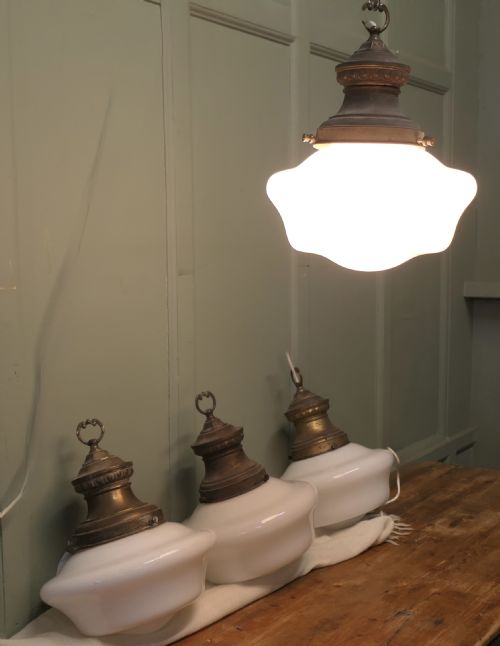
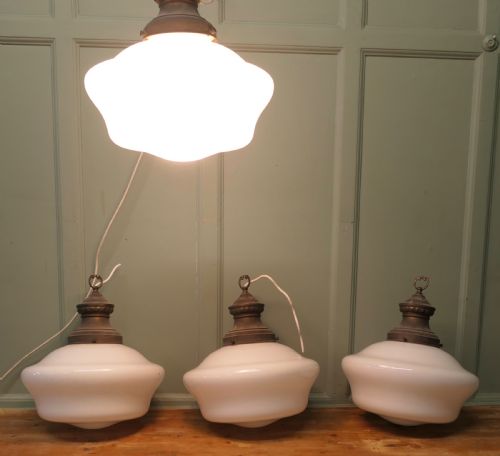


Opal Glass Shade Lamp
An opal glass shade lamp brings a soft, diffused glow to a room through milky glass paired with brass, copper, or ceramic fittings.
Opal Glass Shade Lamp
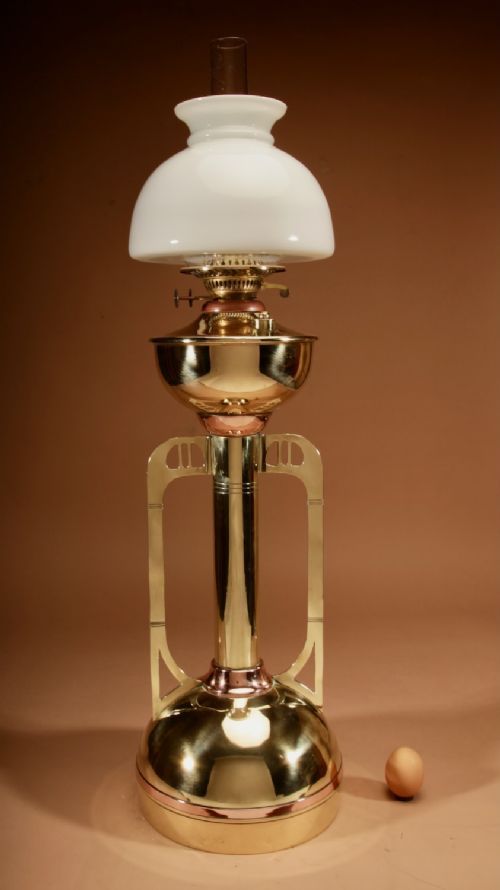
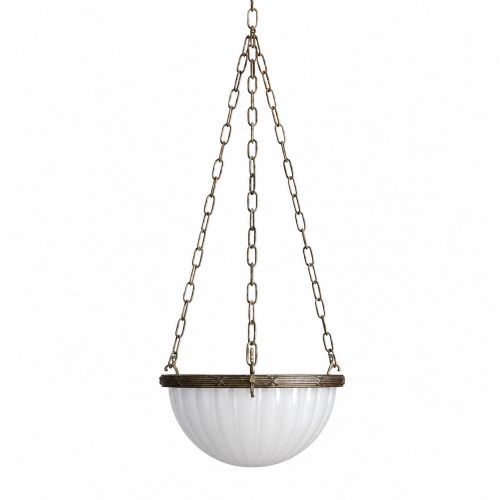
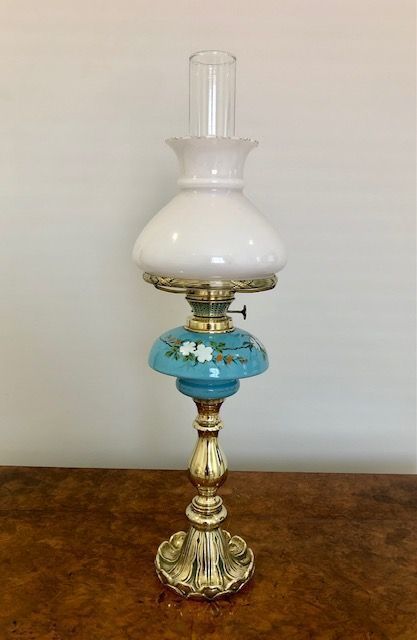
When you search for an opal glass shade lamp, you are looking at lighting fixtures that span from the Victorian period through to the mid-20th century. These pieces encompass pendant lights, ceiling lights, table lamps, oil lamps, and individual lampshades.
The versions you are most likely to meet on this page include industrial ceiling lights from the 1930s, Victorian brass oil lamps with white glass shades, and early 20th-century opaline glass pendants. Styles range from Arts and Crafts and Secessionist to Art Deco and French Country.
Forms vary from diminutive English light shades and conical hanging pendants to large pharmacy moonstone glass shades and trade sign lights. They combine utilitarian strength with the subtle translucency characteristic of opaline and milk glass.
How they were made
The primary materials recorded in these pieces are glass and metal, specifically brass, copper, and chrome, alongside ceramic elements. Glassmakers achieved the milky, opaque quality of opal and opaline glass through specific mineral additions during production.
Metal components such as brass rings, desk lamp bases, and ceiling fitments were cast, spun, or turned to house the glass securely. Many shades feature hand-finished details, such as frilly edges on French opaline glass lampshades or enamelled surfaces on Edwardian ceiling lamps.
Several pieces originate from English pharmacies and town halls, proving that brilliant lighting was once a serious municipal and medicinal affair.
What varies in quality
Quality in these lamps rests in the substance of the glass and the integrity of the metal mounts. Heavier gauge brass, substantial copper work, and thick, evenly blown opaline glass distinguish the finer examples from lighter utilitarian wares.
Subtlety of form and the retention of original components also set pieces apart. An integrated design, such as a Secessionist table lamp or an Arts and Crafts ceiling pendant, displays a higher level of artisan consideration than standard production models.
Gustave Serrurier Bovy·Jefferson Light
The Opal Glass Shade Lamp Glossary
- Opaline glass
- A type of semi-translucent milk glass that diffuses light evenly without harsh glare. It appears in various pastel or white tones across Victorian and 20th-century shades.
- Torchiere
- A floor lamp that directs light upwards towards the ceiling rather than downwards. Art Deco examples often pair this form with a prominent glass shade.
- Pendant light
- A hanging light fixture suspended from the ceiling by a cord, chain, or metal rod. They frequently utilise large conical or bowl-shaped shades.
- Secessionist
- A stylistic movement from central Europe associated with the early 20th century. It favours clean geometric forms and restrained ornamentation over Victorian excess.
Opal Glass Shade Lamp: Frequently Asked Questions
Can I use modern bulbs in these lamps?
Most antique and vintage fixtures accommodate standard modern LED bulbs, provided the wattage matches the historical capacity of the fitting. Check the internal wiring and bulb holder before use.
If the lamp retains its original wiring, consulting a professional electrician is advisable to ensure safety and compliance with current standards.
How do I tell Victorian from Art Deco shades?
Victorian shades often accompany brass oil lamps and frequently feature decorative elements like frilled edges or opalescent bowls. They tend to have a heavier, more ornate presence.
Art Deco shades from the 1930s lean towards geometric clarity, streamlined torchiere forms, and modernist double-shade configurations that reflect industrial efficiency.
Were these lamps originally for gas or electricity?
Many surviving pieces from the 19th century began as paraffin or oil lamps, later converted for electrical use. Others were manufactured specifically for early domestic or commercial electricity.
Industrial pendant lights and trade sign lights from the 1930s were designed exclusively for electrical supply from their creation.