




Brass Copper Table Lamp
A brass copper table lamp brings warmth and industrial character to a room through mixed metals and period craftsmanship.
Brass Copper Table Lamp
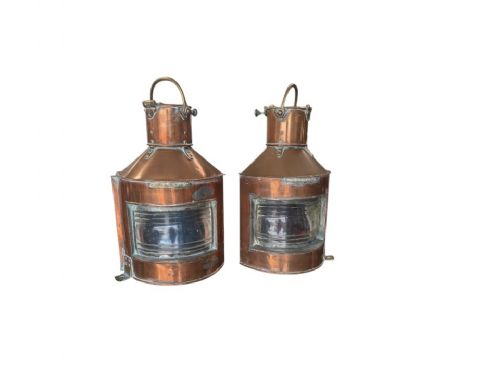
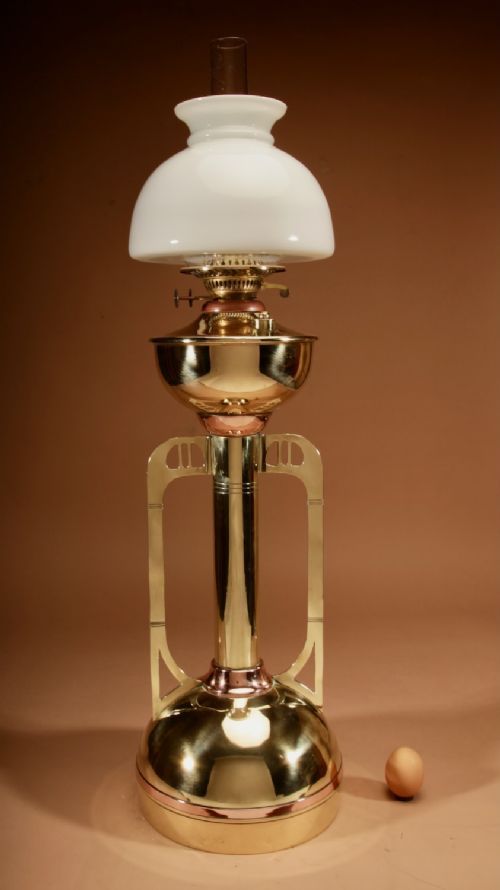
A brass copper table lamp combines two distinct metal tones, often appearing in forms ranging from converted Victorian oil burners to structured Arts and Crafts designs. Buyers seeking these items encounter domestic desk lights, maritime lanterns adapted for interiors, and slender standard lamps with adjustable mechanisms.
The pieces on this page span the mid-nineteenth century through to the mid-twentieth century, capturing shifts in design from ornate classical revival styles to the clean geometries of the Amsterdam School. Converted paraffin lamps and heavy desk lights dominate the selection, each showing the patina of genuine age.
Makers and designers from various European schools utilised these durable metals to create utilitarian objects with artistic merit. Whether looking at a French Empire model or a British workshop creation, the dual-metal construction remains a defining characteristic of the category.
How they were made
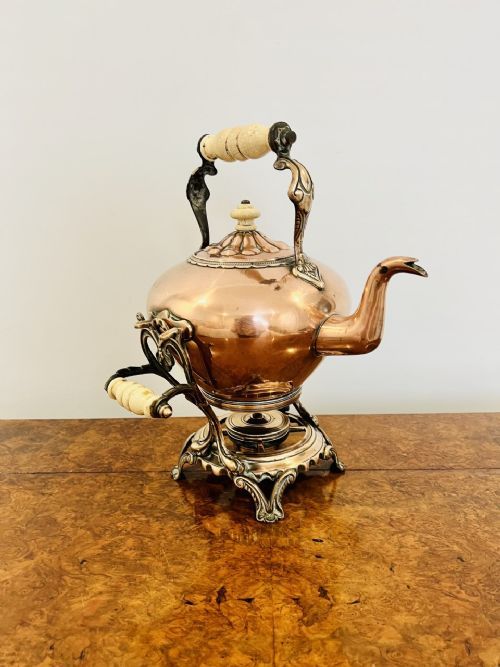
Makers combined sheet copper and cast brass, using techniques such as hand-beating, riveting, and spinning to shape the metal components. Many examples feature patinated copper surfaces paired with polished brass fittings to create a deliberate visual contrast.
Internal wiring and burner assemblies often reveal historic conversions, particularly on pieces originating as paraffin or oil lamps from the Victorian era. Glass shades, silk fringe elements, and ceramic or vaseline glass inserts frequently complete the structure.
Listings feature pieces spanning the mid-nineteenth century to the mid-twentieth century, incorporating glass, fabric, rattan, and bone alongside brass and copper.
What varies in quality
Quality rests in the heaviness of the gauge metal and the integrity of the hand-formed joints, where skilled workshops prioritized structural balance over mass production. Pieces bearing specific designer attributions or marked workshop stamps show superior finishing in the chased details and mechanical adjustments.
The subtlety of the metal patination and the originality of components, such as period glass shades or burners, separate standard utility lighting from exceptional design objects. Better examples maintain crisp lines in the brass casting and deliberate restraint in the copper hammering.
Alderson And Gyde Ltd·Gustave Serrurier Bovy·Jan Eisenlöffel·W A S Benson
The Brass Copper Table Lamp Glossary
- Patinated copper
- Copper treated to age the surface colour artificially or naturally through chemical exposure. This finish deepens the visual warmth of the metal.
- Vaseline glass
- A pale yellow or green glass containing uranium dioxide that glows under ultraviolet light. It frequently appears on early twentieth-century lighting fixtures.
- Arts and Crafts
- A design movement valuing handcraftsmanship and simple forms over industrial mass production. Objects from this tradition often display visible rivet work and beaten textures.
- Amsterdam School
- An architectural and design style originating in the Netherlands characterised by rounded brickwork, expressive forms, and rich metal detailing. Pieces from this movement utilise brass and copper to create dynamic silhouettes.
- Paraffin lamp
- A lighting device designed to burn lamp oil before conversion to electricity. Many surviving desk and table lights began their functional lives as oil burners.
Brass Copper Table Lamp: Frequently Asked Questions
How do I date a brass copper table lamp?
Dating relies on examining the construction methods, switch types, and stylistic markers associated with periods like the Victorian era or the Arts and Crafts movement. Hand-beated surfaces and heavy brass castings typically point to earlier nineteenth or early twentieth-century manufacture.
Secondary clues include the presence of converted oil burners, old wiring remnants, and registration marks stamped into the metal base. Comparing the piece's proportions and decorative motifs to documented workshop designs helps narrow the production decade.
Were these always electric lamps?
Many examples began as oil or paraffin burners before being converted to run on electricity during subsequent decades. Original burners and reservoirs are frequently adapted to house lamp holders and modern wiring.
This conversion history is standard for nineteenth-century lighting and does not diminish the authenticity of the piece. Collectors often appreciate the retention of the original oil lamp mechanism alongside the updated electrical fittings.
How do I clean brass and copper safely?
Maintenance requires preserving the historic patination rather than polishing the metals to a bright, reflective shine. Dusting with a dry, soft cloth is usually sufficient for routine care.
Harsh chemical cleaners strip away the aged surface character that defines antique metalwork. If cleaning is necessary, use specialised non-abrasive metal conservators applied with gentle pressure.
What styles are common in these lamps?
The selection includes utilitarian ship lanterns, decorative French Empire pieces with classical motifs, and geometric Amsterdam School designs. Arts and Crafts examples focus on honest construction and hand-hammered textures.
Victorian classical revival styles also appear frequently, often featuring ornate brass castings paired with rich copper bodies. Each style reflects the prevailing aesthetic and technical capabilities of its production period.