




Hand Painted Oil Lamp Shade
These hand painted oil lamp shade examples bring character and period charm to any room through decorative glass and painted details.
Hand Painted Oil Lamp Shade
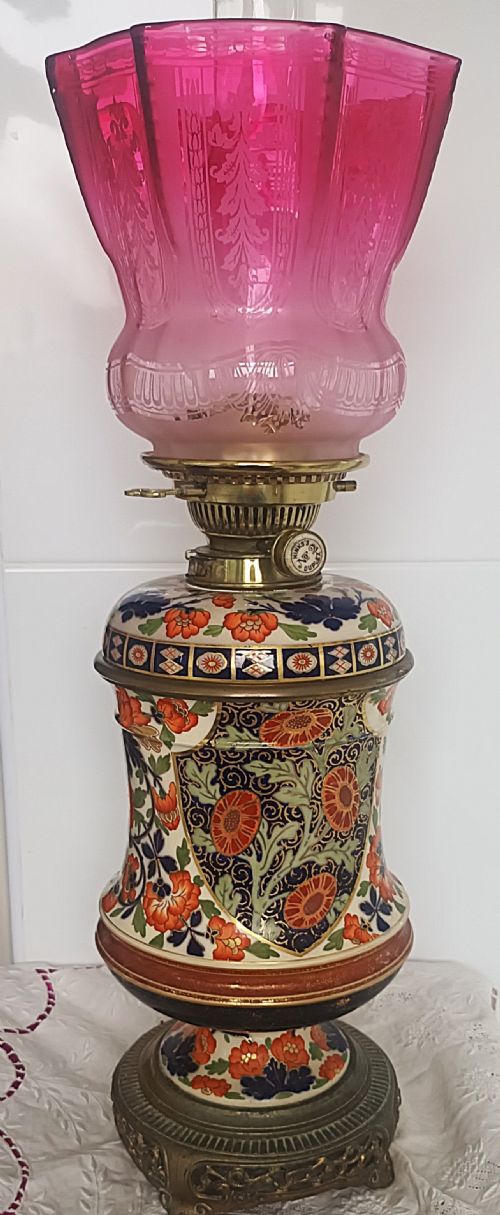
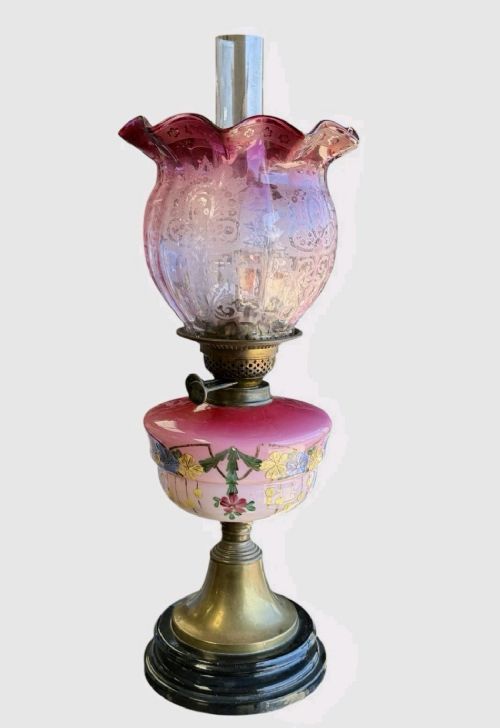
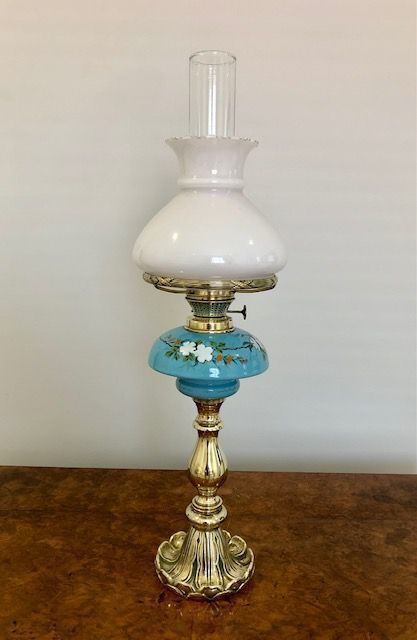
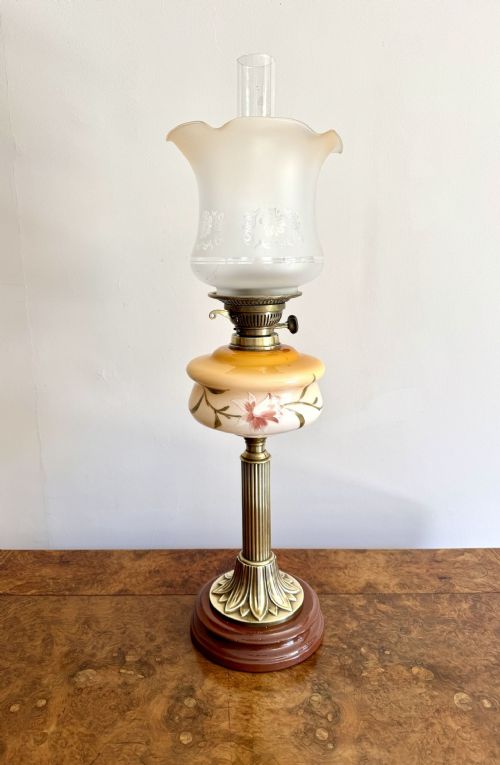
A hand painted oil lamp shade forms the decorative upper component of nineteenth and early twentieth-century lighting fixtures, designed to diffuse light while adding visual interest to a room. When you search for a hand painted oil lamp shade, you encounter items originating from the Victorian and Edwardian eras, as well as the opening decades of the twentieth century.
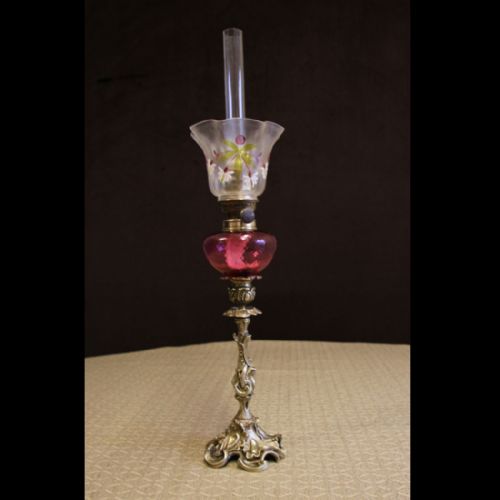
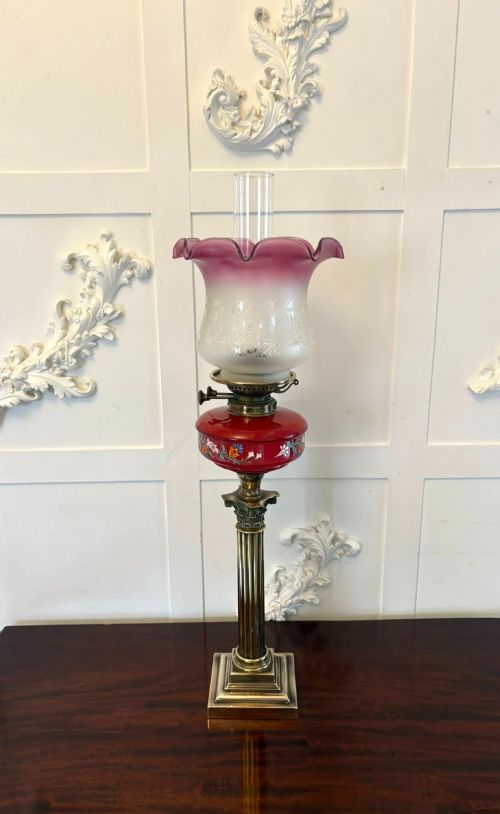
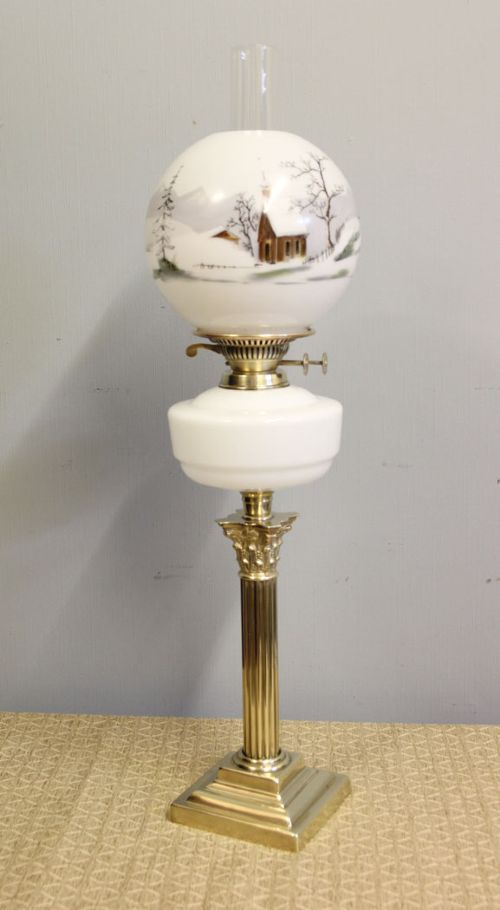
The pieces appearing on this page span various forms including tulip shades, globe shades, and hanging shades intended for oil or paraffin lighting. Materials commonly associated with these items include satin glass, opaline glass, cranberry glass, milk glass, and ceramic, frequently paired with brass hardware and columns on the complete lamps.
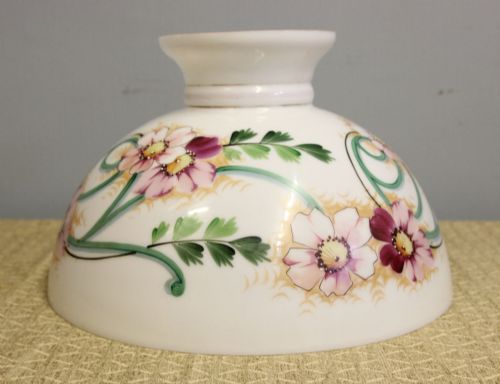
Makers and designers from this span utilised French Rococo Revival influences alongside classic Victorian and Edwardian aesthetics. You are most likely to meet examples featuring floral motifs, winter scenes, or delicate enamel work applied directly to the glass surface.
How they were made
The manufacture of these shades relied on skilled glassblowing and ceramic production techniques typical of the nineteenth century. Artisans shaped materials such as cranberry glass, satin glass, and opaline glass by hand before applying decorative pigments.
Painting was executed directly onto the glass or ceramic body, often utilising enamel colours that required firing to bond with the surface. Brass components found on the accompanying lamps were cast and finished to support the glass shades securely.
Hand Painted Oil Lamp Shade Retail Price Guide 2026
Typical asking prices for hand painted oil lamp shade among the pieces listed under this phrase on Sellingantiques today, from the lower quarter to the upper quarter. They describe what is for sale here now, not the wider market.
Listings feature items spanning from the Victorian period through to the 1930s, utilising materials such as brass, cranberry glass, and opaline glass.
What varies in quality
Quality in these pieces depends heavily on the crispness and complexity of the hand-painted decoration. Finer examples display detailed brushwork and depth in motifs such as winter scenes or floral compositions, whereas simpler pieces show more basic application.
The choice of glass material also dictates the standard of the item, with heavy satin glass, layered cranberry glass, and milk glass representing superior craft compared to standard commercial output. The weight and finish of associated brass mounts further distinguish the tier of the object.
The Hand Painted Oil Lamp Shade Glossary
- Cranberry glass
- A rich red-pink glass created by adding gold chloride to the molten batch during production. It is frequently seen in Victorian lighting and tableware.
- Opaline glass
- A translucent, pale white or tinted glass that diffuses light softly. It provides an ideal background for hand-painted floral and scenic designs.
- Satin glass
- Glass treated with an acid bath to produce a velvety, matte finish rather than a high gloss. This texture was popular during the late nineteenth century.
- Duplex lamp
- A type of oil lamp utilising a twin-wick burner mechanism to produce a brighter flame. These burners required larger shades to accommodate the increased heat and light output.
- Corinthian column
- An architectural column style featuring ornate acanthus leaves on the capital, frequently adapted as a decorative stem for Victorian and Edwardian brass oil lamps.
Hand Painted Oil Lamp Shade: Frequently Asked Questions
How do I clean a hand painted shade?
Clean glass and ceramic shades gently using lukewarm water and a mild soap. Avoid harsh scrubbing near painted areas to protect the enamel work.
Dry the surface thoroughly with a soft cloth before reinstalling the shade onto the lamp collar.
Can these shades fit modern lamps?
Many antique shades share standard fitter diameters with modern lamps, though older openings can vary slightly. Measuring the base fitter width accurately ensures a proper match.
Adapter rings can sometimes assist in securing a vintage shade to a contemporary gallery.
Were all shades painted by hand?
While hand painting is common on Victorian and Edwardian examples, some later or mass-produced items utilised transfer printing. Hand-painted pieces reveal subtle brushstrokes and slight individual variations under close inspection.
Transfer patterns often display uniform dot patterns or exact repetitions across identical designs.
What period do most shades come from?
The majority of these pieces date from the Victorian and Edwardian eras, spanning the late nineteenth century up to the early twentieth century. Design motifs and glass types usually reflect the prevailing aesthetics of these decades.
Artisans produced various forms ranging from simple tulip profiles to large globe shades during this timeframe.