
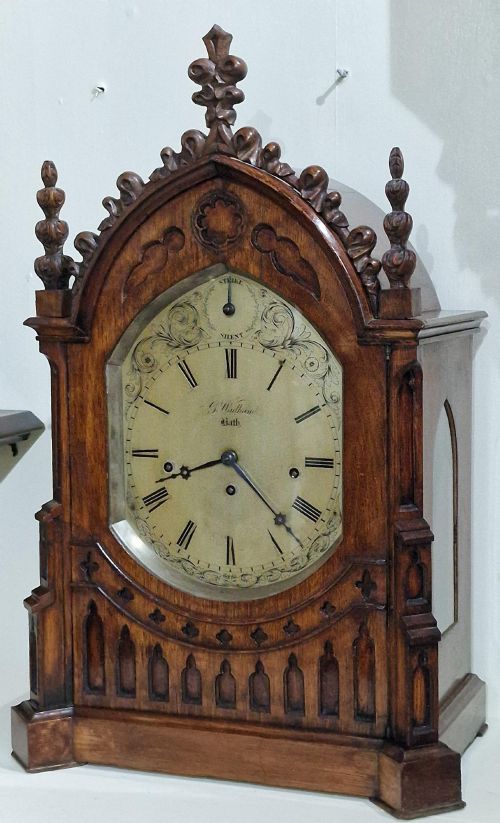
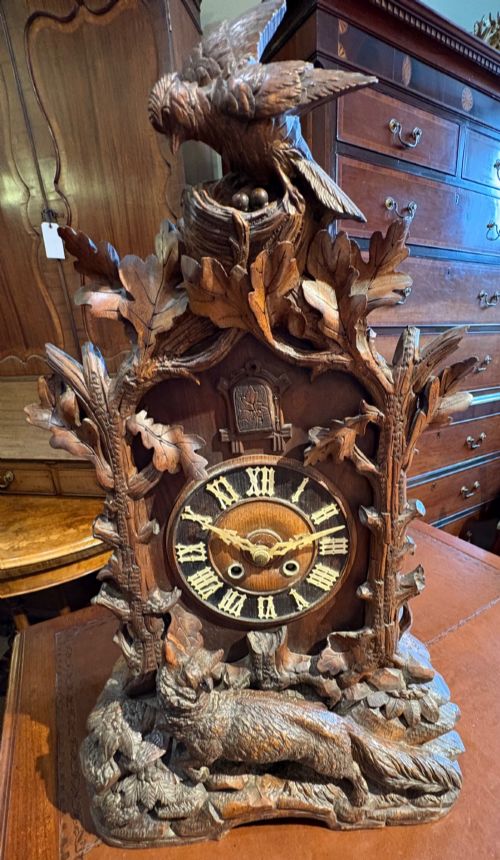
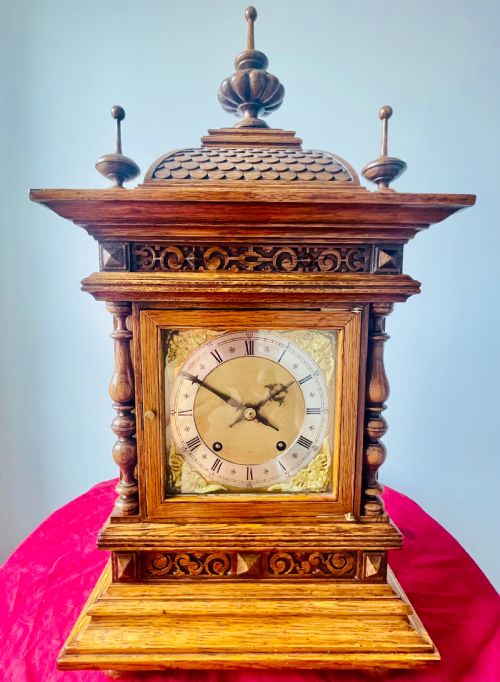


Victorian Oak Mantel Clock
A Victorian oak mantel clock brings architectural weight and steady mechanical life to a room, driven by brass movements housed in carved timber.
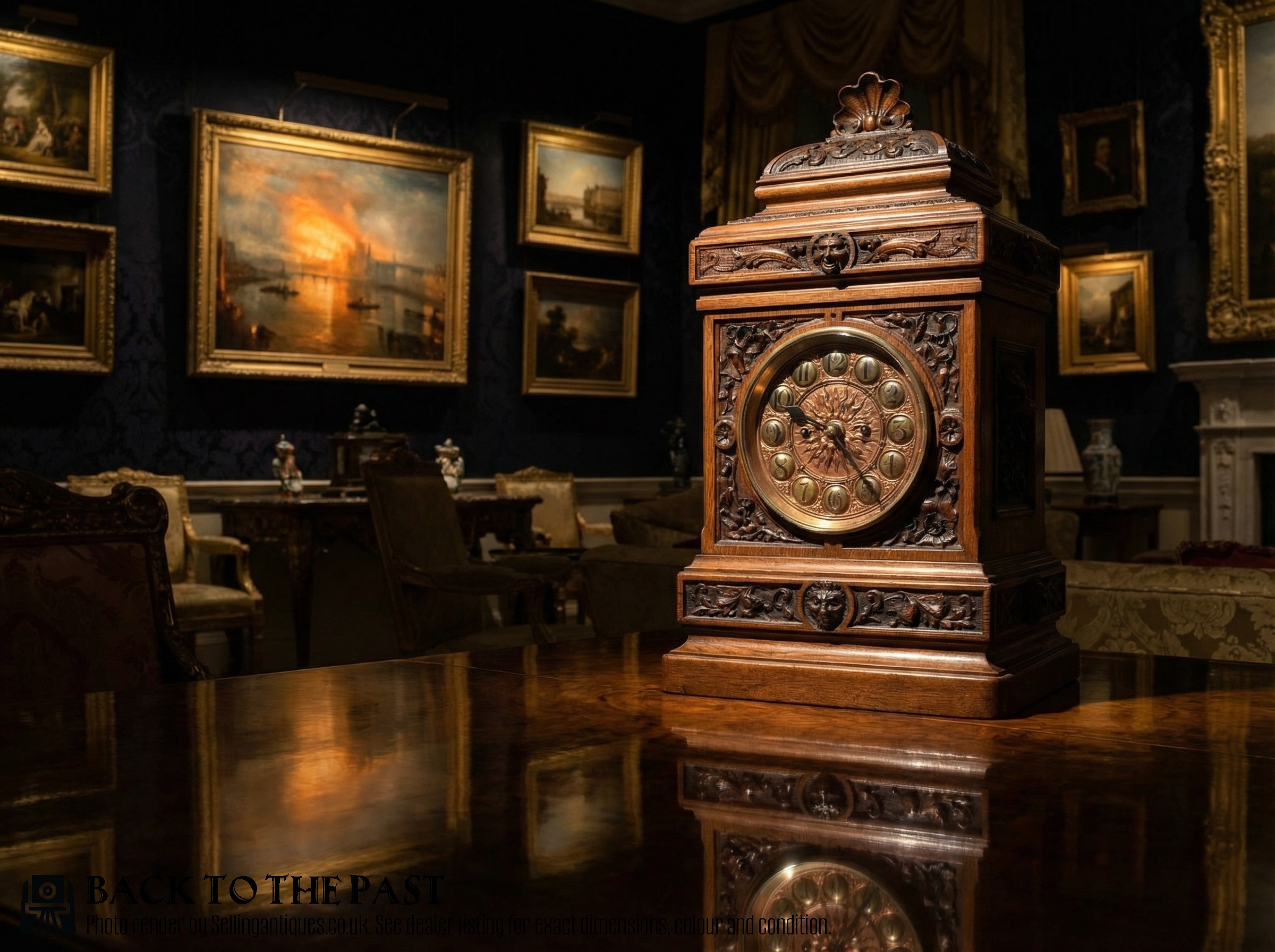
Victorian Oak Mantel Clock
A victorian oak mantel clock is a domestic timekeeper designed to sit on a shelf or sideboard, combining heavy timber cases with intricate mechanical movements. These pieces range from modest architectural desk versions to imposing quarter-striking bracket clocks housed in golden or Pollard oak.
The selections span the nineteenth century into the early twentieth century, taking stylistic cues from Gothic Revival, Black Forest carving, and the Aesthetic Movement. Most examples encountered here rely on robust oak cases, often enriched with carved details, bevelled glass panels, and silvered metal dials.
How They Were Made
Cabinetmakers built these heavy cases predominantly from solid oak, sometimes utilising walnut or ebonised accents alongside carved wood details. The timber was frequently hand-carved with architectural motifs, cathedral arches, or foliate patterns reflecting Gothic and Arts and Crafts tastes.
Inside the wooden housing, clockmakers fitted complex brass mechanisms driven by twin or triple fusee movements, striking on bells or gongs. Dials incorporated enamelled numerals and silvered metal chapters, protected behind heavy bevelled glass doors.
Listings feature nineteen-century pieces alongside early twentieth-century examples, constructed primarily from oak with brass movements and glass panels.
What Varies in Quality
The distinction between ordinary production and superior work lies in the depth of the cabinetwork and the complexity of the movement. Master makers invested in crisp, deep hand-carving and substantial oak cases that remained stable over decades.
Internal engineering separates standard timepieces from high-grade musical and quarter-striking systems produced by notable workshops. The integration of solid brass plates, fine fusee gear trains, and multiple bells or gongs dictates the standing of the piece.
George Wadham·Winterhalder And Hofmeier·DeLa Salle And Christie·Payne And Co·Beha
The Victorian Oak Mantel Clock Glossary
- Fusee
- A conical pulley used in mechanical clocks to maintain an even pull as the mainspring unwinds. This device helps the clock keep accurate time throughout its running cycle.
- Bracket clock
- A portable timekeeper originally designed to sit on a wall bracket to aid projection of sound. Later examples simply retained the name while resting on tables or mantelpieces.
- Gothic Revival
- An architectural and decorative style drawing on medieval forms. Clocks in this taste frequently feature pointed arches, tracery, and cathedral-like gables.
- Quarter-striking
- A mechanism that chimes the quarters of the hour on bells or gongs in addition to striking the full hour. It requires a more complex gear train than a simple time-and-strike movement.
- Silvered metal
- A brass or copper dial treated with a silver finish and engraved with numerals. This surface provides high contrast against dark oak cases.
Victorian Oak Mantel Clock: Frequently Asked Questions
How do I wind an oak mantel clock?
Use the appropriate key on the winding arbors found on the dial face, turning gently until resistance increases. Avoid over-winding to prevent strain on the mainsprings.
Ensure you match the correct key size to the square arbor so the metal does not round off over years of use.
Why does my clock run fast or slow?
Changes in temperature and humidity affect the wooden case and metal pendulum rod, altering the beat rate. Regulation is achieved by adjusting the small nut on the pendulum to lower or raise the bob.
Allow the clock a day to settle after making any small adjustment before turning the regulator nut again.
What is a triple fusee movement?
A triple fusee setup powers three distinct gear trains within the clock, handling timekeeping, striking the hours, and playing tunes or chimes on multiple bells. This arrangement represents a high standard of Victorian horology.
Such complex movements demand professional attention during servicing to keep all three trains synchronised.
Where should I place a heavy oak clock?
Position the timepiece on a sturdy, level mantelpiece or sideboard where vibrations from floorboards are minimised. A stable surface ensures the pendulum swings evenly without catching.
Keep the wood away from direct sunlight and heat sources to prevent the oak case from drying or splitting.