


Edwardian Oak Bracket Clock
These edwardian oak bracket clock pieces bring solid timber cases and mechanical movements into a room, offering both timekeeping and traditional presence.
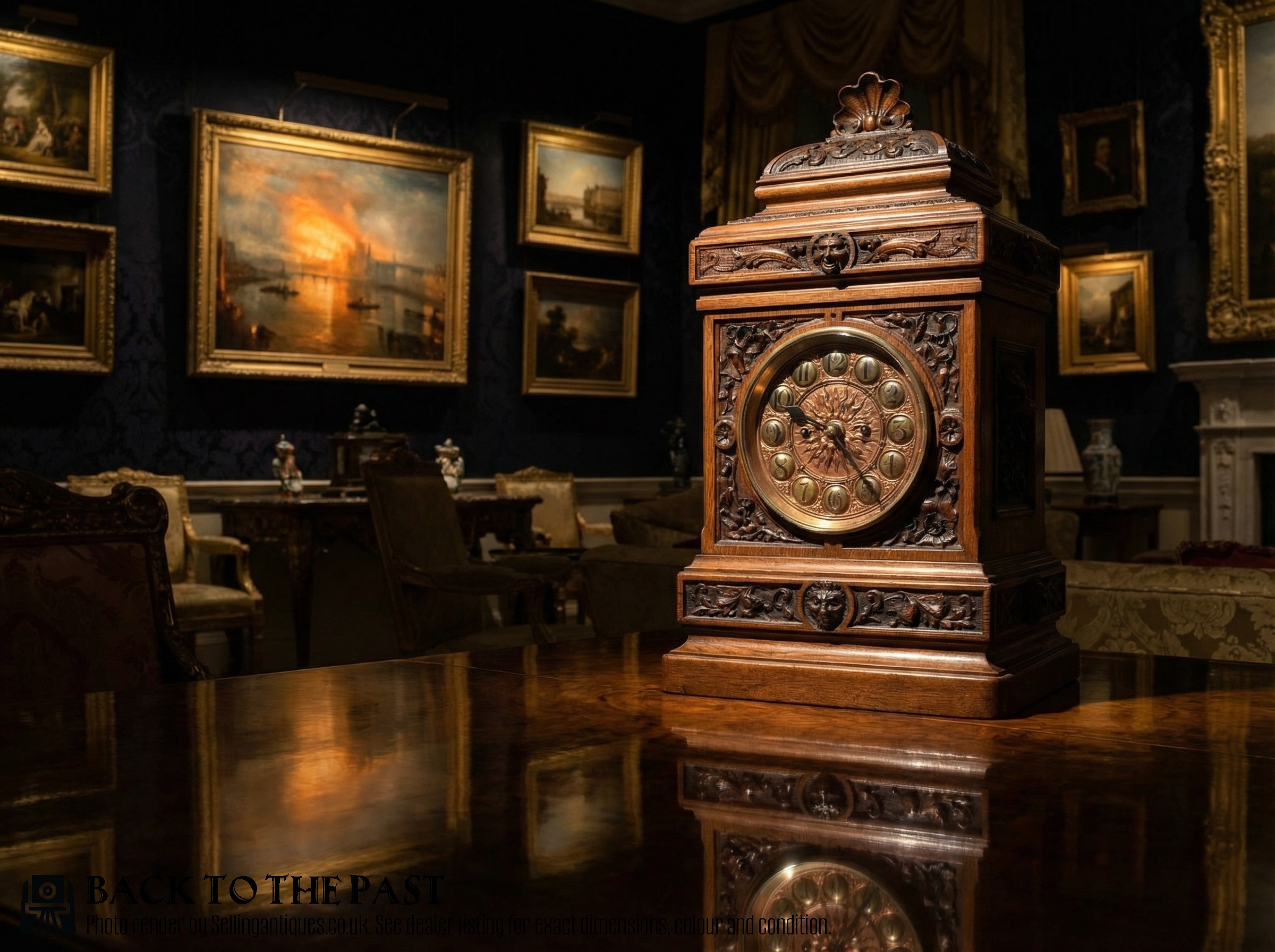
Edwardian Oak Bracket Clock
When you search for an edwardian oak bracket clock, you encounter solid timber cases spanning the Edwardian era, the Victorian period, and into the early twentieth century. These items function primarily as bracket clocks or mantel clocks, sitting securely on furniture surfaces.
The most common examples you meet on this page date from around nineteen hundred to the nineteen twenties, often housing eight-day movements or single fusee mechanisms. Makers and origins vary from English workshops to German producers like Winterhalder and Hofmeier.
Forms range from architectural golden oak cases with four glass sides to hand-carved Arts and Crafts designs and Victorian Gothic Revival shapes. You also find larger boardroom clocks and Westminster-chime models that bring deep acoustic presence to a space.
How they were made
Makers utilised solid oak, often featuring golden or dark tones, shaped into heavy architectural or carved cases to house the heavy brass and copper internal components. Hand carving appears on Arts and Crafts and Victorian Gothic Revival examples, showing crisp chisel work directly on the timber grain.
Dials incorporate silvered metal, enamel, or brass chapters behind protective glass plates, pairing legible numerals with precise mechanical gearing. Movements rely on traditional brass plates and steel arbors, driven by weighted fusee chains or spring barrels that require periodic winding.
Boardroom clocks were built large enough to ensure nobody missed the end of a meeting, no matter how tedious.
What varies in quality
The distinction between standard production and finer execution lies in the density of the oak timber and the crispness of any hand carving. Superior pieces display carefully selected grain patterns and robust joinery that keeps heavy glass and brass assemblies square over decades.
Movement sophistication also dictates standard, with quarter-striking or Westminster-chime mechanisms representing higher tier engineering than basic timepieces. The integration of signed brass movements by established makers adds historical depth to the physical object.
Jas Whitelaw of Edinburgh
The Edwardian Oak Bracket Clock Glossary
- Bracket clock
- A portable mechanical clock originally designed to sit on a wall bracket, though later examples served primarily as mantel clocks. These pieces typically feature heavy timber cases and sophisticated striking trains.
- Fusee
- A conical pulley used in mechanical clocks to maintain an even pull on the gear train as the mainspring unwinds. This device ensures consistent timekeeping across the duration of the wind.
- Single fusee
- A movement driven by a single fusee chain or cord that powers the timekeeping mechanism without a striking train. It represents a straightforward, reliable mechanical layout.
- Ting-tang
- A two-hammer striking mechanism that sounds two different notes on the quarters before striking the hour. It produces a distinctive musical chime rather than a simple bell strike.
- Silvered metal
- A brass or copper dial surface treated with a silver compound to create a matte white finish for engraved numerals. This technique reduces glare and provides high legibility.
Edwardian Oak Bracket Clock: Frequently Asked Questions
What is an edwardian oak bracket clock?
An edwardian oak bracket clock is a mechanical timekeeper housed in a wooden case made of oak, produced around the early twentieth century or late Victorian period. These items were designed to sit on mantelpieces, desks, or specialised wall brackets.
They combine heavy timber joinery with intricate brass gear trains, often featuring striking or chiming capabilities that audibly mark the passage of time.
How do I wind an edwardian oak bracket clock?
Winding requires a matching key inserted into the winding holes on the dial face, turned gently until resistance indicates the mainspring is fully tensioned. Care must be taken not to overwind the mechanism.
Most surviving examples utilise eight-day movements, meaning they require attention roughly once a week to maintain continuous operation.
Where should I place an edwardian oak bracket clock?
These clocks require a stable, level surface such as a heavy sideboard, mantelpiece, or dedicated wall shelf to ensure the pendulum or balance wheel beats evenly. Avoid placing them in areas subject to excessive vibration or direct sunlight.
Because many examples feature glass side panels or four glass sides, positioning them where light can pass through the case highlights the internal brass movement.
How do I tell different periods apart?
Victorian and Gothic Revival examples tend to feature heavy, dark oak and elaborate carved ornamentation, reflecting nineteenth-century taste. Edwardian and later pieces often lean towards simpler golden oak finishes or cleaner Arts and Crafts lines.
Examining the dial materials, such as enamel versus silvered metal, alongside the complexity of the striking movement, provides further clues to the manufacturing decade.