
Victorian Oak Kitchen Chairs
These victorian oak kitchen chairs bring sturdy vernacular character to a room, offering honest seating shaped by nineteenth-century country makers.
Victorian Oak Kitchen Chairs
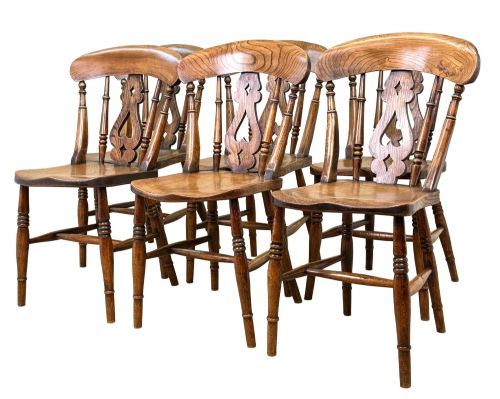
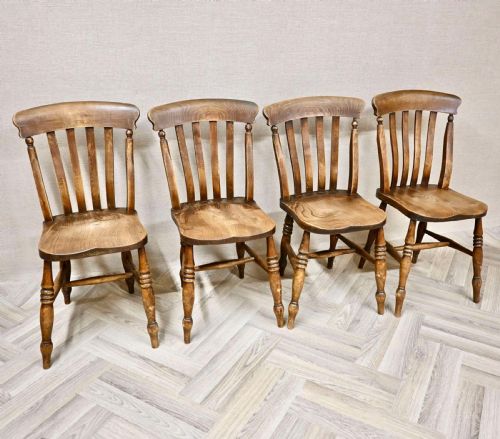
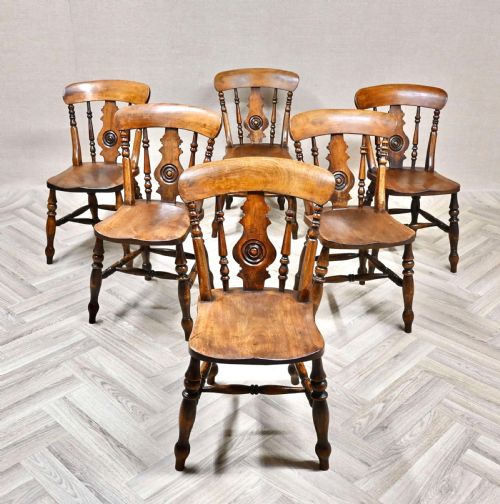
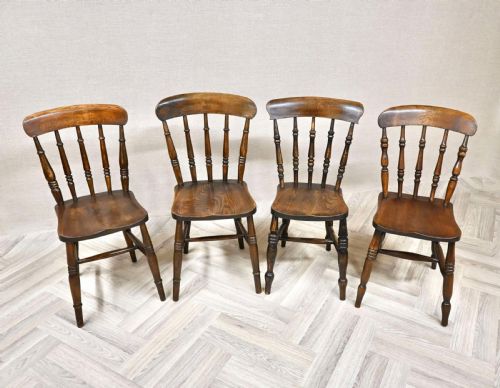
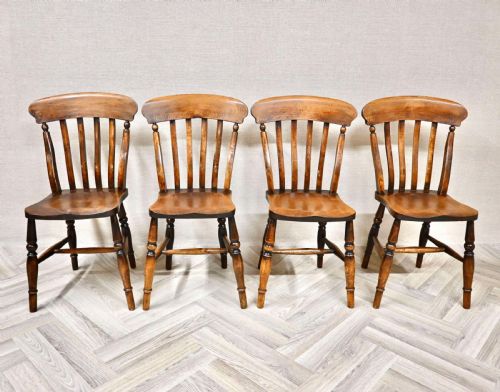
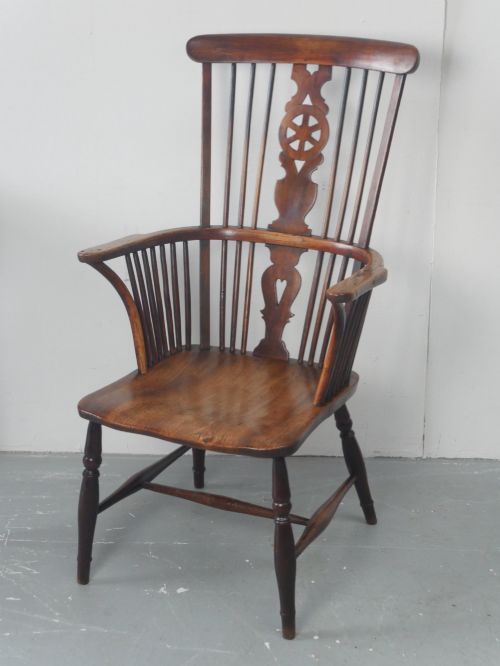
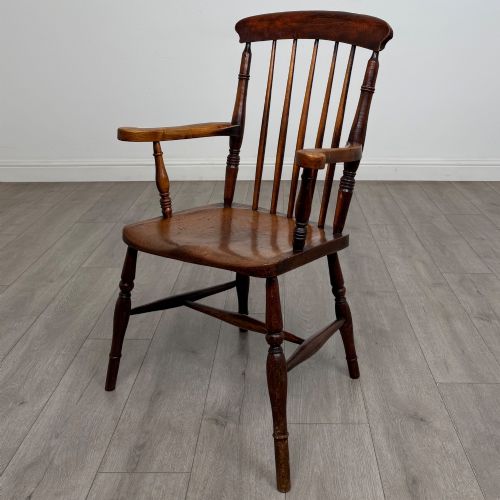
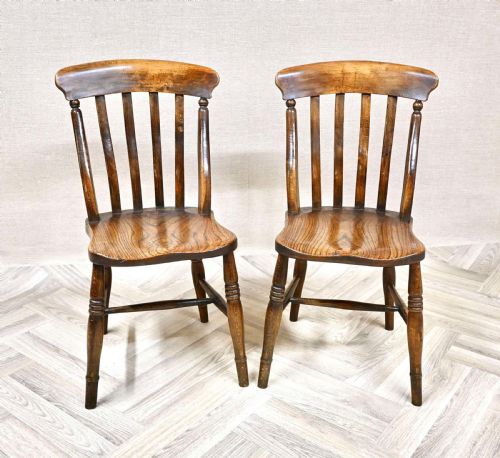
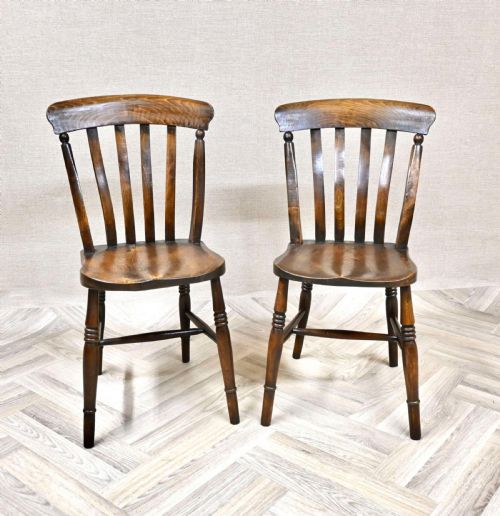
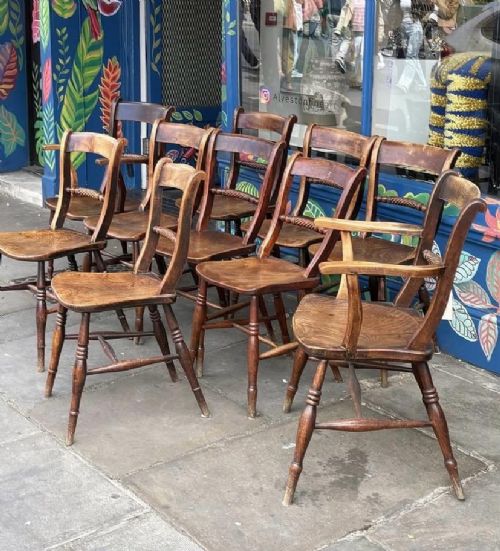
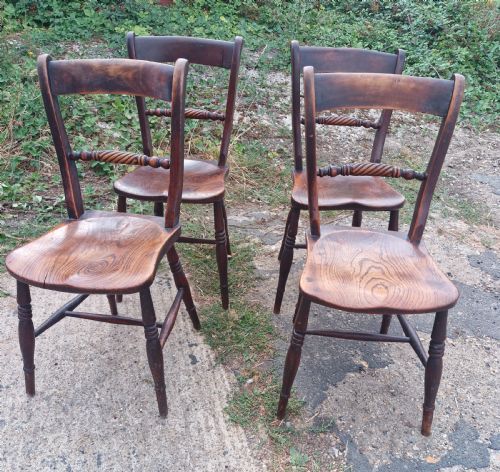
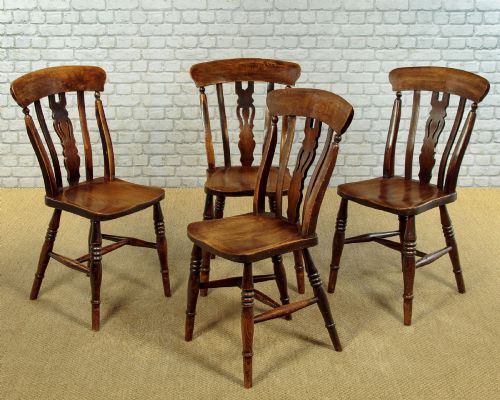
Victorian oak kitchen chairs span robust utilitarian forms built for daily domestic use during the nineteenth century. These pieces appear primarily as Windsor designs, featuring lathbacks, stick backs, wheelbacks, and lathe backs alongside ladderback variants.
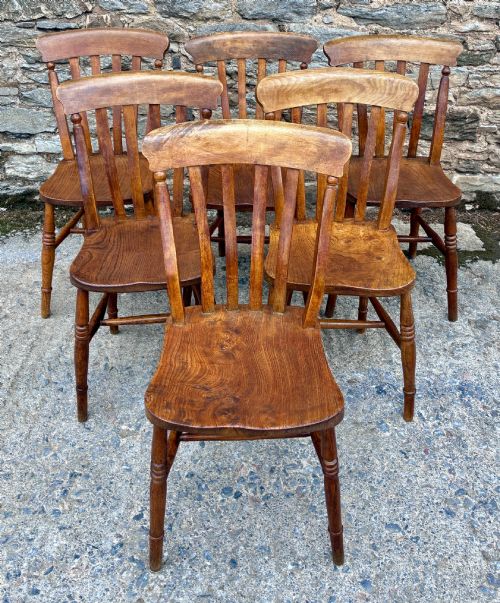
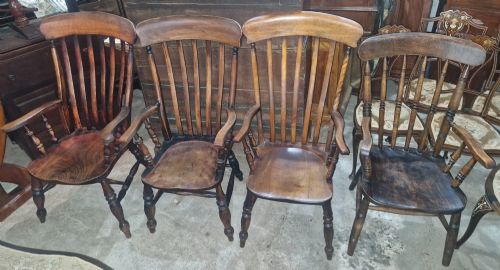
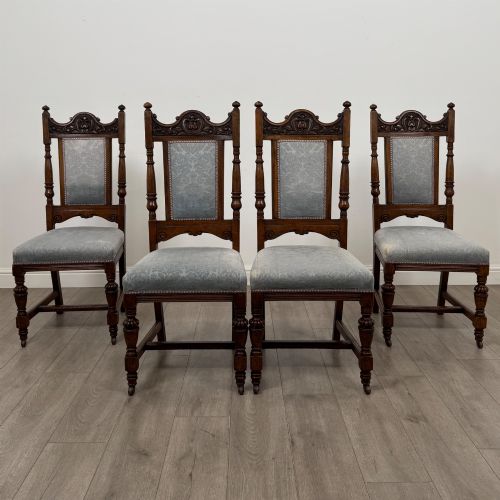
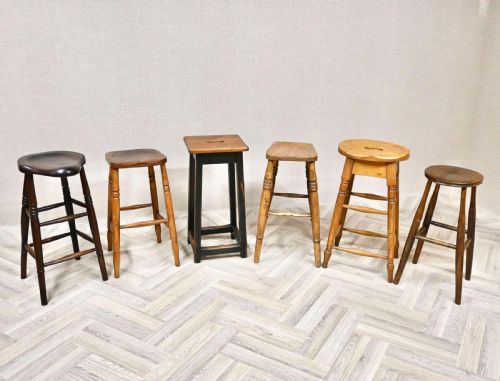
Buyers encounter single chairs, pairs, and matched sets ranging from four to ten pieces, alongside armchairs, bar stools, and rocking chairs. The regional vernacular styles draw from English country traditions, rustic farmhouse aesthetics, and occasional Gothic Revival influences.
The material palette extends beyond oak to include elm, beech, ash, and yew, often paired with rush seating or upholstery fabric. Workshops produced these items to serve hard-working household environments, resulting in enduring domestic furnishings.
Construction and Materials
Makers combined solid timbers such as oak, elm, and beech, utilising turned spindle components and steam-bent elements to form robust Windsor frames. Seats were frequently carved from single planks of elm or oak, scooped into penny seat profiles for comfort.
Traditional joinery relied on wedged tenons and mortise joints, securing uprights directly into thick wooden seats without metal fasteners. Frame stability derived from carefully positioned undercarriage stretchers connecting the legs.
Listings feature nineteenth-century styles including English country vernacular, rustic farmhouse, and Gothic Revival variations.
Judging Quality and Integrity
Quality rests on the integrity of the original timber and the survival of uncompromised joints across the undercarriage. Matched sets display uniform turning work and consistent wood grain, whereas assembled groups show subtle variations in spindle thickness or seat shaping.
Surface character distinguishes superior examples, where decades of daily use produce a deep timeworn patina across the oak and elm components. Pieces retaining their original seat thickness and unclipped legs preserve the intended proportions set by the nineteenth-century maker.
Worksop Allsop
The Victorian Oak Kitchen Chairs Glossary
- Windsor chair
- A chair built with a solid wooden seat into which the legs and back sticks are tenoned directly. This construction method creates a durable, supportive frame common in nineteenth-century domestic seating.
- Lathback
- A chair back featuring vertical wooden slats, or laths, steam-bent or shaped to support the sitter. This pattern is frequently found on traditional farmhouse dining chairs.
- Penny seat
- A wooden seat scooped into a shallow circular depression resembling a large coin. This shaping provided ergonomic comfort before upholstered cushions became standard in kitchens.
- Lathe back
- A chair back constructed using turned spindles shaped on a woodturning lathe. These components provide uniform strength and decorative rhythm across the frame.
- Rush seat
- A seating surface woven from dried marsh rushes, creating a textured pad. This traditional method offers flexible support within ladderback kitchen chairs.
Victorian Oak Kitchen Chairs: Frequently Asked Questions
How do I spot a true set?
Examine the turning marks on the legs and spindles, because matched sets share identical dimensions and tool signatures. Variations in seat thickness or timber grain suggest pieces gathered together over time.
Look closely at the underside of the seats for consistent construction methods and ageing patterns across every chair in the group.
What woods were used?
Makers selected oak for structural frames and legs, while elm provided stable timber for carved solid seats. Beech and ash frequently supplied the turned spindles and steam-bent bows.
Secondary woods often appear in stretchers and lesser components, reflecting whatever local timber was available to the regional workshop.
Are stick backs comfortable?
The raked backrests and ergonomically scooped wooden seats provide surprisingly supportive posture for dining. Without upholstery, they offer firm seating designed for long hours at a farmhouse table.
Adding loose seat pads allows adjustment for softness while preserving the visible timber construction.
How do I date these chairs?
Nineteenth-century pieces display hand-turned components and subtle tool marks left by regional craftsmen. Construction techniques evolved from heavier vernacular framing toward standardised factory production by the late Victorian era.
Patina depth and timber shrinkage around the wedge joints offer further clues to a chair's age.