
Rustic Oak Kitchen Seating
These rustic oak kitchen seating options bring robust vernacular character and practical utility into domestic spaces.
Rustic Oak Kitchen Seating
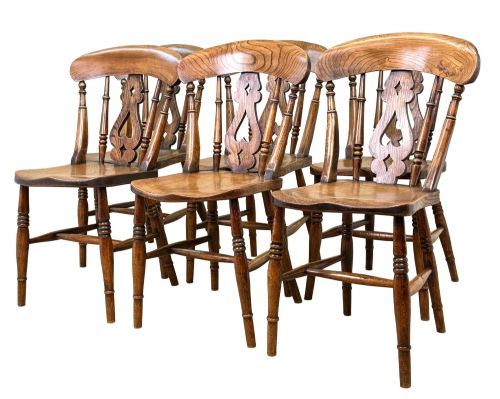
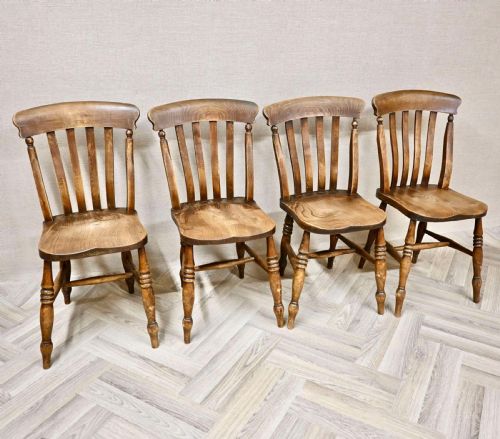
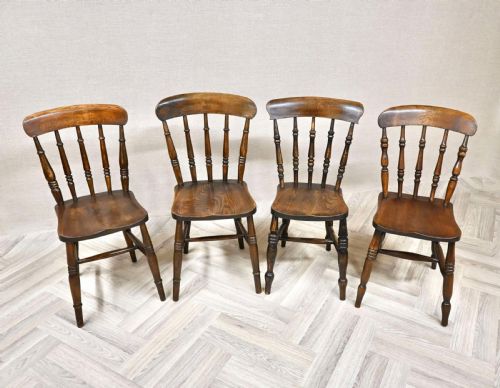
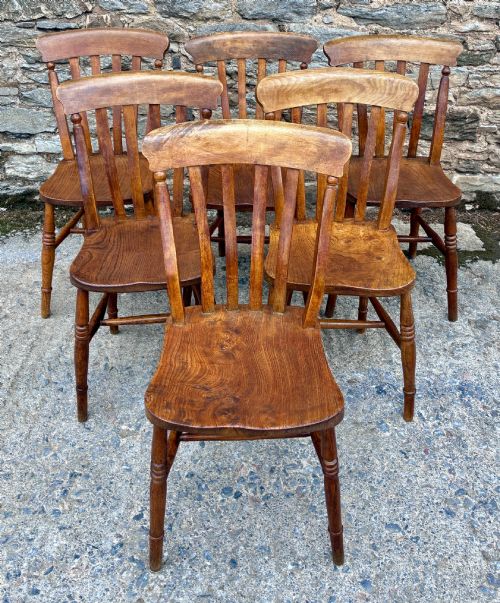
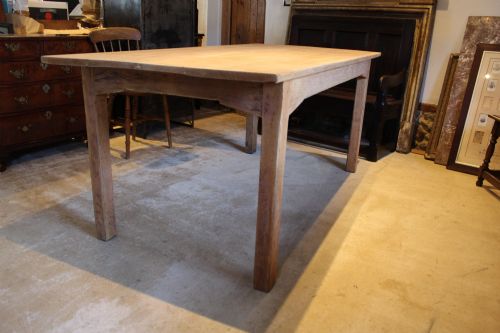
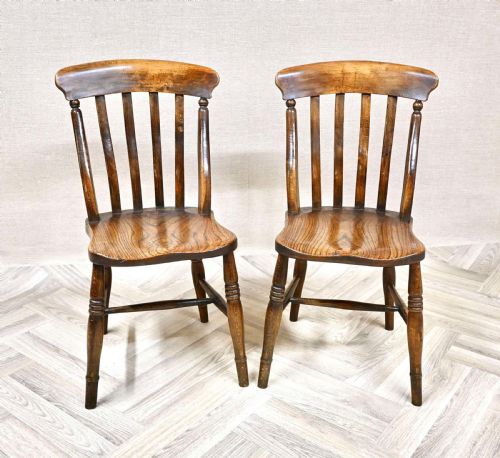
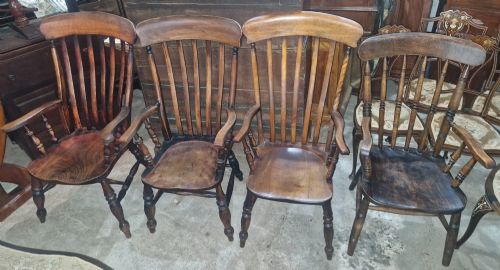
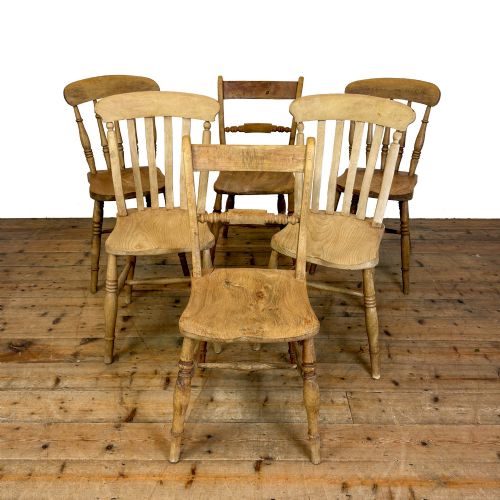
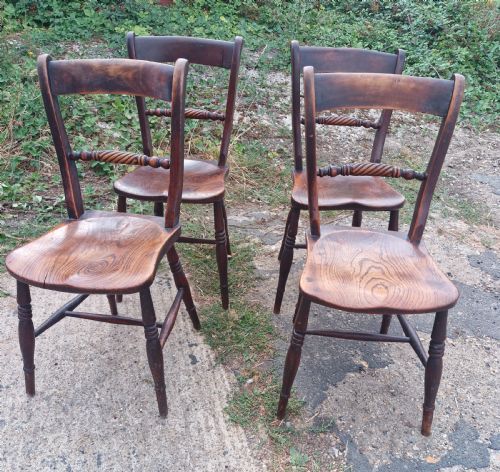
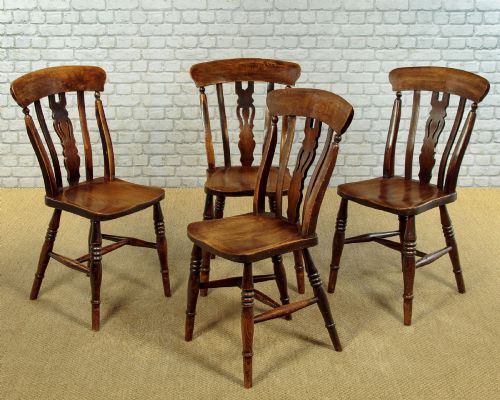
Rustic oak kitchen seating spans functional dining chairs, benches, stools and refectory tables intended for everyday domestic use. The pieces appearing most frequently take the form of Windsor chairs, ladderbacks and sturdy refectory dining tables designed for larger groups.
Makers shaped these items across the nineteenth and early twentieth centuries, drawing on styles such as English Country, Victorian Country and Gothic Revival. Surviving configurations range from single armchairs to matched sets of ten or twelve chairs paired with long timber tables.
Materials and Construction
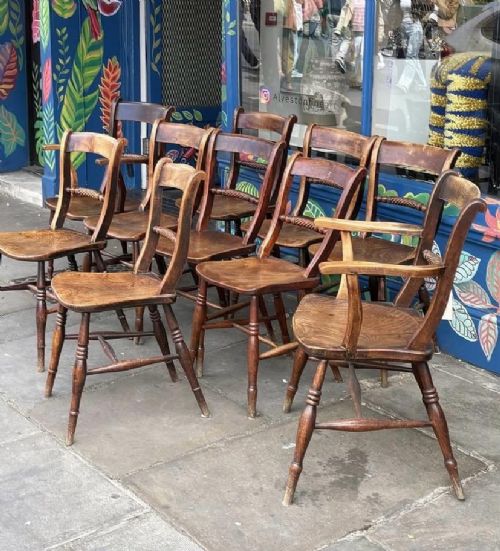
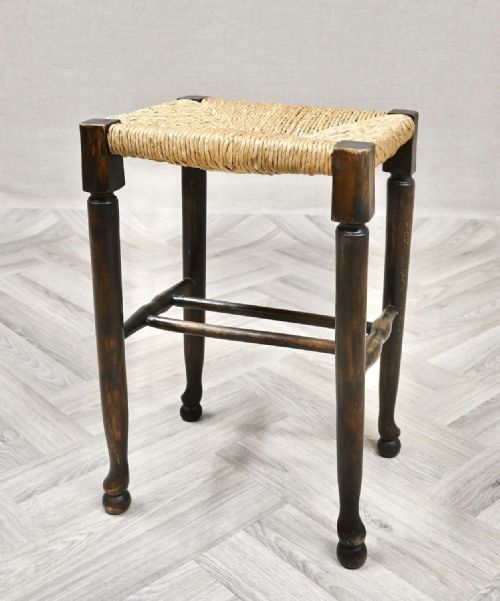
Makers constructed frames primarily from solid oak, complemented by companion timbers such as elm, beech, ash and pine used for seats and structural spindles. Rush also appears as a traditional seating material woven onto chair frames.
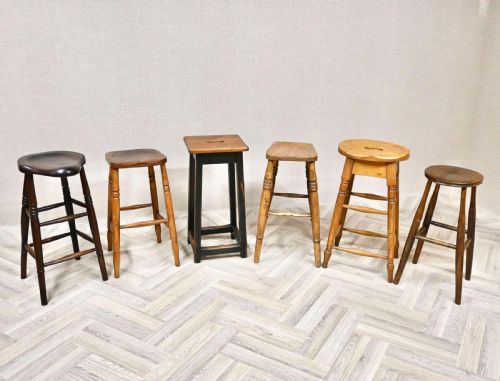
Workshops utilised robust joinery methods, turning legs and spindles on lathes while shaping plank seats into distinctive saddle or oval forms. Tables rely on heavy trestle and refectory bases to support substantial oak tops.
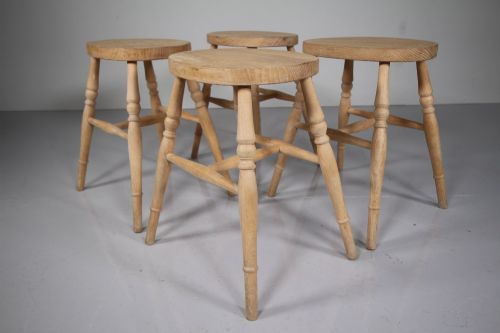
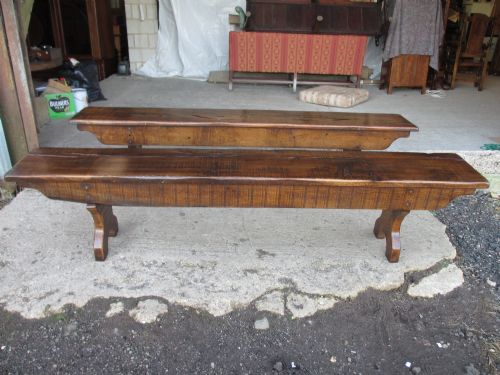
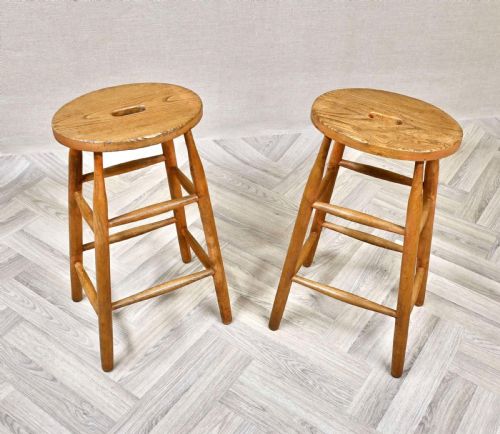
Seating forms include dining chairs, bar stools, armchairs and benches, alongside refectory tables seating up to twelve people.
Evaluating Quality
Quality rests in the integrity of the timber selection and the retention of original surface patination. Pieces that maintain their structural tightness across joints and spindles show superior initial construction.
The degree of matching within larger sets alters how the collection sits together in a room. Matched sets command greater cohesion than assembled harlequin groups gathered over time from multiple sources.
The Rustic Oak Kitchen Seating Glossary
- Windsor chair
- A wooden chair built with a solid sculpted seat into which the legs and back spindles are directly inserted. This form provides sturdy support through steam-bent back bows.
- Ladderback
- A chair style featuring horizontal slats set between the upright posts of the backrest. These slats are often curved to fit the spine of the sitter.
- Refectory table
- A long dining table traditionally built for communal dining halls and domestic kitchens. These examples feature solid timber tops supported by heavy trestle bases.
- Rush seat
- A seating surface woven from dried marsh rushes twisted into cords. This technique creates a resilient and textured pad across the frame.
- Harlequin set
- A collection of dining chairs that share a general period or style but vary slightly in individual design. Such groups were typically assembled gradually rather than purchased as one original set.
Rustic Oak Kitchen Seating: Frequently Asked Questions
How do I clean an antique oak bench?
Dust surfaces regularly with a dry cloth to prevent grit accumulation on the grain. Avoid modern chemical polishes that can build up a sticky residue over the historic timber.
Apply occasional beeswax to nourish the wood and maintain its natural lustre. Keep these pieces away from direct heat sources to prevent the oak from drying out and splitting.
Can I mix different chair styles around my table?
Combining different chair styles creates an eclectic harlequin arrangement frequently seen in period interiors. Matching wood tones or shared construction details helps unify the overall look.
Ensure that the seat heights remain consistent so diners sit comfortably at the table. Armchairs work best placed at the head and foot of the table with side chairs along the lengths.
How do I date a farmhouse Windsor chair?
Examine the turning of the legs and the shape of the seat saddle for clues to the period. Earlier nineteenth-century examples often display deeper saddle shovel seats and heavier undercarriage stretchers.
Tool marks and the type of wood used for secondary components also indicate the manufacturing era. Elm seats paired with ash or beech spindles point towards traditional regional English production.
Are rush seats durable for daily use?
Rush seating is surprisingly resilient when kept dry and used with care in domestic environments. The twisted marsh grass flexes slightly under weight, offering comfortable give.
Protect the woven strands from sharp objects and excessive moisture to prevent fraying. Traditional rush can be repaired by a skilled specialist if the weave eventually wears through.