


Victorian Oak Carver
A victorian oak carver is a sturdy nineteenth-century armchair designed for the head of the table or the fireside, offering both heft and comfort.

Victorian Oak Carver
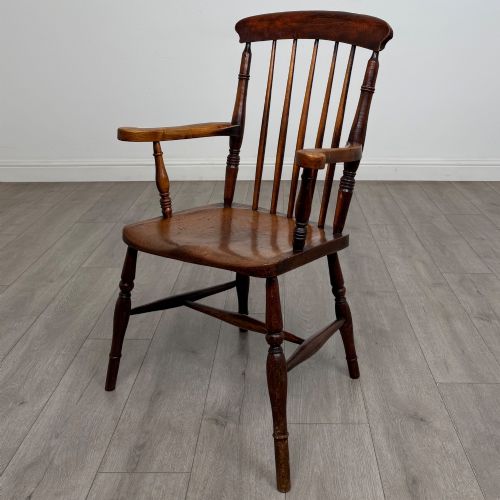
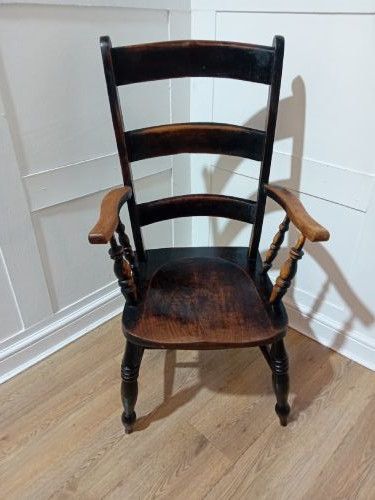
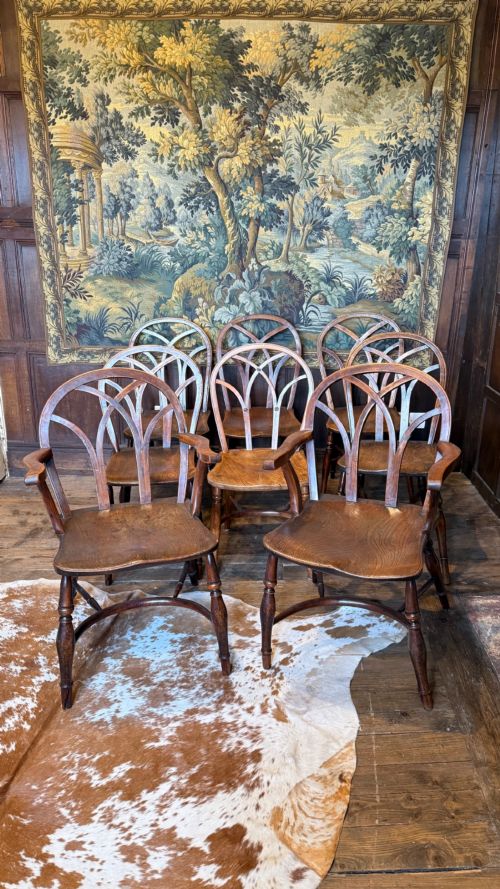
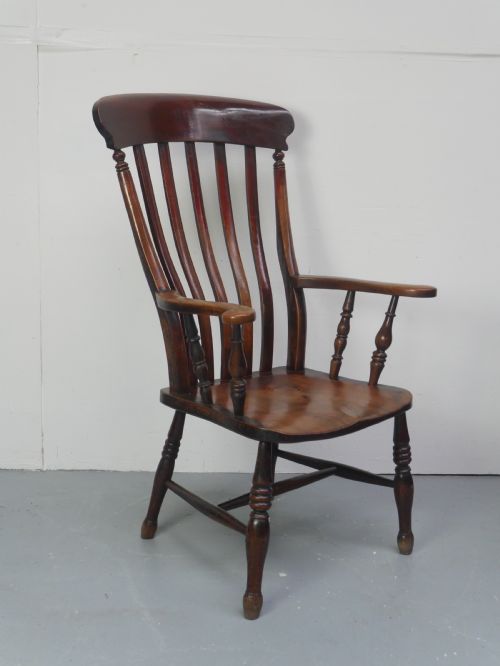
A victorian oak carver is an armchair rooted in nineteenth-century domestic life, appearing primarily as dining carvers, desk chairs, and heavy farmhouse or Thames Valley armchairs. These pieces combine substantial timber frames with integrated armrests, serving practical roles at the head of a dining table or beside a hearth.
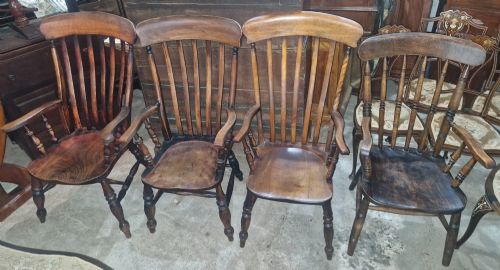
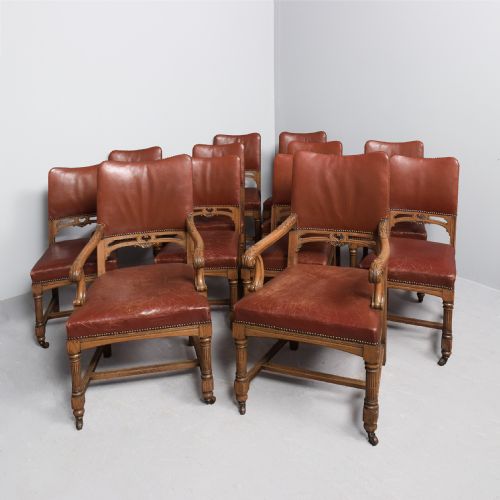
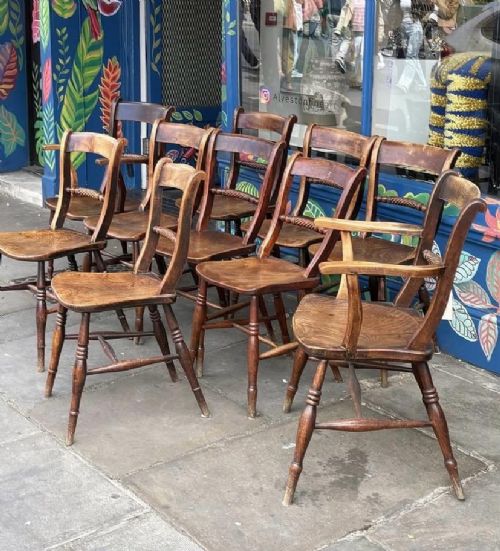
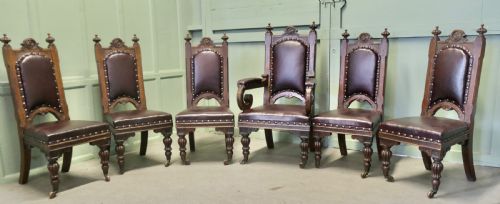
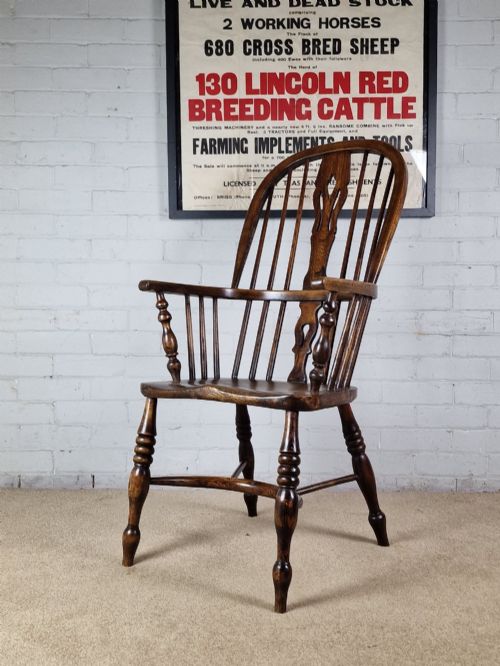
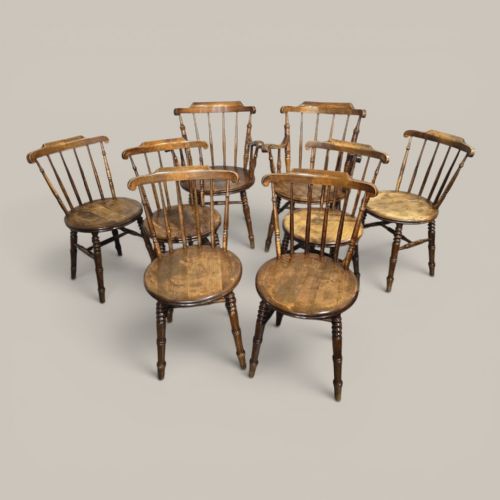
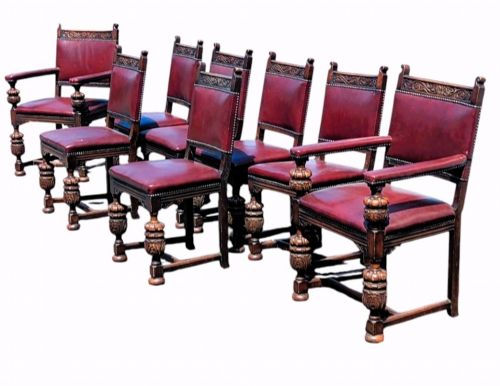
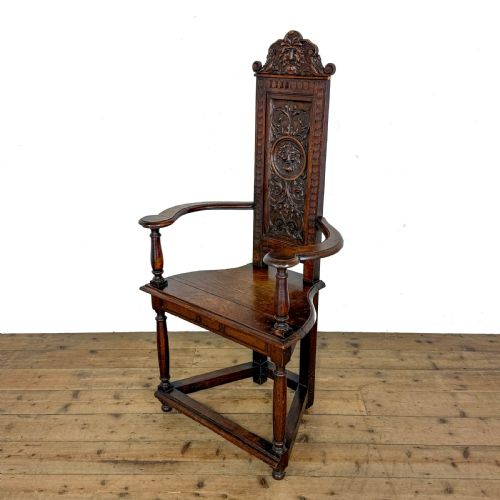
The versions most commonly met on this page span the mid to late nineteenth century, taking forms such as stick-back Windsors, ladder-backs, and heavily carved Gothic Revival or Jacobean Revival elbow chairs. Regional variations like Yorkshire and Lancashire types also emerge frequently alongside country house styles.
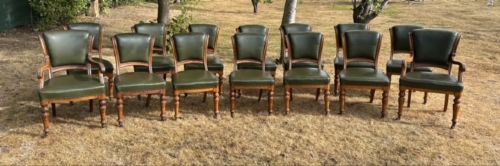
Makers and workshops utilised native hardwoods to build seating intended for enduring daily use, resulting in surviving examples that display considerable variety in regional turning and carving traditions. Buyers encounter everything from simple spindle-back farmhouse models to imposing throne chairs with leather or rush seats.
Factors of quality
Quality rests heavily on the crispness of hand-carved detailing and the architectural integrity of the frame, where deeply sculpted crest rails and robust joints distinguish finer metropolitan workshop pieces from simpler provincial output. Timber selection also dictates grade, with dense, figured oak outperforming plain utility stock.
The survival of original surface finishes and secondary woods, such as an untouched elm seat on an oak frame, preserves the authentic character that distinguishes superior examples from heavily restored or married pieces.
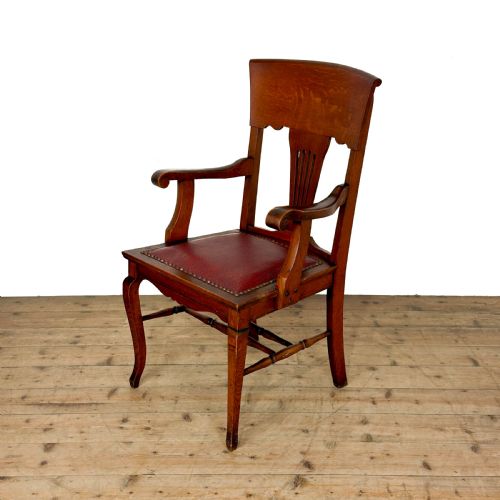
Listings demonstrate a strong presence of nineteenth-century regional English forms, pairing solid oak frames with elm seats and leather upholstery.
W Williamson And Sons·Lamb Of Manchester
The Victorian Oak Carver Glossary
- Carver
- An armchair, typically designed en suite with a set of smaller dining chairs for use at the head of a table.
- Windsor
- A chair constructed with a solid wooden seat into which the legs, back sticks, and bow are separately dowelled.
- Splat
- The central vertical strip of wood in the back of a chair, often shaped or carved.
- Rush
- Marsh grass twisted into cord and woven tightly to form a supportive seat mesh.
- Stretcher
- The horizontal wooden rail connecting and bracing the legs of a chair.
Victorian Oak Carver: Frequently Asked Questions
How do I spot a true nineteenth century carver?
Examine the construction methods visible underneath the seat and along the leg joints, looking for hand-cut joinery, pegged tenons, and appropriate age-related wear on the timber.
Check for consistency in the wood grain and patina across the arms, legs, and back assembly to confirm that the components belong together historically.
Were these chairs used only for dining?
While many served as host chairs at dining tables, numerous examples functioned as desk chairs, library elbow chairs, or fireside seating in nineteenth-century homes.
Heavier throne and high-back varieties were often placed in halls or parlours for decorative impact as much as for seating.
How should I care for an antique leather seat?
Maintain leather upholstery by keeping it away from direct heat sources and strong sunlight, which cause the hide to dry out and crack over time.
Apply a specialist leather conservation wax sparingly to nourish the material while preserving its historical surface character.
What is the difference between a country and a revival carver?
Country carvers, such as Windsor and ladder-back forms, evolved through regional vernacular traditions with an emphasis on utilitarian comfort and local timber use.
Revival carvers draw on historical Gothic, Jacobean, or Queen Anne design motifs, featuring formal carving and symmetrical proportions intended for sophisticated interiors.