
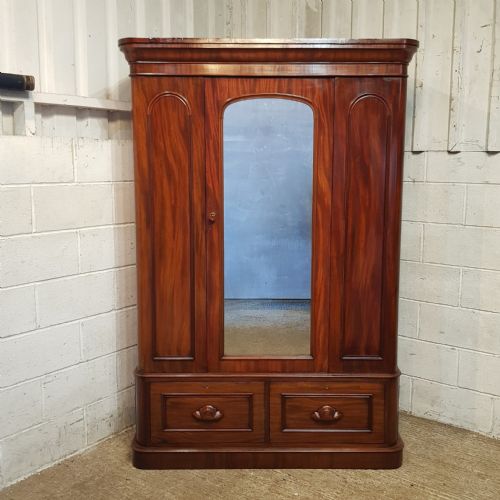
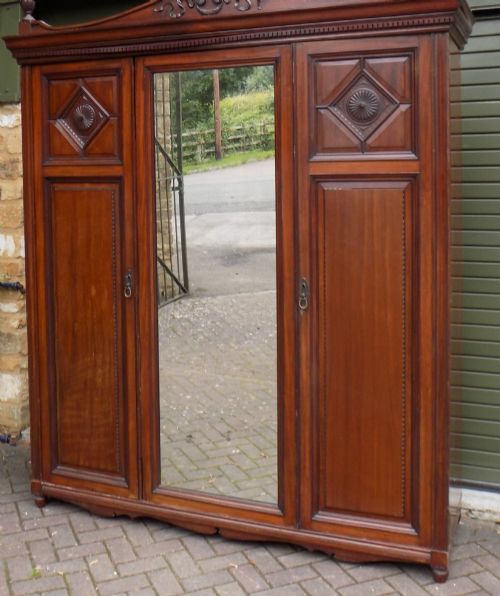
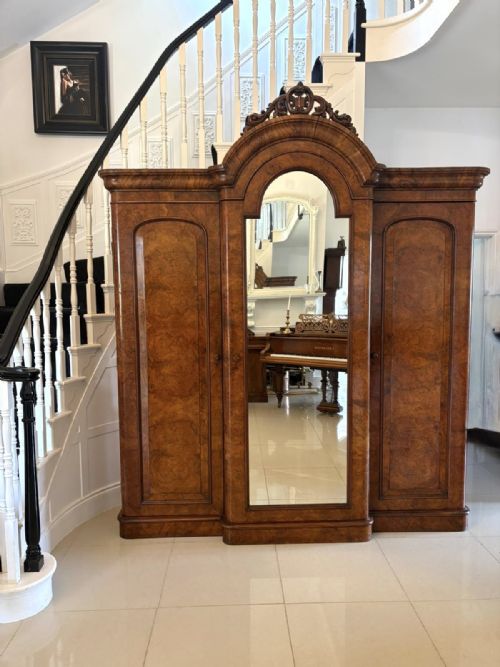
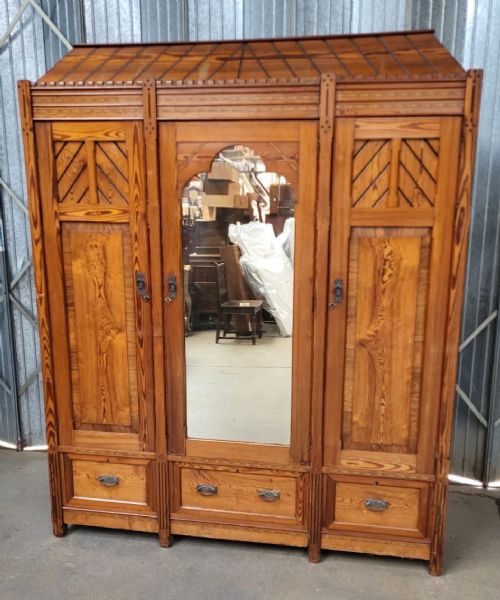


Victorian Mirrored Clothes Press
A Victorian mirrored clothes press is a substantial bedroom storage piece offering hanging space and internal drawers behind full-length glass doors.
Victorian Mirrored Clothes Press
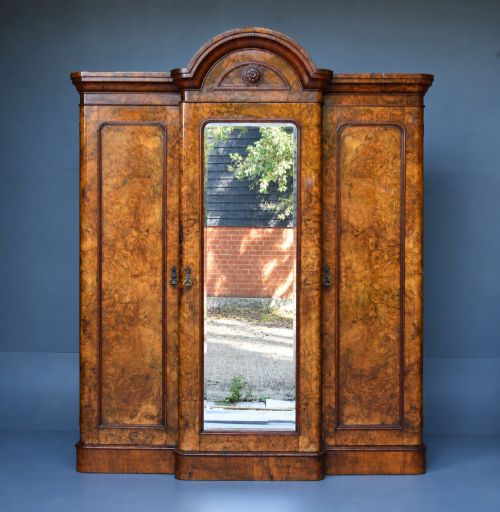
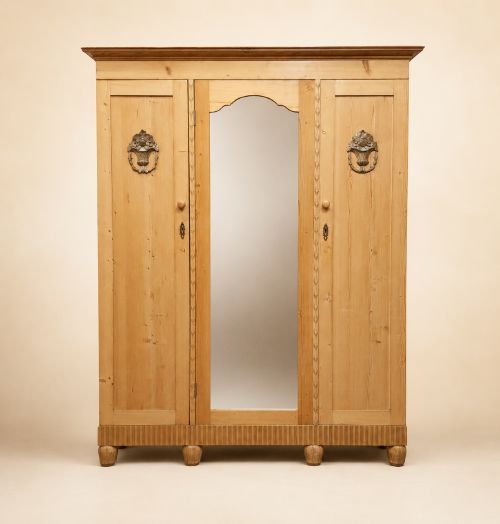
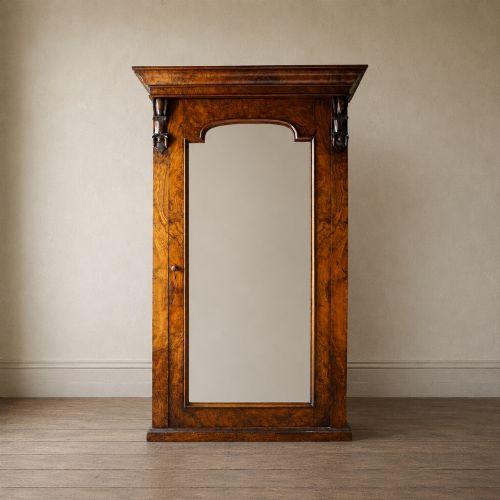
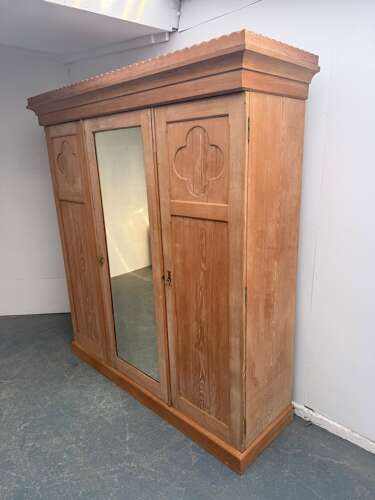
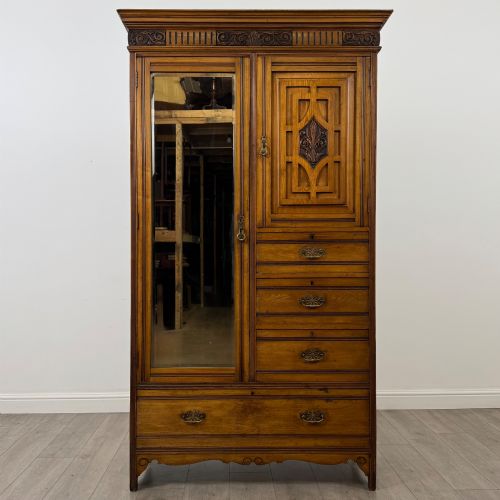
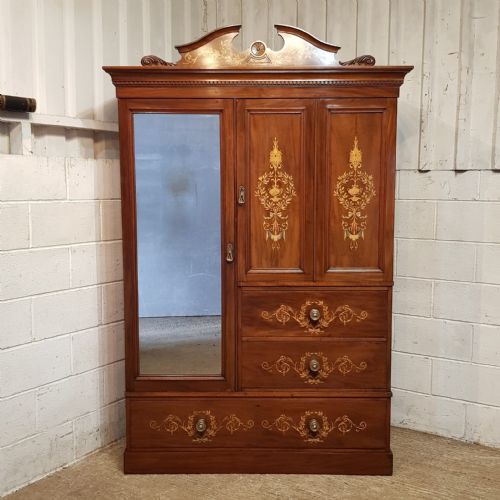
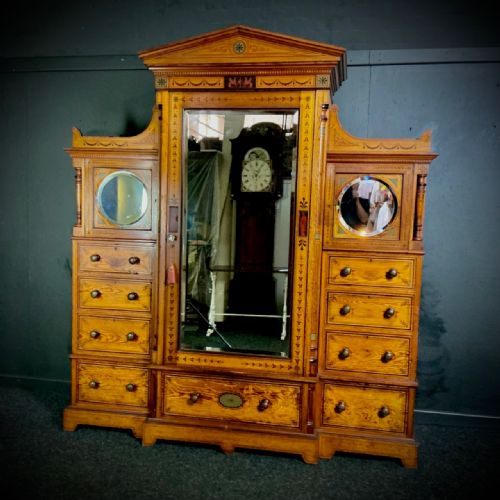
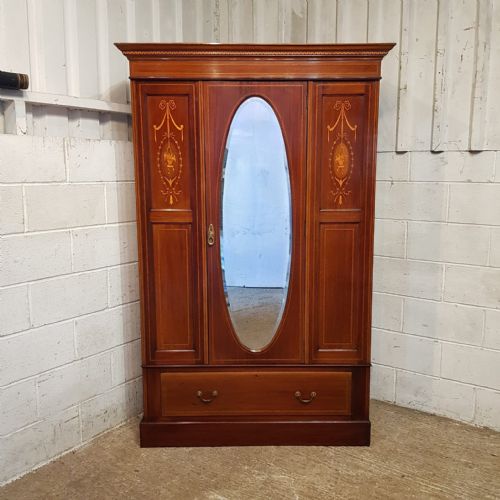
A Victorian mirrored clothes press typically appears as a large timber wardrobe designed to store garments in nineteenth-century homes. Buyers seeking a Victorian mirrored clothes press will find single, triple, and four-door formats spanning the middle and late decades of that era.
Many examples take the form of a compactum, combining hanging compartments with multiple internal drawers and linen presses. The pieces originate from workshops utilising native and imported timbers during the nineteenth and early twentieth centuries.
Materials and Construction
Cabinetmakers constructed these presses using solid timbers like mahogany, walnut, ash, pitch pine, and oak, often applying burr walnut or figured birch veneers to primary surfaces. Brass fittings secure the doors and internal mechanisms, while bevelled mirror glass is set directly into the central door panels.
Joinery techniques involve heavy framing to support the significant weight of large doors and glazed panels. Carved details, inlay work, and polished wax finishes complete the external appearance.
Craftsmanship and Proportion
Quality separates along the ambition of the timber selection and the complexity of the internal configuration. Finer examples employ highly figured burr veneers, intricate inlay, and dense hardwoods such as rosewood rather than standard pine or plain mahogany.
Construction depth dictates utility, with superior multi-door compactums offering fitted interior trays, linen slides, and well-balanced mirror doors that operate smoothly within heavy frames.
The Victorian Mirrored Clothes Press Glossary
- Compactum wardrobe
- A multi-compartment wardrobe combining hanging space, shelving, and internal drawers within a single large carcass. This configuration maximises bedroom storage efficiency.
- Mirror glass
- Flat reflective glazing set into wardrobe doors during the nineteenth century. It provides full-length reflection while concealing internal storage.
- Breakfront
- A cabinet design where the central section projects forward from the flanking wings. This creates architectural depth on large triple or four-door wardrobes.
- Aesthetic Movement
- A late nineteenth-century design style emphasising simplicity, artistic craftsmanship, and ebonised or light wood finishes. Pieces from this movement often feature subtle inlay and brass hardware.
- Gentleman's wardrobe
- A specialised storage piece traditionally designed for male attire, incorporating sliding trays alongside standard hanging sections. These often feature central mirrored doors.
Victorian Mirrored Clothes Press: Frequently Asked Questions
How do I fit a large clothes press in a modern bedroom?
Measure ceiling height and floor space carefully, noting that many large Victorian pieces dismantle into modular sections for transport and installation.
Ensure clearance for opening heavy mirrored doors and allow space for internal drawers to pull out fully.
How do I care for antique timber and mirror glass?
Clean wooden surfaces with traditional beeswax and soft cloths to nourish the grain without building up synthetic residues. Avoid placing the piece near direct heat sources that cause timber shrinkage.
Polish mirror glass gently using proprietary window cleaner applied to a cloth rather than sprayed directly onto the frame.
How can I identify a late Victorian piece?
Late Victorian examples often date from the 1880s and 1890s, frequently incorporating machine-bevelled mirror glass and stylistic influences from the Arts and Crafts or Aesthetic movements. The timber selection often shifts towards lighter ash, pitch pine, or dark polished mahogany.
Construction methods during this period also began incorporating standardised hardware alongside traditional hand-cut joinery.