


Traditional Mahogany Armoire
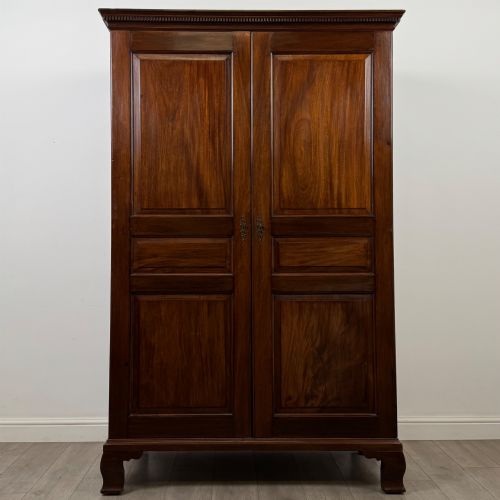
These traditional mahogany armoire pieces are substantial timber wardrobes and linen presses built to anchor a bedroom with grand proportion and deep grain.
Traditional Mahogany Armoire
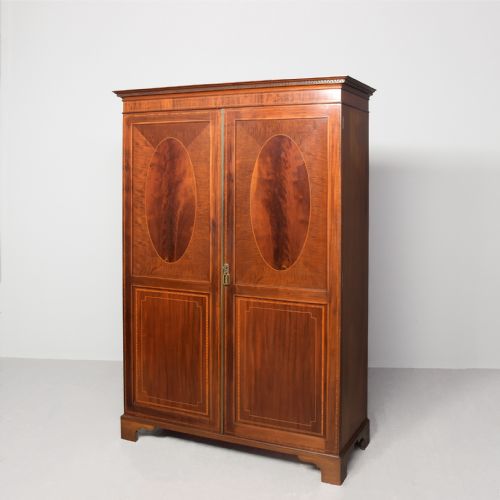
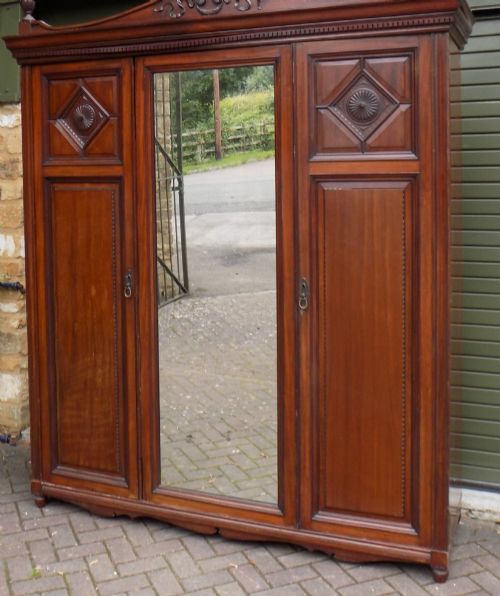
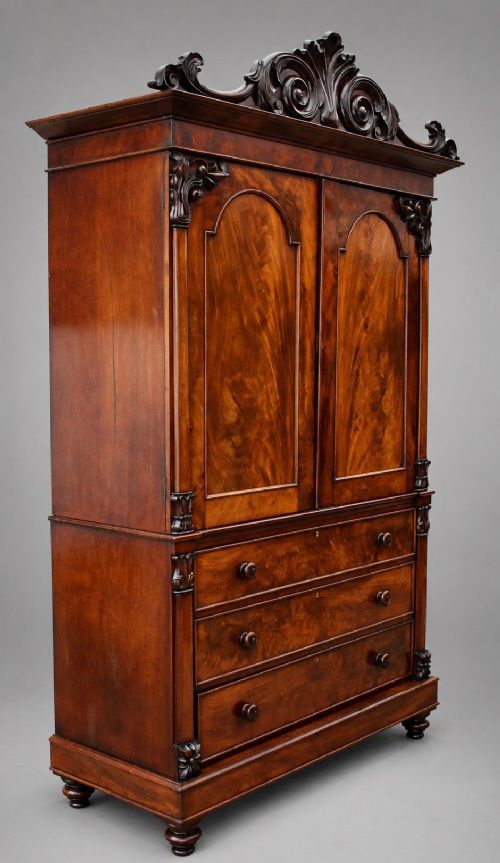
When you search for a traditional mahogany armoire, you encounter grand timber wardrobes, linen presses, and storage cabinets originating from the eighteenth, nineteenth, and early twentieth centuries. The pieces span Georgian, Regency, William IV, and Victorian periods, often taking the form of large double or triple door wardrobes alongside fitted linen presses.
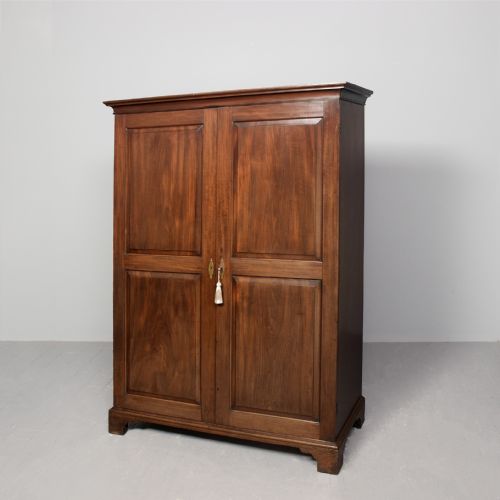
The version you are most likely to meet on this page is a nineteenth-century wardrobe or a Georgian linen press constructed from rich mahogany timber. These utilitarian furniture items were designed to store garments and linens securely in large domestic chambers, utilising deep internal hanging space and sliding trays.
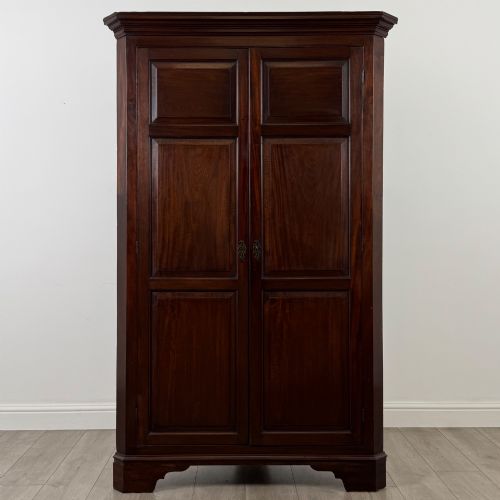
The selection also includes corner cabinets and bowfront cupboards fashioned from the same dense timber, showing that the terminology stretches across various tall storage forms. Regional variants such as Dutch marquetry and Channel Islands pieces appear alongside standard British cabinetmaking traditions from the eras of George III and Victoria.
What varies in quality
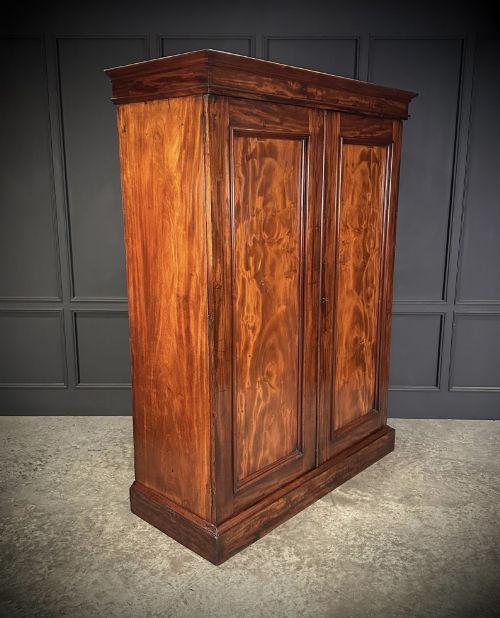
The hierarchy of quality rests primarily on the selection of timber figures, where matched flame mahogany veneer and Cuban mahogany display superior depth compared to plain stock. Cabinetmakers achieved distinction through intricate boxwood stringing, satinwood details, and refined carving rather than mere utility.
Proportion and scale dictate the success of the architecture, distinguishing grand breakfront triple wardrobes from simpler double door cupboards. The integrity of internal fittings, such as original linen slides and working brass locks, separates unaltered examples from heavily adapted pieces.
Listings span the eighteenth, nineteenth, and twentieth centuries, featuring Georgian, Regency, William IV, and Victorian periods alongside Edwardian examples.
The Traditional Mahogany Armoire Glossary
- Linen press
- A tall storage piece comprising upper sliding trays for folded linens and lower drawers for hanging garments. This form dominated bedrooms before full-length hanging wardrobes became standard.
- Flame mahogany
- A distinct timber figure resembling flickering flames, achieved by cutting through the branch junctions of the tree. Cabinetmakers prized this veneer for central door panels.
- Compactum
- A multi-compartment wardrobe combining hanging space, drawers, and linen shelves within a single unified carcass. This clever layout maximised bedroom storage efficiency.
- Breakfront
- A cabinet design where the central section projects forward from the flanking wings. This architectural arrangement creates depth and shadow across large multi-door wardrobes.
Traditional Mahogany Armoire: Frequently Asked Questions
How do I date a mahogany wardrobe?
Dating relies on observing structural characteristics, timber selection, and hardware styles associated with specific reigns and centuries. Georgian pieces often display clean architectural lines and bracket feet, while Victorian examples lean towards heavier carved ornamentation and breakfront proportions.
Secondary woods inside drawers and backboards offer further clues to the period of manufacture. Nail types, dovetail fineness, and locking mechanisms help confirm whether a wardrobe originates from the eighteenth century or the later Victorian era.
What is a linen press?
A linen press is a tall piece of furniture designed specifically to store household textiles and folded garments. The upper section typically encloses sliding wooden trays behind two doors, while the base contains a chest of drawers.
These pieces were essential in large historical homes before central heating and modern closets. Over time, many presses had their internal trays removed to accommodate modern clothes hangers.
Will a large wardrobe fit my room?
These traditional wardrobes are notably tall and deep, requiring careful measurement of ceiling height and doorway clearance before purchase. Many nineteenth-century examples were constructed as modular carcasses that dismantle into cornices, base plinths, and side sections for transport.
Checking the dismantling capability of a specific piece ensures it can negotiate stairwells and tight hallways. Professional delivery teams frequently handle the assembly of these heavy timber structures on site.
How should I care for mahogany timber?
Mahogany benefits from stable indoor humidity and protection from direct sunlight, which can fade the rich reddish-brown colour over decades. Regular dusting with a soft, dry cloth maintains the surface sheen without building up heavy wax residues.
Applying a traditional beeswax polish sparingly helps nourish the grain and preserve the antique finish. Avoid placing these heavy timber pieces directly against damp exterior walls or near active heat sources.