


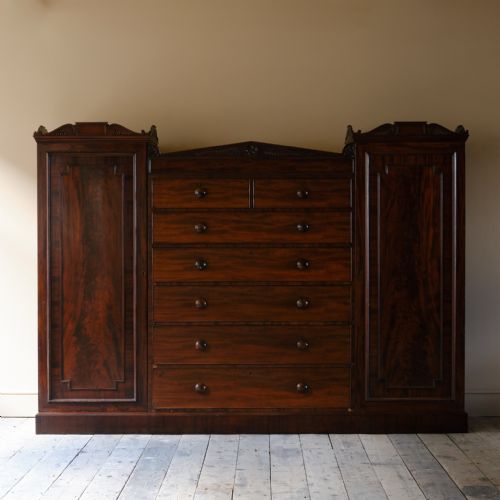


Flame Mahogany Compactum
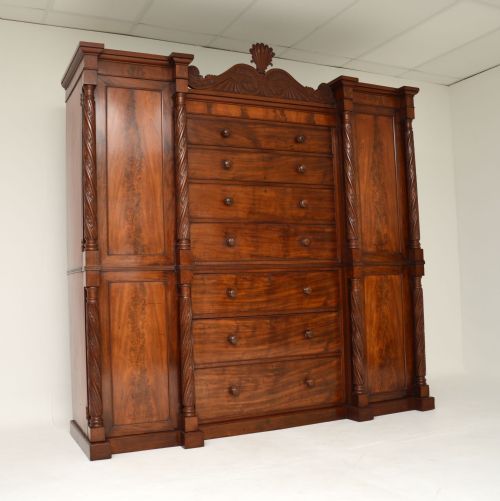
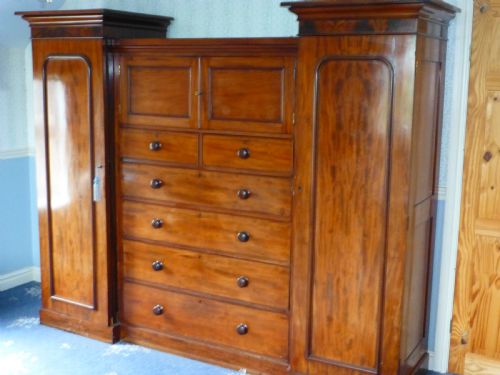
A flame mahogany compactum is a grand storage piece combining wardrobe hanging space and internal drawers, prized for its dramatic figured wood grain.
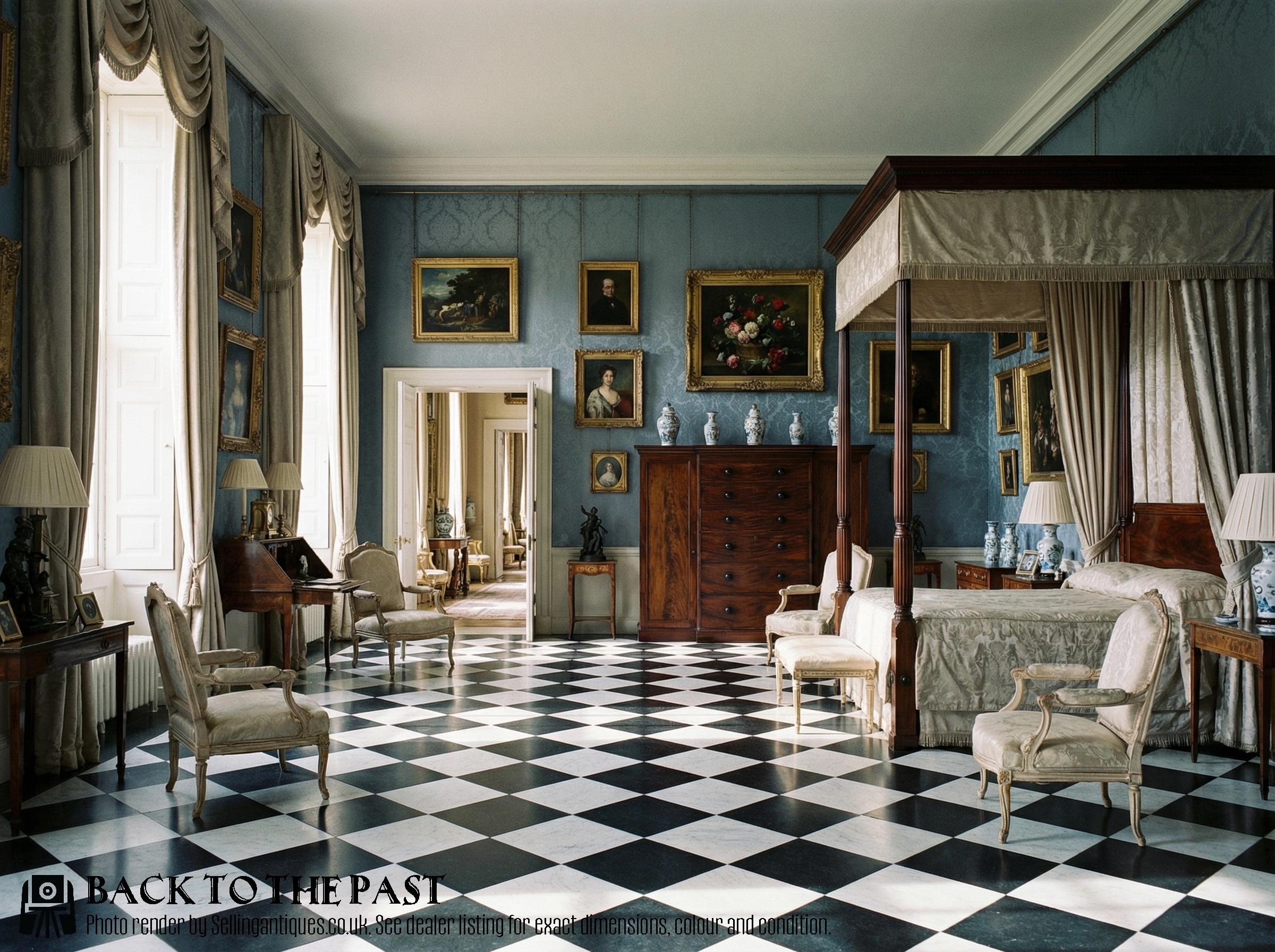
Flame Mahogany Compactum
A flame mahogany compactum provides substantial bedroom storage by uniting hanging compartments with banks of internal drawers and linen presses. These large pieces appear frequently in Victorian, William IV, and Georgian incarnations across the inventory.
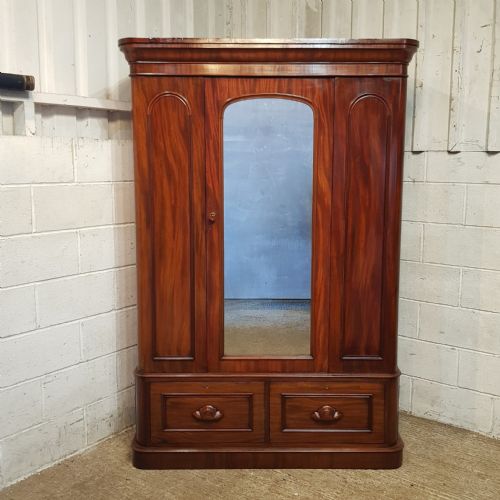
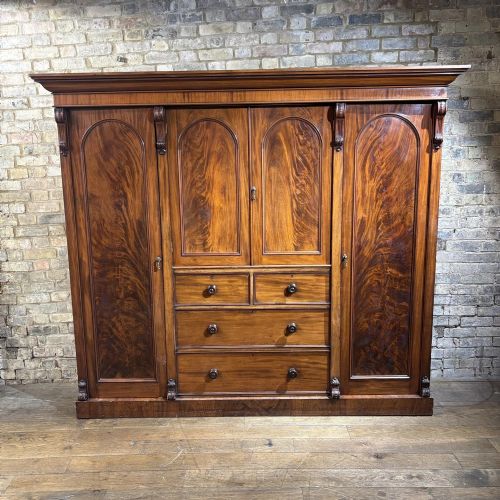
The layout typically involves a central tower of drawers flanked by full-length hanging wardrobes, sometimes configured with breakfront or inverted breakfront facades. Double, triple, and four-door formats emerge regularly from the listings.
Buyers seeking this form will encounter diverse stylistic treatments ranging from plain Georgian proportions to ornate Victorian Gothic Revival and Edwardian Chippendale Revival details.
How they were made
Cabinetmakers constructed the carcase using solid timbers such as mahogany, oak, and pine, applying highly figured flame mahogany veneer to the primary exterior surfaces to create striking visual patterns.
Joinery incorporated substantial brass hardware for locks, handles, and hanging mechanisms, while glass panels occasionally featured in door designs alongside panelled timber.
Selected Edwardian iterations conceal secret drawers tucked discreetly inside the cabinetry to safeguard valuables from curious houseguests.
What varies in quality
The hierarchy of quality rests primarily on the intensity and symmetry of the flame mahogany veneer selection, where expertly matched grain figures across multiple doors elevate the piece significantly.
Architectural proportions and the sophistication of internal fittings, such as secret drawers or well-configured linen slides, separate standard workshop output from exceptional cabinet work.
Gillows·Waring & Gillow
The Flame Mahogany Compactum Glossary
- Compactum
- A multi-functional wardrobe featuring integrated drawer units alongside hanging spaces. This combination design maximises storage capacity within a single large piece of bedroom furniture.
- Flame mahogany
- A veneer cut from the branch junctions of the mahogany tree, displaying a distinctive fire-like ripple effect. Cabinetmakers prized this grain for its dramatic decorative impact on primary facades.
- Breakfront
- A cabinet front where the central section projects forward from the flanking wings. This configuration adds architectural depth and shadow to large wardrobes.
- Linen press
- A piece with upper cupboards enclosing sliding trays for folded textiles above a base of drawers. These units frequently form the foundational layout of earlier compactums.
- Inverted breakfront
- A facade design where the central section recedes rather than projects. This subtle variation creates a concave focal point on large multi-door wardrobes.
Flame Mahogany Compactum: Frequently Asked Questions
How do I dismantle a compactum?
These large wardrobes often separate into distinct modular sections, including a central tower, side robes, cornice, and plinth, held together by internal bolts or pegs.
Working with a partner helps safely unscrew and disengage the vertical modules to facilitate transport and reassembly in a new room.
What is the difference between a wardrobe and a compactum?
A standard wardrobe provides primarily hanging space behind doors, whereas a compactum integrates dedicated internal drawer stacks and linen shelves alongside the hanging sections.
This hybrid internal architecture allows for comprehensive storage of both folded garments and long coats within a single carcass.
How do I care for flame mahogany?
Protect the veneered surfaces by placing the wardrobe away from direct sunlight and maintaining stable room humidity to prevent veneer lifting or drying out.
Apply a traditional beeswax polish sparingly and buff with a soft cloth to nourish the timber grain without building up heavy residue.
How do I date a mahogany compactum?
Examine the secondary woods inside the drawers, such as oak or pine, alongside the construction style, hardware types, and overall architectural proportions.
Georgian examples display restrained lines and bracket feet, while Victorian and Edwardian iterations often incorporate heavier breakfront cornices and extensive flame veneer matching.