
Victorian Mahogany Press
A victorian mahogany press brings structural dignity and deep timber warmth to a room, offering substantial storage built to last generations.
Victorian Mahogany Press
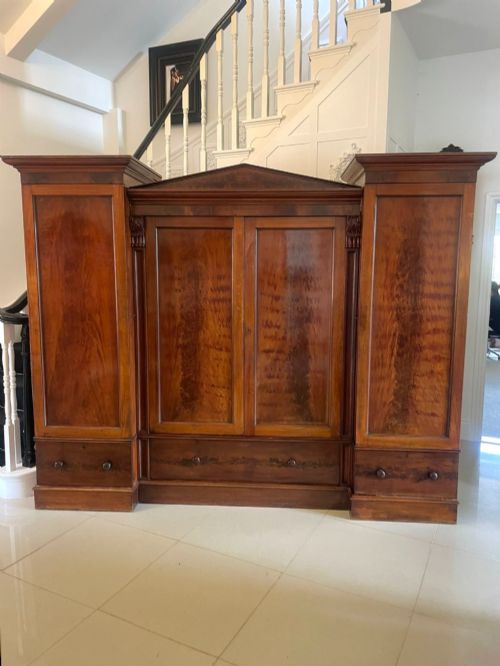
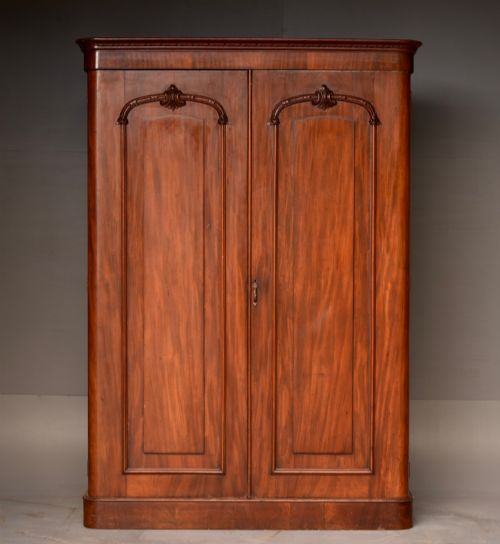
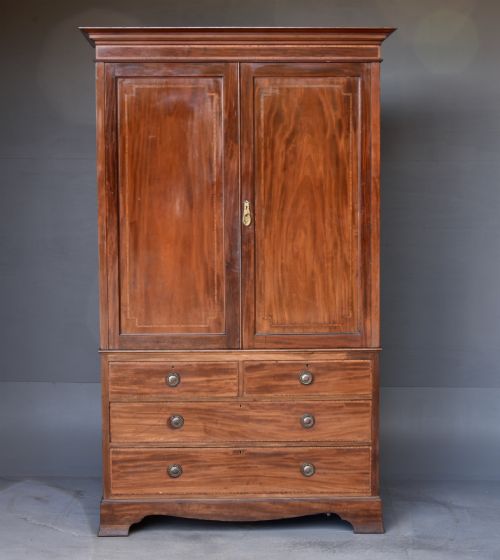
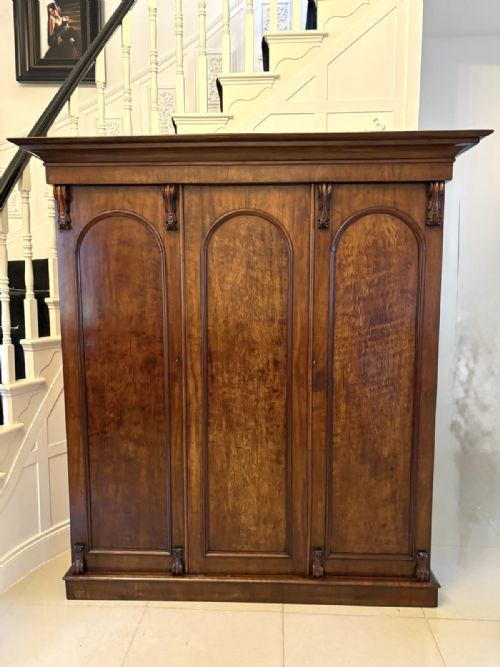
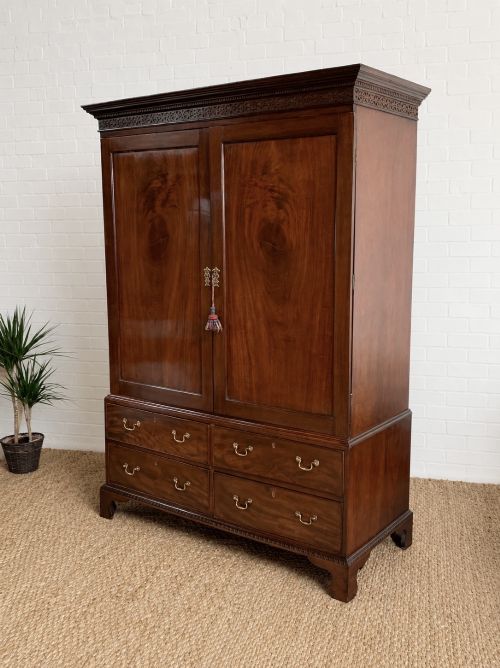
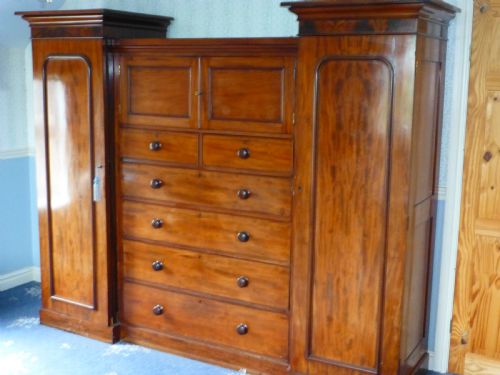
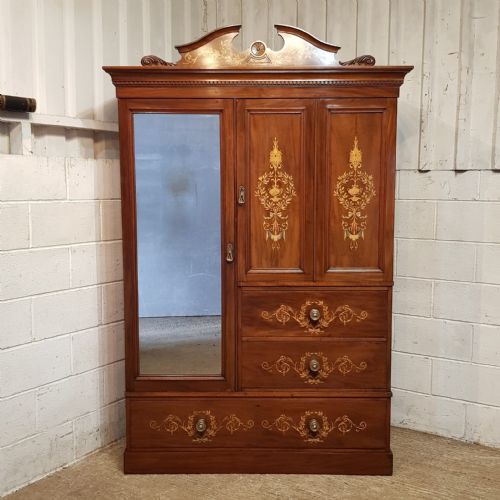
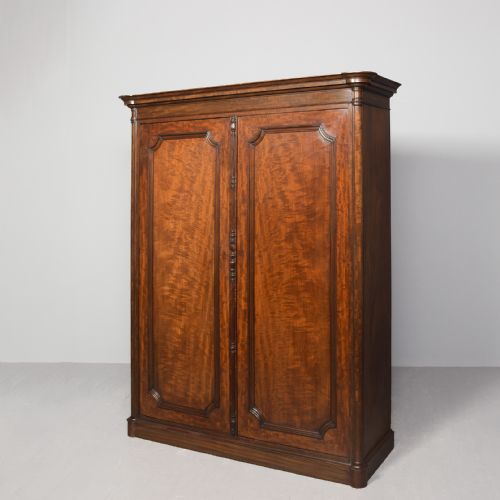
When you search for a victorian mahogany press, you encounter substantial storage furniture designed to hold folded linens, garments, and household goods. These pieces typically combine an upper section of linen sliding trays or hanging space with a lower chest of drawers, standing with a commanding architectural presence.
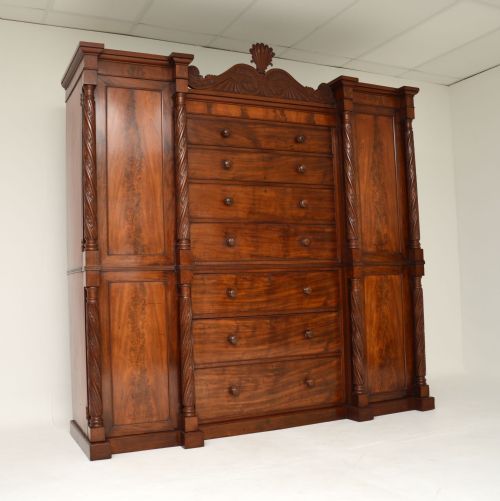
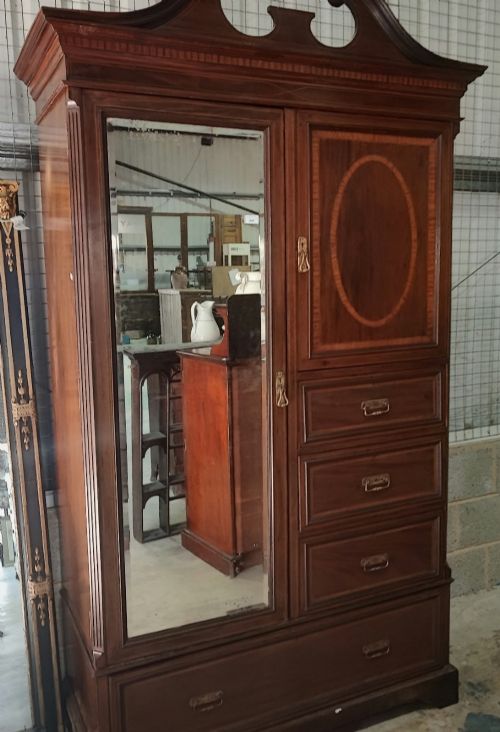
The versions most commonly met on this page date from the nineteenth century, ranging from compact dwarf presses to grand multi-door combination wardrobes. Pieces often incorporate regional variations, such as Welsh vernacular designs or Channel Island hall wardrobes, showing distinct local cabinet-making traditions alongside standard metropolitan forms.
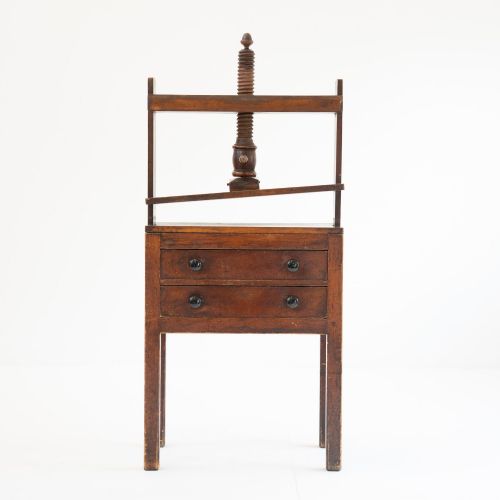
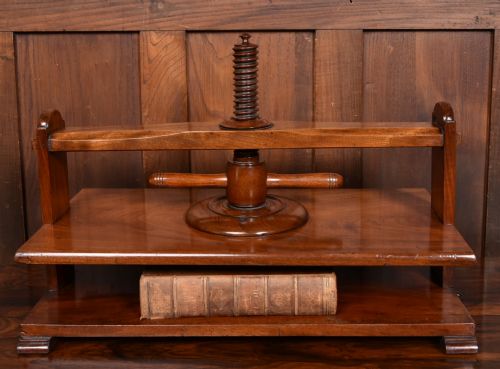
Makers and retail houses of the period, including Gillows, Maples and Co, and Heal and Son, produced these items to meet the demands of affluent households. Alongside full-sized linen presses, the selection occasionally includes table-top book presses and campaign cabinets fulfilling specialised domestic and travel functions.
What varies in quality
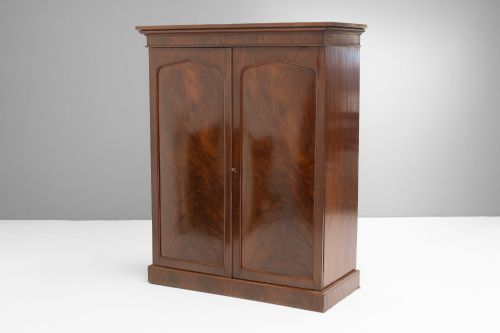
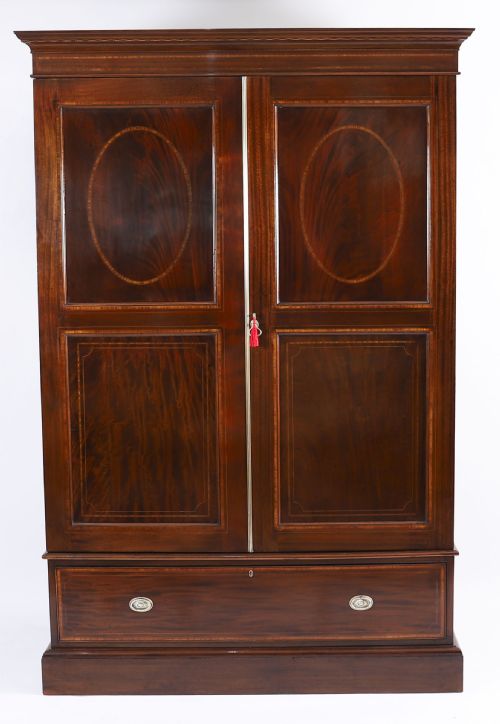
The choice of timber veneer dictates much of the visual impact, with symmetrical flame mahogany cuts commanding higher regard than plain surfaces. Superior examples display carefully matched grain patterns across all doors and drawer fronts, creating a cohesive visual harmony.
Construction methods and internal completeness also differentiate the range. Pieces retaining their original sliding trays, functional locks with keys, and uncompromised internal configurations represent the higher standard of surviving nineteenth-century output.
Listings feature nineteenth-century pieces incorporating mahogany, brass, glass, satinwood, pine, and oak across styles from Georgian revival to Victorian Gothic.
maples & co·Edwards and Roberts·Gillows·S & H Jewell·Heals
The Victorian Mahogany Press Glossary
- Compactum
- A multi-compartment wardrobe combining hanging space, drawers, and linen shelves within a single unified piece of furniture. This form became popular during the nineteenth century for efficient bedroom storage.
- Flame mahogany
- A veneer cut from the fork of the mahogany tree where branches join the trunk, producing a distinctive flickering, flame-like grain pattern. Cabinet-makers reserved this decorative timber for the most prominent exterior surfaces.
- Linen press
- A tall piece of furniture featuring upper doors enclosing sliding shelves for folded textiles, mounted above a chest of base drawers. Originally designed for storing household linen before modern wardrobe hanging space became standard.
- Blind fretwork
- Carved ornamentation applied to a flat surface in geometric or interlaced patterns without piercing through to the background. It frequently appears along the cornices of better quality nineteenth-century case furniture.
- Breakfront
- A cabinet design where the central section projects forward from the flanking wings, creating architectural depth and varied shadow lines across the facade.
Victorian Mahogany Press: Frequently Asked Questions
What is a linen press used for?
A linen press served primarily to store household textiles, sheets, and folded garments on internal sliding wooden trays before vertical hanging wardrobes became common in bedrooms.
The lower drawer section provided additional space for smaller items of clothing, making the piece a central storage hub in a nineteenth-century home.
Where should I place a heavy mahogany press?
These tall, heavy items require stable flooring and adequate wall clearance to accommodate their substantial depth and architectural cornices. Placing them away from direct heat sources prevents the mahogany timber and decorative veneer from drying out or splitting.
Because they arrive as very heavy single units or modular sections, checking ceiling height and stairway clearance before delivery is essential.
How do I date a nineteenth century mahogany press?
Dating relies on observing structural characteristics, timber choices, and stylistic cues such as Regency proportions, early Victorian flame veneers, or late Victorian aesthetic movement details. Drawer construction methods, including hand-cut dovetails and the presence of secondary woods like pine or oak, offer further chronological clues.
Makers' stamps, brass hardware styles, and labels from firms like Gillows or Heal and Son help narrow the production era precisely.