

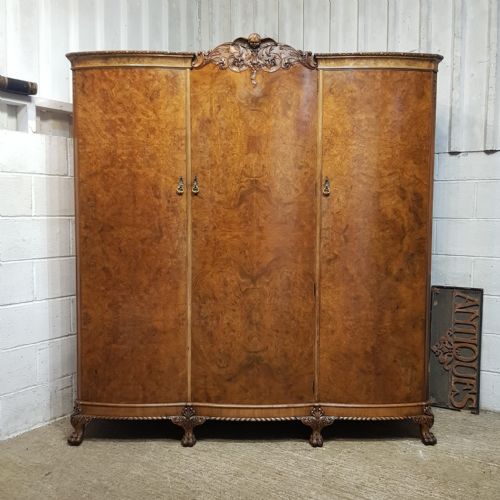


Large Triple Door Armoire
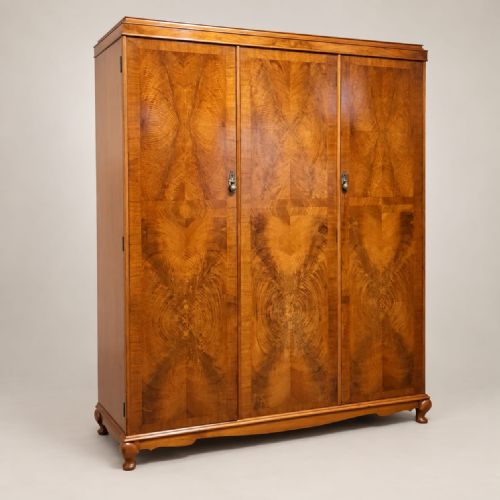
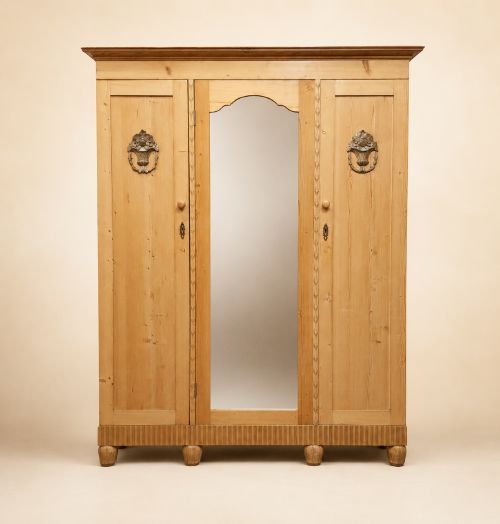
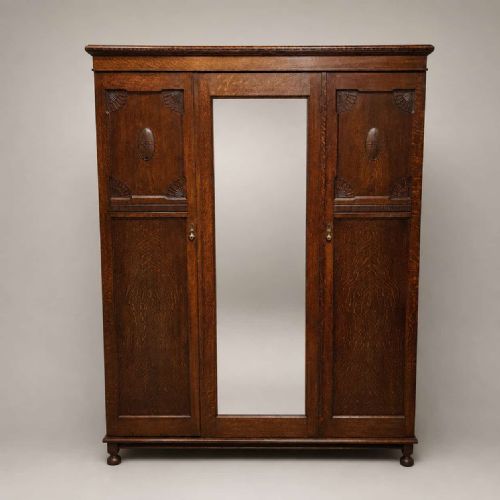
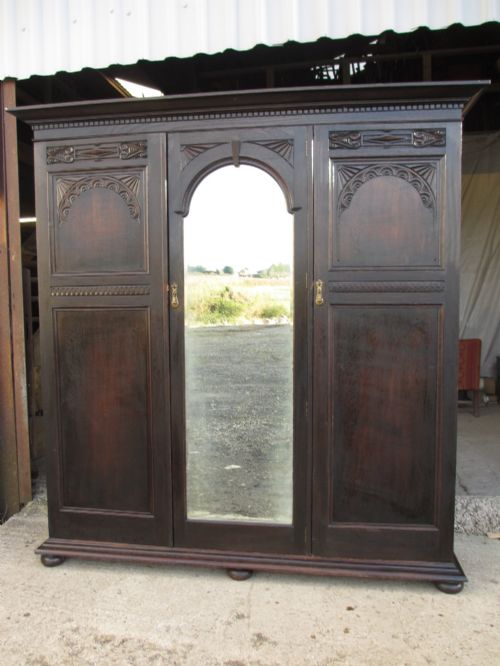
A large triple door armoire provides substantial hanging space and architectural presence, constructed across Victorian, Edwardian, and Art Deco periods.
Large Triple Door Armoire
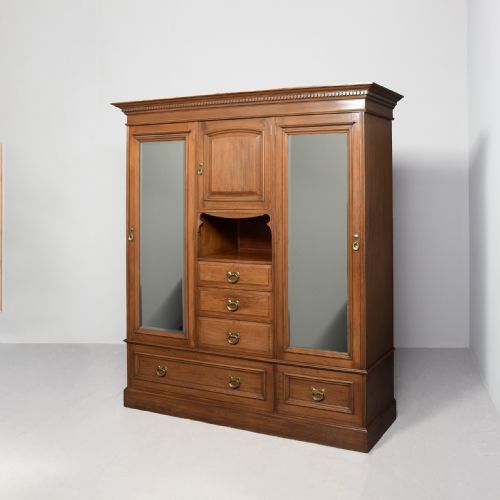
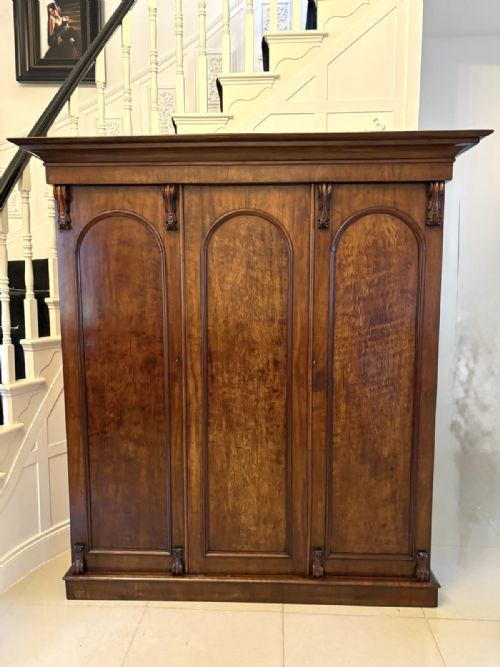
A large triple door armoire offers extensive storage across three distinct internal sections, often combining hanging space with drawers and linen shelves in a compactum arrangement. Buyers searching for a large triple door armoire encounter pieces predominantly from the Victorian and Edwardian eras, alongside French Provincial designs and later Art Deco interpretations.
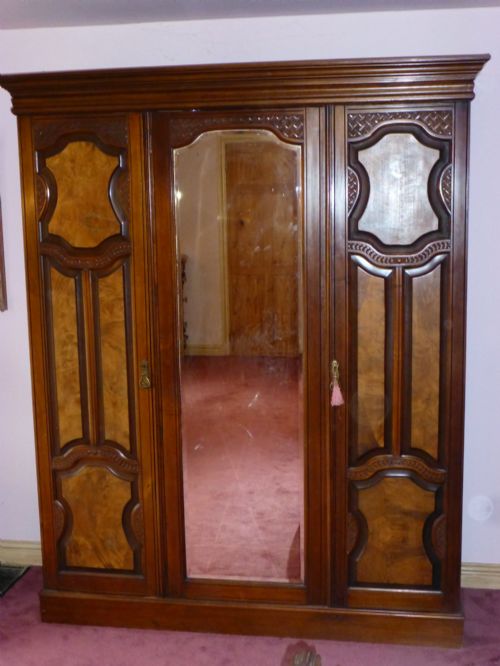
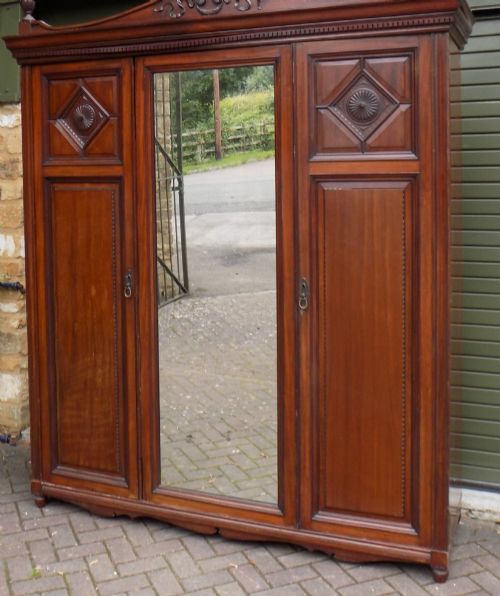
The architectural scale of these wardrobes suits large bedrooms and dressing rooms, typically featuring central mirrored doors flanked by timber panels. Construction materials span native and exotic woods, including mahogany, burr walnut, oak, and satinwood, frequently embellished with brass hardware and glass mirrors.
Materials and Construction
Cabinet makers built these large wardrobes using solid timber frames faced with figured veneers such as burr walnut, mahogany, and pollard oak, applying decorative inlay in satinwood or maple. Carved ornamentation, linenfold panels, and applied mouldings define stylistic revivals ranging from Jacobean and Chippendale to Art Nouveau and Gothic.
Internal configurations rely on modular construction, allowing the three distinct sections to separate for transport and installation in domestic spaces. Glass bevelled mirror doors and cast brass hanging hooks or sliding rails reflect the functional demands of nineteenth and early twentieth century households.
Listings span the nineteenth and twentieth centuries, featuring oak, mahogany, and burr walnut across Edwardian, Victorian, and Art Deco styles.
Distinctions in Quality
The tier of craftsmanship separates standard utility furniture from pieces produced by prominent cabinet makers, evident in the selection of symmetrical burr veneers and crispness of hand-carved detail. Superior examples maintain structural integrity across wide panel doors through seasoned timber selection and robust internal framing.
Integration of secondary storage compartments, such as fitted interior linen drawers and sliding trays within a compactum layout, distinguishes higher grades of manufacture. The depth of figure in walnut and mahogany surfaces, combined with original bevelled mirror glass and brass fittings, marks the upper range of surviving examples.
Holland and Sons·Maple & Co
The Large Triple Door Armoire Glossary
- Compactum
- A multi-section wardrobe combining hanging space with internal drawers, shelves, and sometimes shoe racks. This layout maximises bedroom storage within a single architectural unit.
- Burr walnut
- Timber taken from the gnarled growth of a walnut tree, yielding highly decorative swirling grain patterns. Cabinet makers prized this wood for veneering prominent door panels.
- Breakfront
- A piece of furniture where the central section projects forward from the flanking wings. This architectural device creates depth and shadow across large wardrobe facades.
- Satinwood
- A hard, yellowish timber native to Ceylon and India, used extensively for crossbanding and marquetry inlay during the Edwardian period.
Large Triple Door Armoire: Frequently Asked Questions
How do I dismantle a large triple door armoire?
These wardrobes typically separate into three vertical carcass sections, a heavy cornice top, and a moulded plinth base, held together by internal bolts or screw fixings.
Marking the position of each component during disassembly ensures the panels reassemble correctly without straining the original joints.
Will a large triple door armoire fit in my bedroom?
The substantial footprint requires measuring both ceiling height and floor clearance, accounting for the projection of hinged doors and internal mirror frames.
Because these units were designed for expansive Victorian and Edwardian rooms, checking stairwell turns and doorway clearances prior to delivery is essential.
What is the difference between an armoire and a compactum?
An armoire traditionally designates a large freestanding cupboard with doors enclosing hanging space or shelves, while a compactum incorporates a structured interior of drawers and compartments.
Many large triple door examples combine both formats by dedicating side sections to garments and the central bay to linen drawers.
How do I care for antique veneer surfaces?
Polished timber and delicate burr walnut veneers respond best to regular dusting with a soft dry cloth and occasional applications of traditional beeswax.
Avoiding direct sunlight and maintaining stable room humidity prevents the timber from drying out and keeps the veneer secure to the carcase.