



Three Door Mahogany Wardrobe
A three door mahogany wardrobe provides substantial storage, and these large architectural pieces anchor a bedroom with deep timber grain and presence.
Three Door Mahogany Wardrobe
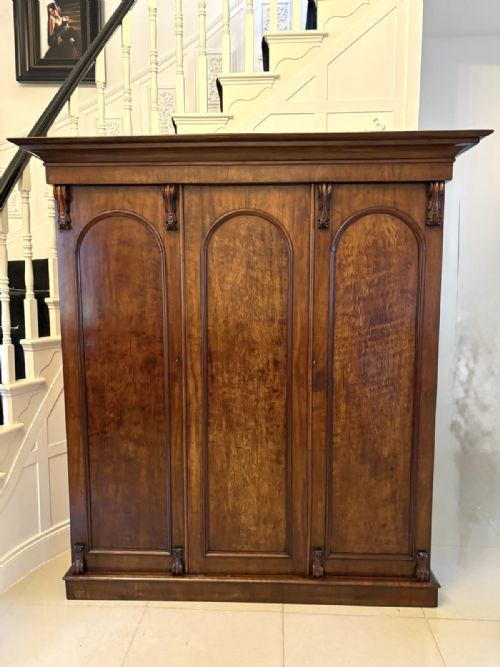
A three door mahogany wardrobe is a grand bedroom piece, often called a triple wardrobe or compactum, designed to handle extensive hanging space and internal drawers. When you search for this phrase, you meet substantial timber constructions that typically span the Victorian and Edwardian eras, alongside earlier Georgian styles and continental armoires.
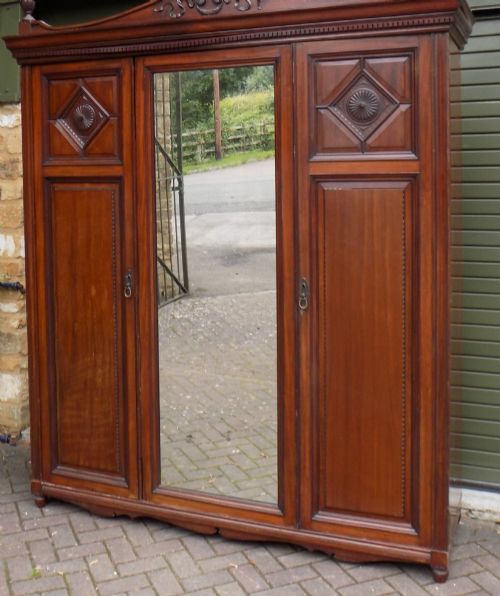
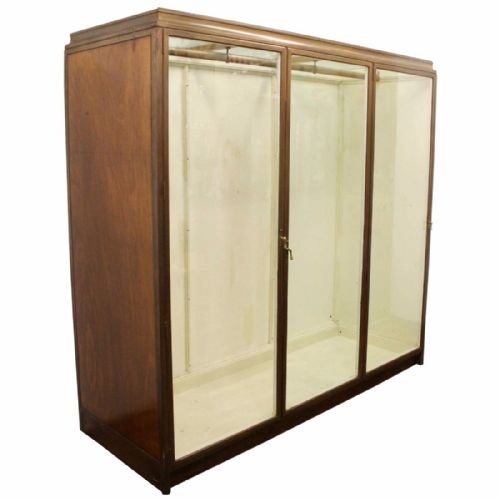
The pieces you encounter most often on this page date from the Victorian period through to the Edwardian years. They rely on a tripartite format where a central mirrored or panelled door is flanked by two full-length wings, sometimes arranged in a breakfront or bow front silhouette.
How they were made
Cabinet makers utilised solid mahogany and applied figured mahogany or flame mahogany veneer across the broad expanses of the doors to display striking grain patterns. Internal carcases often incorporated secondary timbers, whilst structural joints relied on traditional cabinet-making techniques to bear the heavy weight of the timber.
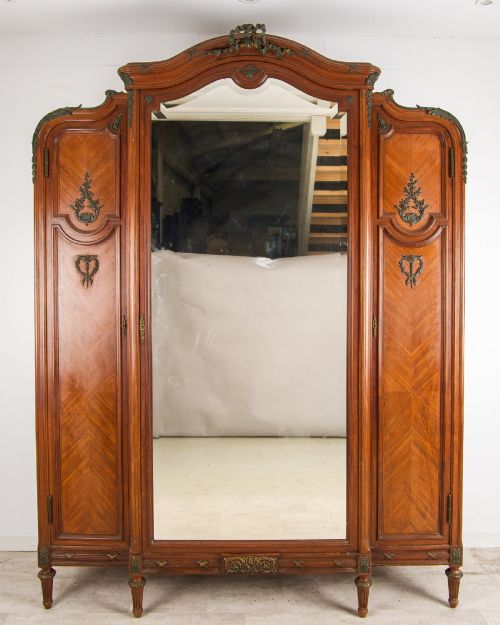
Decoration frequently involved subtle satinwood inlay, carved details, or cast brass hardware. Continental examples introduce mirror glass and gilt bronze ormolu mounts to soften the imposing scale of the dark wood.
Some wardrobes whisper secrets through hidden interior tie racks and secret collar boxes.
What varies in quality
The quality of a three door mahogany wardrobe rests in the selection of the timber veneers and the architectural ambition of the design. Pieces featuring highly figured flame mahogany or intricate marquetry inlay stand apart from plain stock through the deliberate skill applied to their surface ornament.
Construction depth also dictates distinction, as fitted compactum models with original internal sliding trays and drawers demand greater joinery expertise than simple hanging spaces. The integration of breakfront cornices and well-cast ormolu mounts elevates certain examples into high-status commissions.
Maple and Co·Jenners of Edinburgh
The Three Door Mahogany Wardrobe Glossary
- Compactum
- A multi-functional wardrobe that includes internal drawers, sliding trays, and hanging compartments behind its three doors. This layout was particularly popular in the later nineteenth century for comprehensive clothing storage.
- Breakfront
- A cabinet design where the central section projects forward from the flanking wings. This architectural arrangement creates depth and shadow across the facade.
- Flame mahogany
- A veneer cut from the fork of the mahogany tree where the branches meet the trunk. It produces a distinctive flickering flame pattern across wide door panels.
- Ormolu
- Gilt bronze mounts applied to the exterior of furniture, seen frequently on continental armoires. The metal adds metallic highlights to the dark timber surface.
Three Door Mahogany Wardrobe: Frequently Asked Questions
How do I dismantle a three door mahogany wardrobe?
Most of these large wardrobes were designed to dismantle into manageable sections, including a separate cornice, base, and three distinct carcass pieces. You typically unscrew internal brackets and lift the panels apart rather than attempting to move the heavy structure whole.
Working with a helper ensures safety when handling heavy mirrored doors and solid timber cornices during the disassembly process.
What is the difference between an armoire and a wardrobe?
An armoire is a traditional continental European cupboard, often displaying French styling with ormolu mounts or distinct architectural cornices. A wardrobe is the more common British term for the same clothing storage function.
Both terms appear across these listings, particularly when describing imported nineteenth-century pieces.
How do I care for mahogany timber?
Maintain mahogany by keeping the timber away from direct heat sources and sudden humidity shifts that cause wood to crack. Apply a quality beeswax sparingly to nourish the grain and buff gently with a soft cloth.
Avoid synthetic sprays that build up a residue and dull the natural warmth of the polished surface over time.
How do I date an Edwardian wardrobe?
Edwardian pieces, dating from roughly 1901 to 1910, often feature lighter satinwood inlay, brighter mahogany tones, and occasionally simpler proportions than heavy Victorian designs. You may also find factory stamps or retail labels inside the drawers.
Examine the interior fittings and backboards, as machine-sawn timber and simpler plywood backing often point towards this later period.