

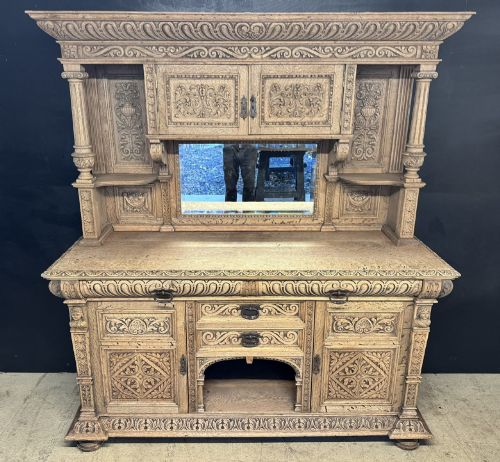
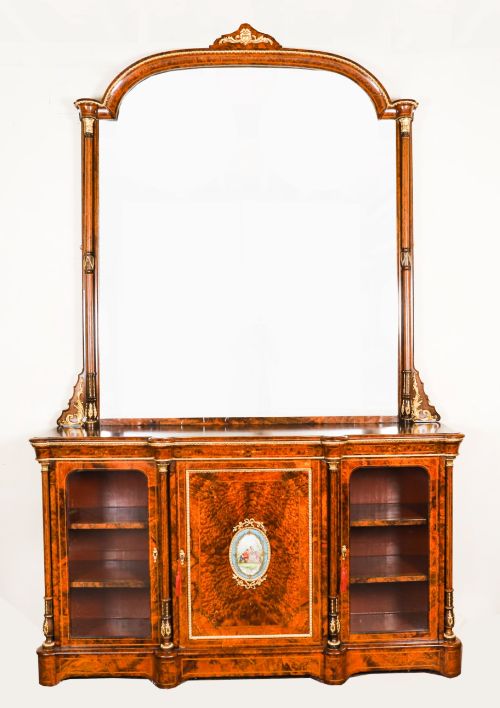
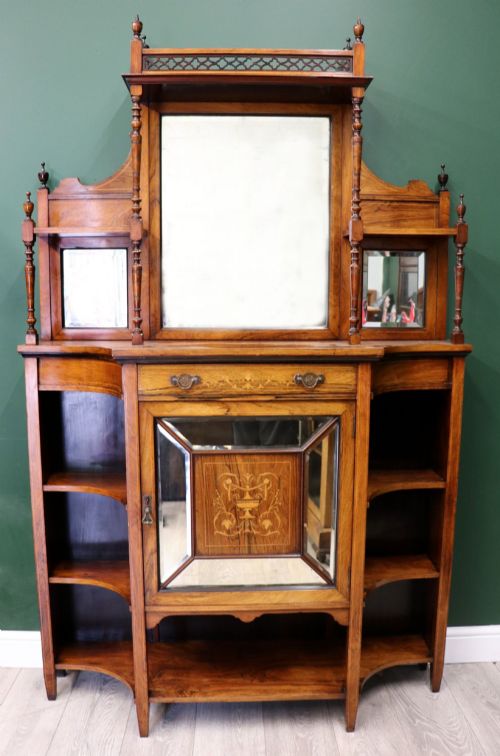
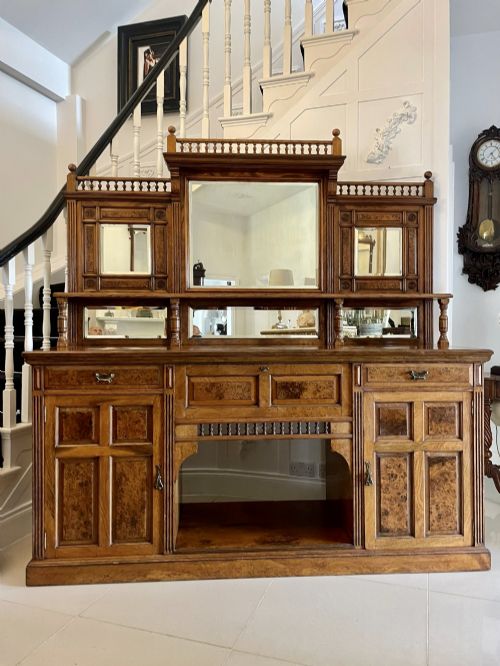
Victorian Mirror Back Sideboard
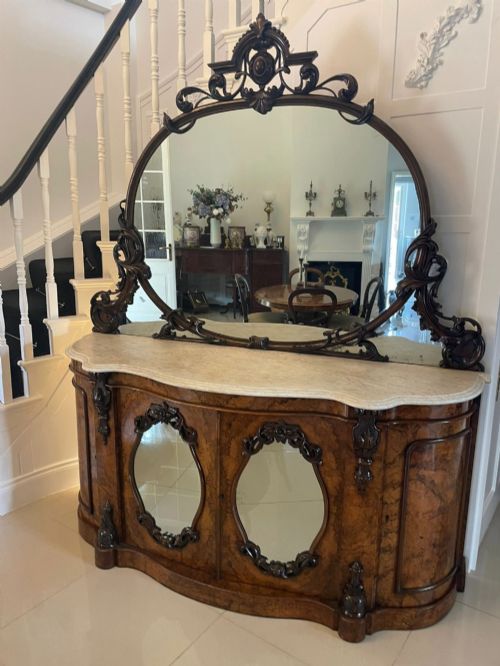
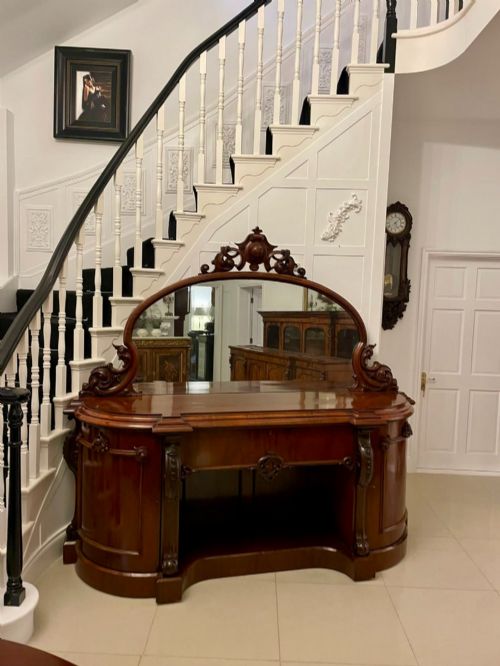
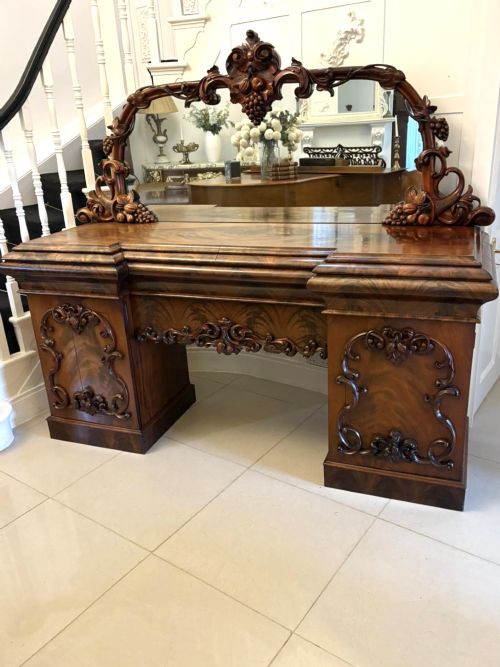
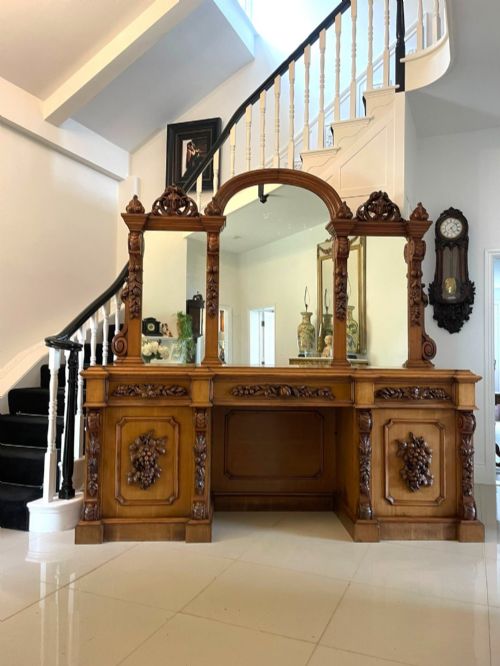
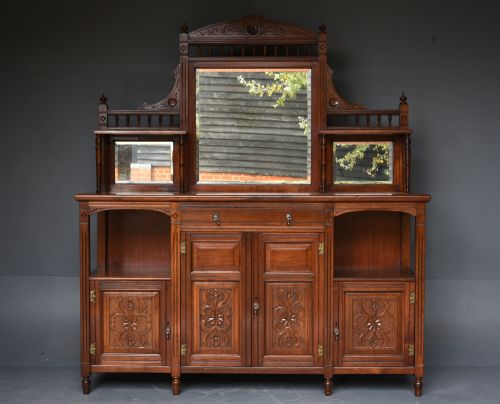
A victorian mirror back sideboard brings together grand proportions and deep, polished timber, anchoring a dining room with fitted glass and carved display shelves.
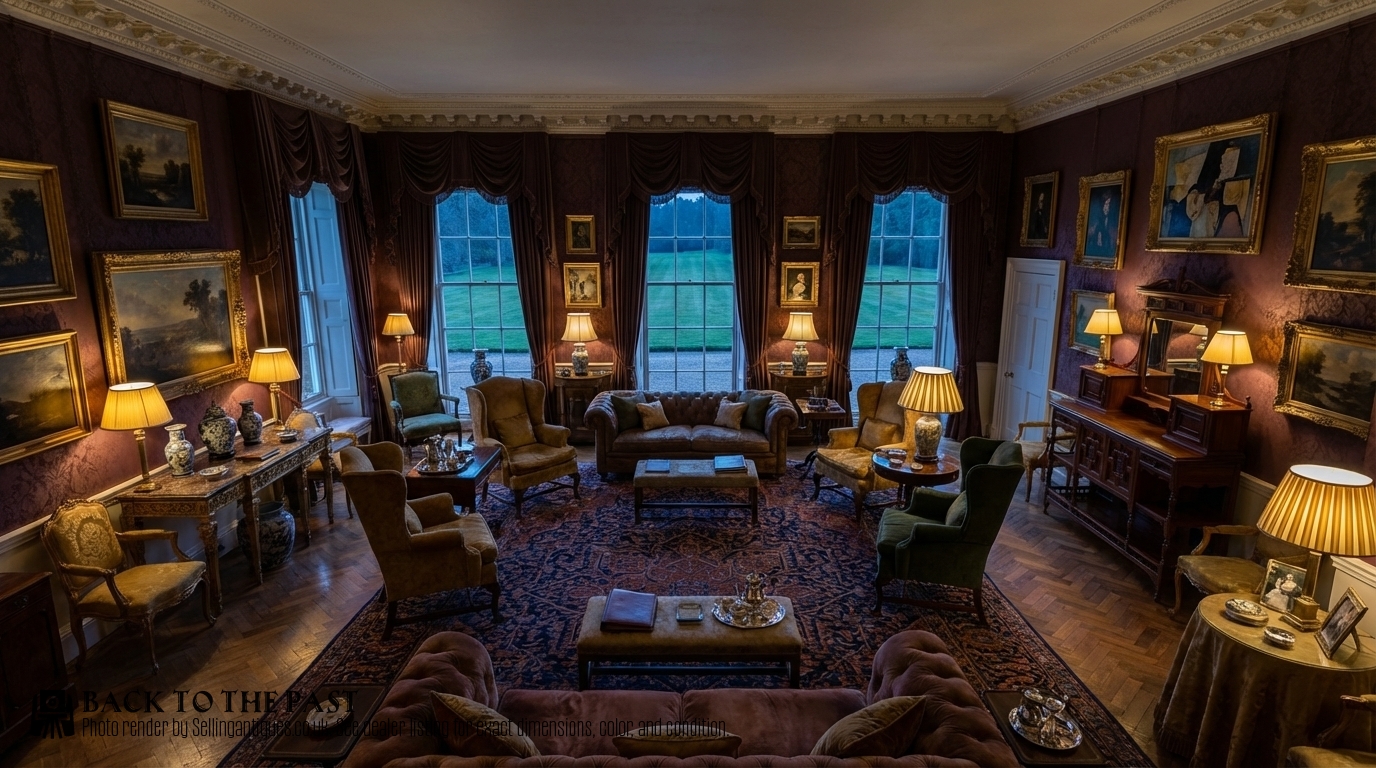
Victorian Mirror Back Sideboard
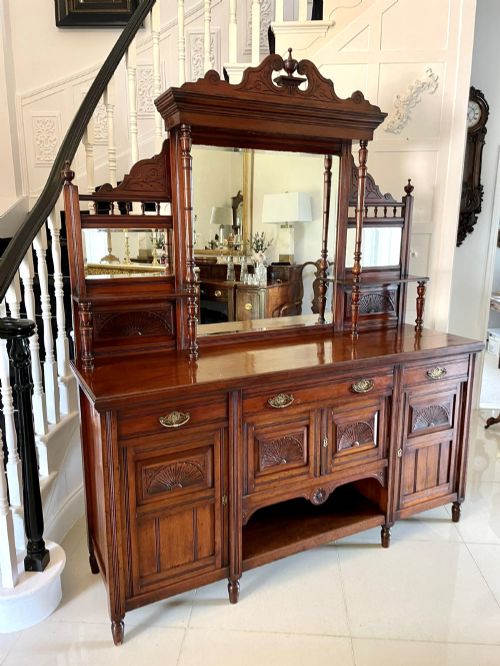
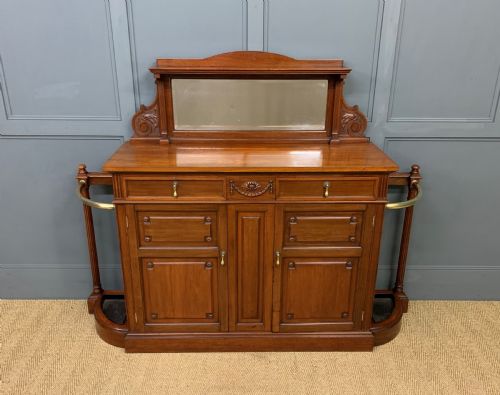
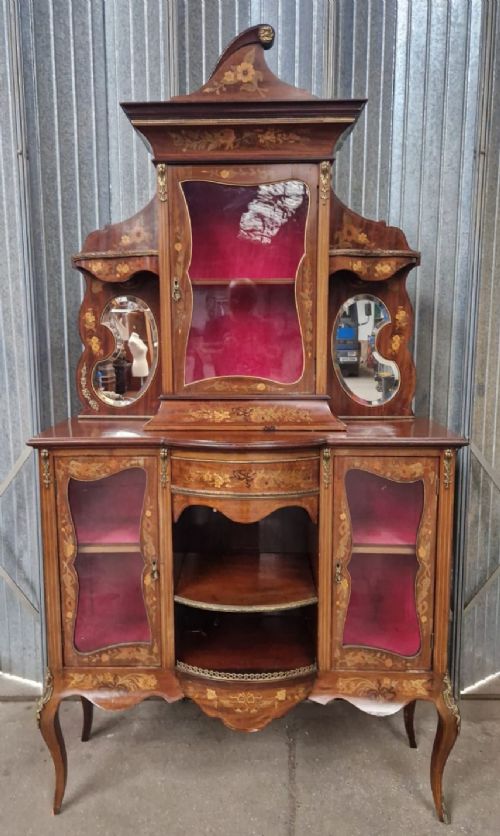
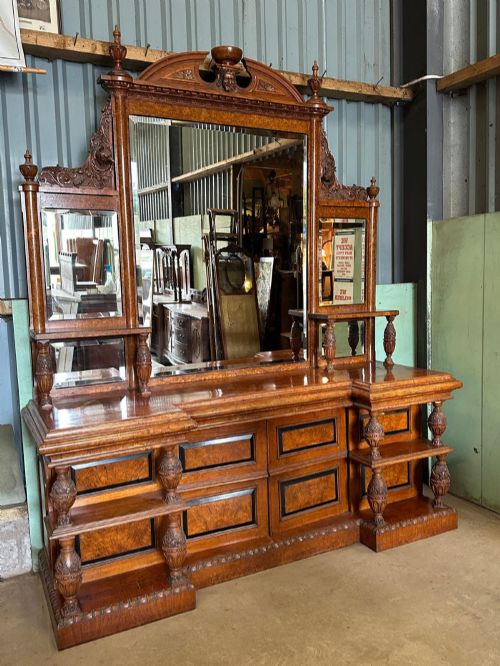
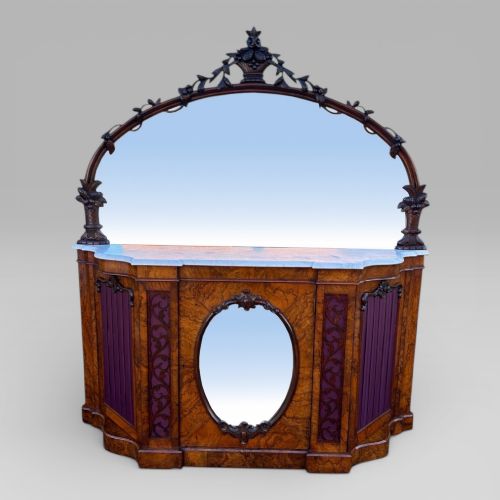
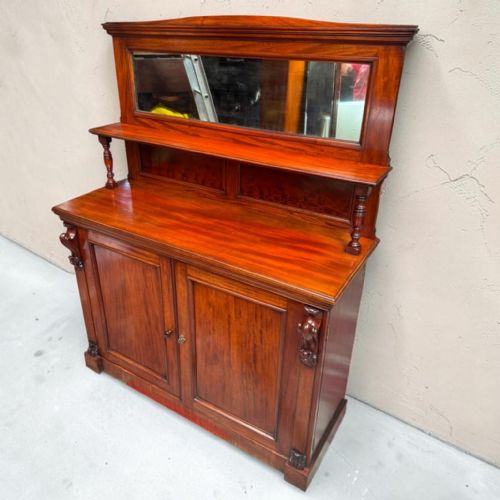
A victorian mirror back sideboard combines a low, enclosed cabinet base with an upright superstructure fitted with a glass mirror and decorative shelving. These substantial dining room and parlour pieces emerge primarily from the nineteenth century, spanning from early periods through to late aesthetic and revival designs.
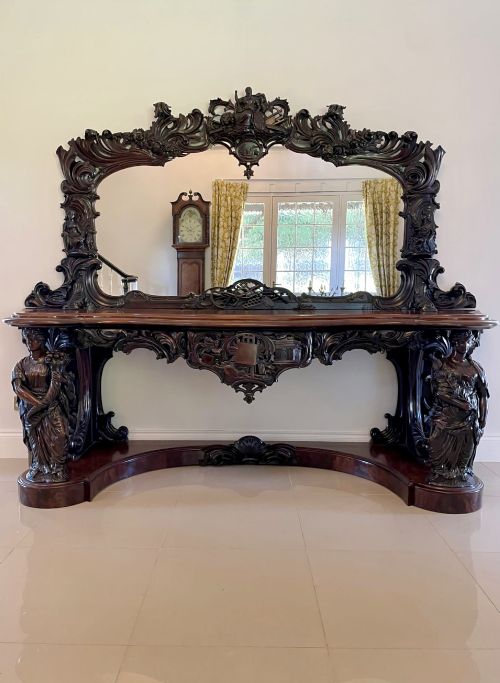
The version most commonly encountered on this page pairs a figured timber base with a heavily carved frame holding a central bevelled or flat glass plate. Cabinet makers built these forms to display silver and porcelain on the lower staging while reflecting candlelight and room space in the polished glass above.
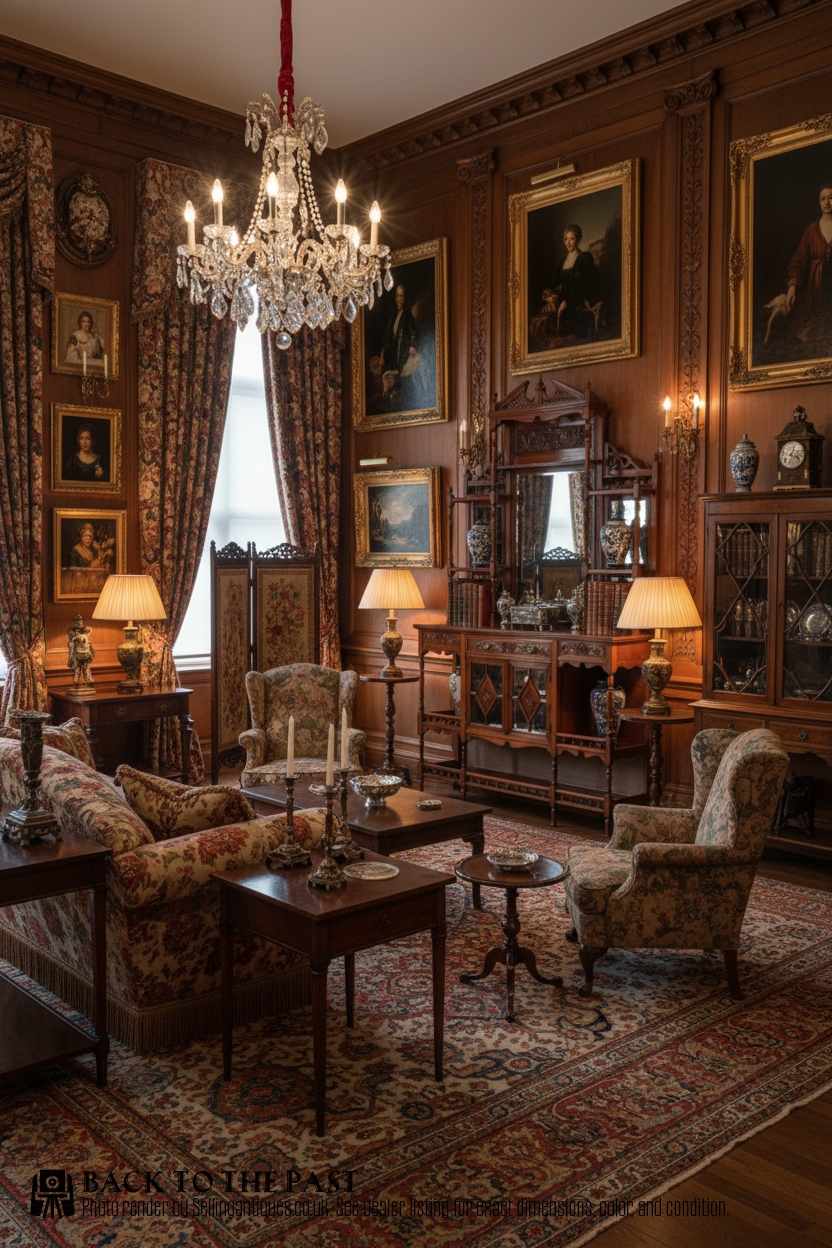
Materials and Construction
Cabinet makers utilised dense native and imported timbers, selecting figured mahogany, burr walnut, pollard oak, and rosewood for their dramatic grain patterns. These choice veneers and solid woods were shaped with deep relief carvings, turned pillars, and sometimes inlaid marquetry or marble tops.
The upper mirror frame required precise joinery to support heavy glass plates safely above the heavy pedestal base. Brass hardware and fitted interior shelving completed the construction, balancing utility with grand decorative display.
Victorian Mirror Back Sideboard Retail Price Guide 2026
Typical asking prices for victorian mirror back sideboard among the pieces listed under this phrase on Sellingantiques today, from the lower quarter to the upper quarter. They describe what is for sale here now, not the wider market.
Listings feature woods spanning rich mahogany, figured burr walnut, dense pollard oak, and exotic rosewood.
Distinctions in Execution
The hierarchy of quality rests upon the selection of timber veneers and the depth of the hand-carved ornamentation. Master workshops employed highly figured burr walnut or pollard oak with crisp, undercut foliage, whereas lesser examples relied on plain grain and shallow machine stamping.
Proportion and structural ambition also divide standard production from exhibition pieces. Superior items integrate heavy marble surfaces, complex breakfront pedestals, and substantial mirror frames that remain rigid under their own weight.
Collinson & Lock·Holland & Sons·T Simpson and Son
The Victorian Mirror Back Sideboard Glossary
- Credenza
- A low dining or drawing room cabinet often lacking the tall legs of a sideboard, frequently incorporating glass-fronted display sections.
- Chiffonier
- A compact sideboard or cabinet equipped with a small superstructure of shelves or a mirror, popular for smaller Victorian parlours.
- Burr Walnut
- Timber taken from the warted excrescences of a walnut tree, yielding highly decorative swirling grain patterns prized for elite cabinet fronts.
- Marquetry
- The art of applying decorative pieces of veneer to a structure to form intricate pictorial designs and geometric patterns.
Victorian Mirror Back Sideboard: Frequently Asked Questions
Where did these sideboards sit in a Victorian home?
These large pieces stood prominently against the main dining room wall, serving as a station for carving meats and holding silver service during formal meals.
In grander townhouses, lighter versions also occupied high-ceilinged drawing rooms to reflect light from oil lamps and display imported ceramics.
How do I care for the polished timber and mirror?
Regular dusting with a dry, soft cloth prevents particulate build-up on the carved mouldings and delicate veneer surfaces. Natural beeswax applied sparingly maintains the lustre of the timber without creating heavy silicone buildup.
Keep the antique mirror glass clean using a barely damp cloth, taking care not to let moisture seep beneath the silvered backing at the edges.
Can I separate the mirror top from the base?
Most of these large cabinets were constructed in two distinct sections to facilitate transport through doorways and up staircases. The upper mirror frame unbolts or lifts out from the lower sideboard surface, resting on secure peg joints or screw fixings.
When moving the furniture, dismantling the superstructure prevents strain on the upright supports and protects the heavy glass plate.
How do I distinguish early Victorian from late Victorian pieces?
Early Victorian examples from around the mid-nineteenth century frequently showcase rich, dark mahogany with restrained classical revival curves and simple architectural pediments. Later nineteenth-century items embrace eclectic styles like the Aesthetic Movement or Renaissance Revival, featuring ebonised details, lighter oak, and busier carved panels.
The integration of specific wood types, such as pollard oak or amboyna, alongside more theatrical mirror framing, typically points toward the later decades of the century.