



Victorian Mercury Barometer
A victorian mercury barometer measures atmospheric pressure while doubling as a striking piece of domestic furniture.
Victorian Mercury Barometer
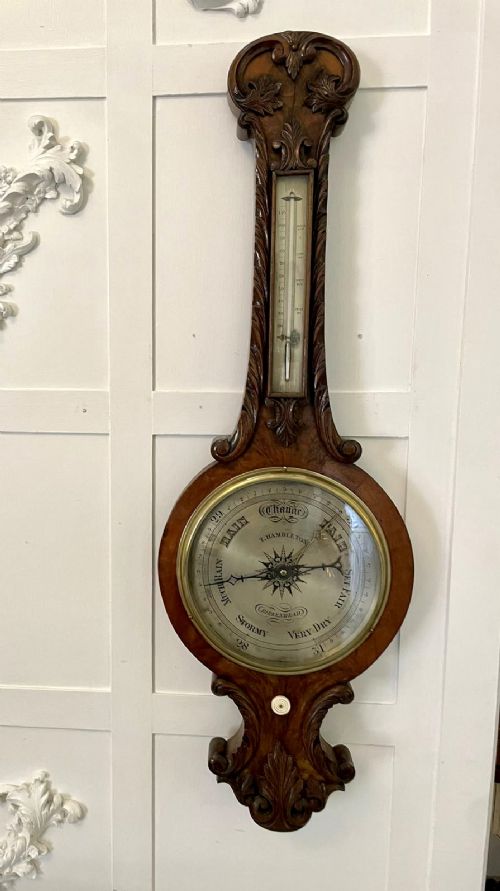
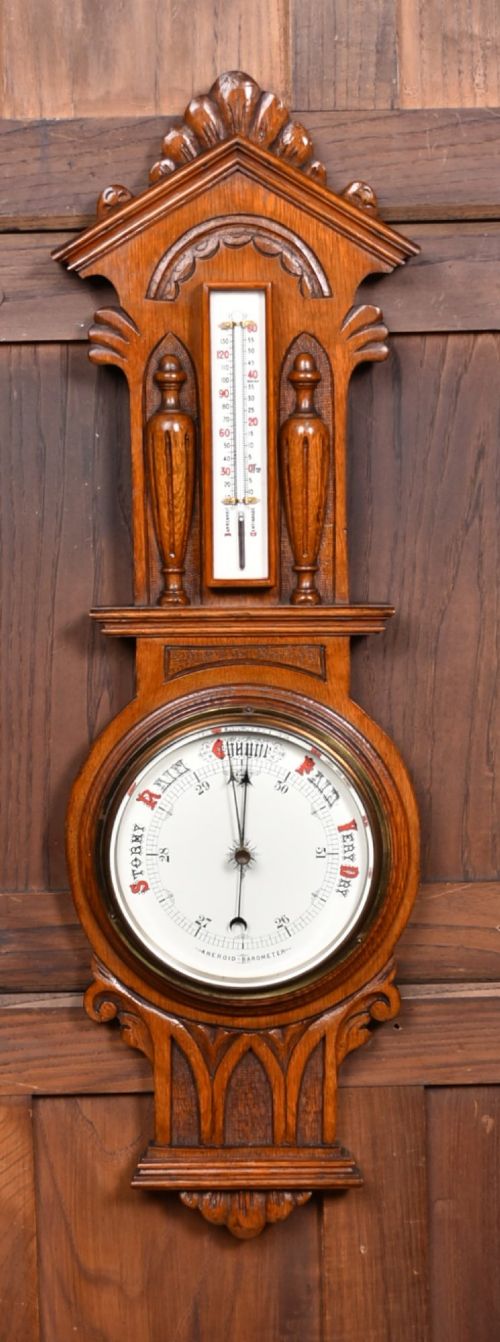
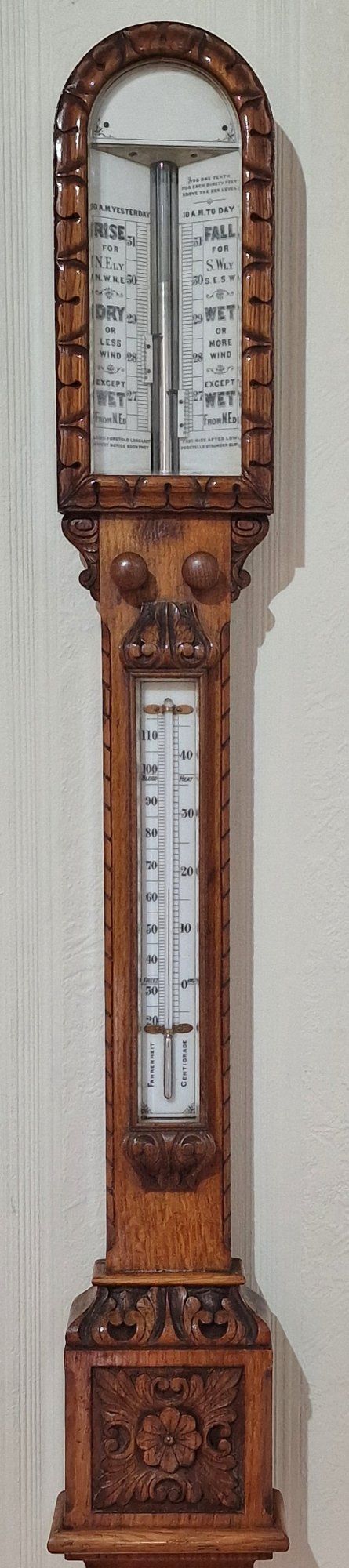
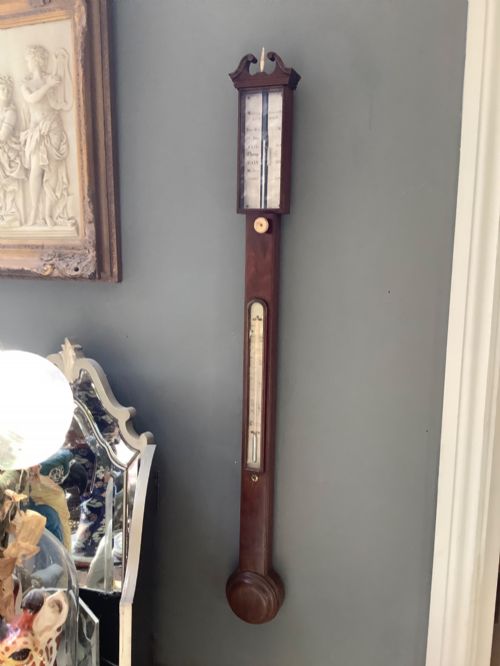
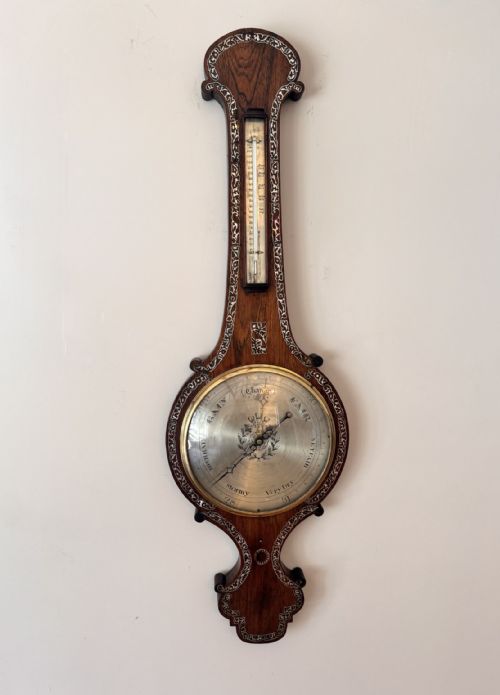
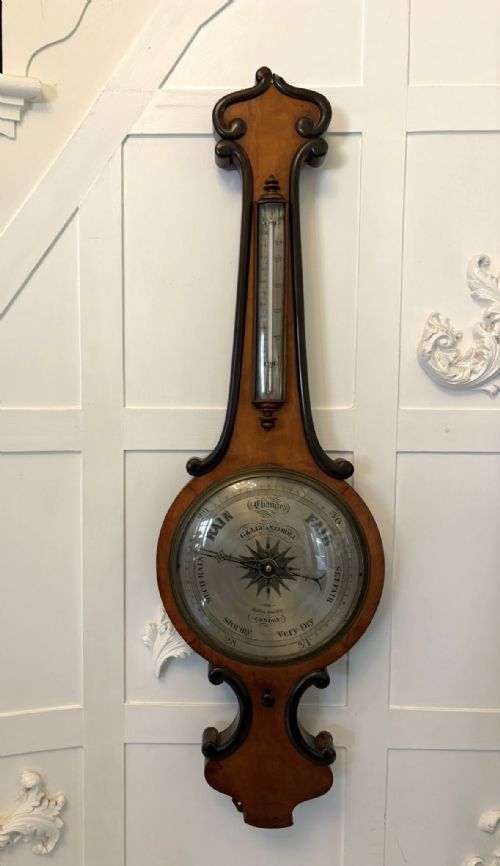
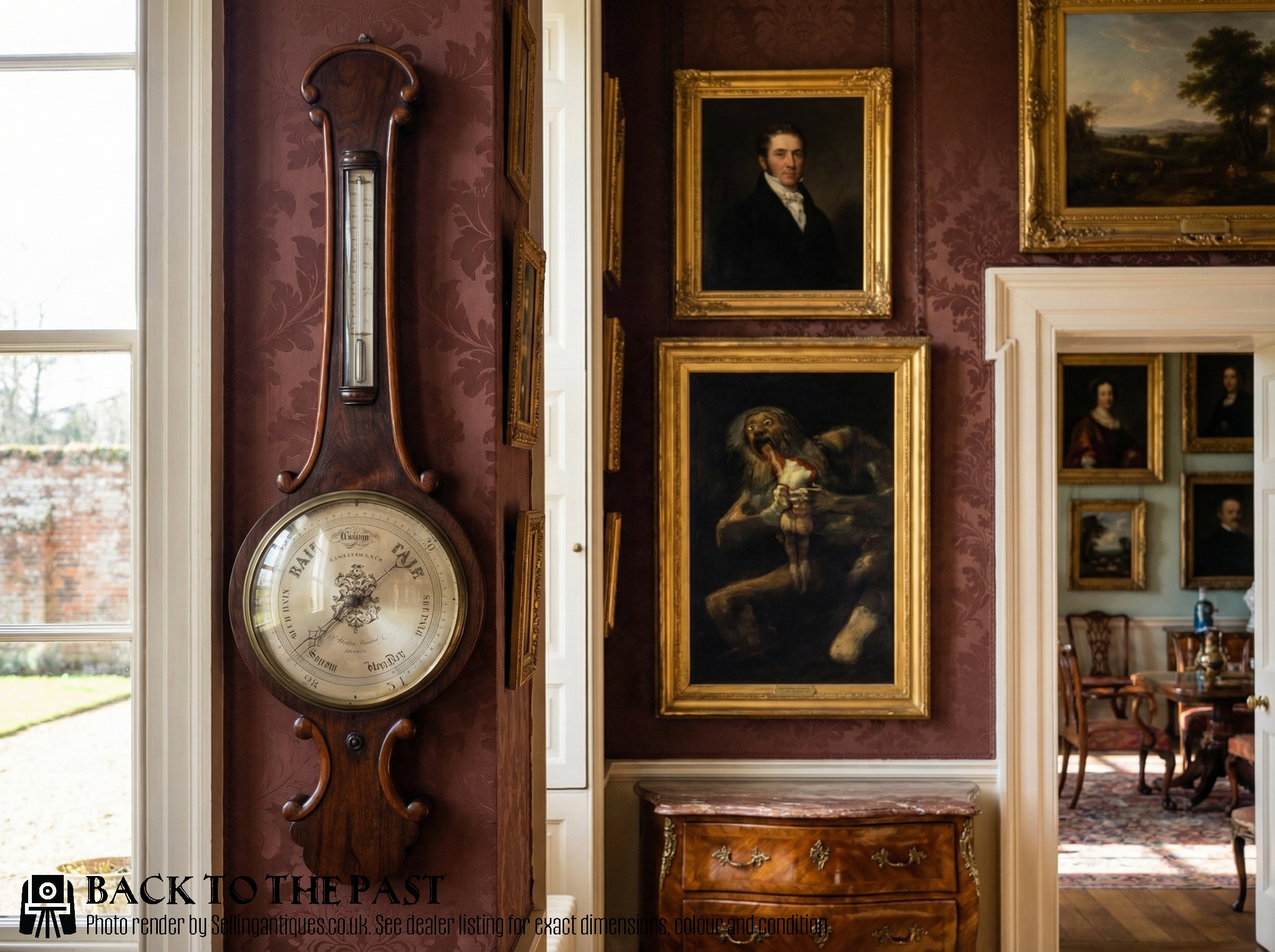
A victorian mercury barometer comes in distinct forms, most commonly the tall stick barometer and the expansive wheel or banjo barometer housed in rich timber cases.
These instruments date predominantly from the nineteenth century, spanning from the eighteen-fifties through to the nineteen-hundreds, reflecting both domestic weather tracking and marine utility.
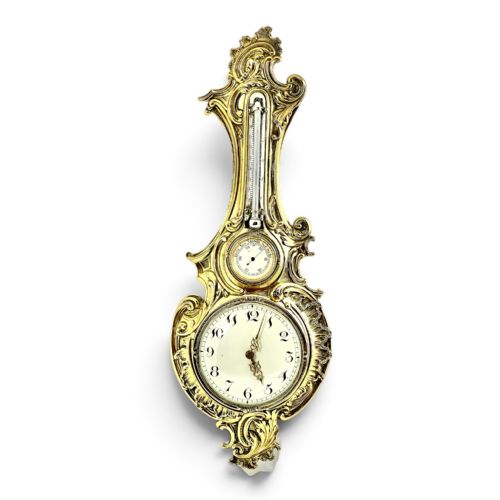
The versions most frequently met on this page combine functional meteorological glass tubes with decorative woodwork, occasionally incorporating matching thermometers or clock dials.
Materials and Technique
Cases rely heavily on dense hardwoods such as mahogany, rosewood, walnut, and oak, frequently embellished with contrasting mother-of-pearl inlay or elaborate carved motifs.
The internal mechanics utilise hand-blown glass columns filled with liquid mercury, paired with silvered metal dials engraved with weather descriptions and maker signatures.
Victorian Mercury Barometer Retail Price Guide 2026
Typical asking prices for victorian mercury barometer among the pieces listed under this phrase on Sellingantiques today, from the lower quarter to the upper quarter. They describe what is for sale here now, not the wider market.
Listings feature eighteenth and nineteenth-century periods, utilising brass, mahogany, rosewood, and glass.
Craftsmanship and Distinction
Superior examples separate themselves through the crispness of the engraved silvered dial, the fidelity of the maker's signature, and the complexity of the timber case carving.
The integration of supplementary instruments, such as integrated thermometers or marine gimbals, elevates a standard domestic piece into an exceptional scientific work.
G & L Guanziroli·Negretti & Zambra·Alexander Wright·Fagioli of Clerkenwell·Jenkins Of Old Swindon·J Hughes London·L Casatelli of Liverpool·James H Kelly·W.E. Pain of Cambridge·Hayward of Ashford·S&B Solomons·Sexty Bros·Pring of Reading·Levy Colchester·Evans of Welspool·Edwards Menia Bridge
The Victorian Mercury Barometer Glossary
- Stick barometer
- A vertical instrument that measures atmospheric pressure directly through a tall glass column of mercury.
- Wheel barometer
- A dial-based instrument where a float on the mercury column turns a pointer across a circular face via a pulley system.
- Silvered metal
- A brass or copper dial plate coated with a fine silver finish and engraved with graduations and weather scales.
- Banjo barometer
- A wheel barometer housed within a case shape resembling a banjo, featuring a widened base and a slender stem.
- Marine barometer
- A specialised stick barometer fitted with gimbal mountings to stay vertical on rolling ships at sea.
Victorian Mercury Barometer: Frequently Asked Questions
How do I read a mercury barometer?
Read the pressure by observing the height of the mercury column against the engraved scale, noting whether rising or falling levels indicate improving or worsening weather.
Many wheel versions feature a secondary pointer set by hand to track daily atmospheric changes.
Where should I hang my barometer?
Hang the instrument on an interior wall away from direct sunlight, radiators, and heavy vibrations to ensure accurate pressure readings.
Stable indoor temperatures prevent unnecessary expansion of the mercury and timber casing.
Can these instruments still predict weather?
These historical pieces remain functional weather glasses that respond accurately to local atmospheric pressure shifts.
They offer a tactile, mechanical method of forecasting rain and shine without digital assistance.
How do I identify a stick versus wheel barometer?
A stick barometer displays pressure vertically along a long, narrow wooden trunk containing the exposed glass tube.
A wheel barometer encloses the mechanism within a wider case featuring a prominent circular dial face.