



Victorian Meal Chime
A Victorian meal chime brings the resonance of the nineteenth-century country house to the modern interior.
Victorian Meal Chime
A Victorian meal chime is an acoustic device designed to summon household residents to dining rooms, utilising suspended metal discs or tubes struck with a mallet. When you search for a Victorian meal chime, you are examining domestic signal instruments that double as decorative furnishings for halls and drawing rooms.
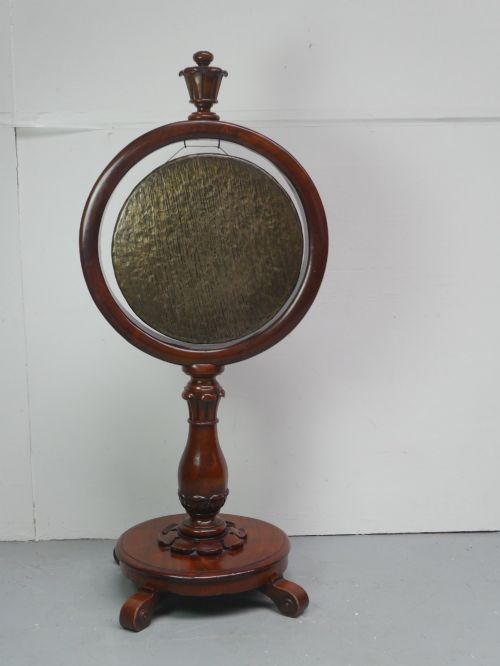
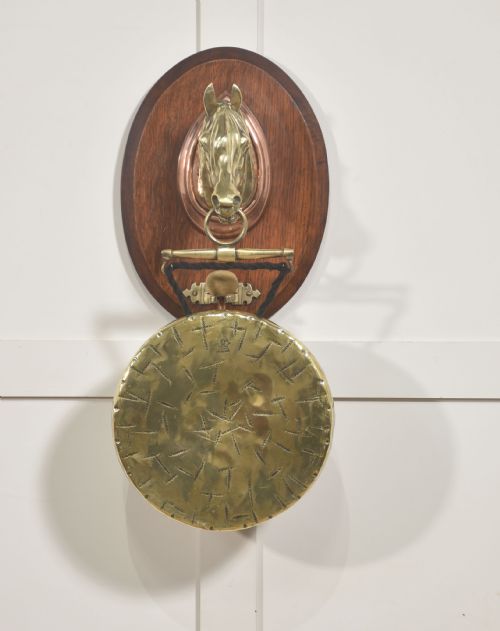
The pieces on this page appear in various formats, ranging from compact table gongs to substantial wall-hanging panels. Oak and walnut provide the structural frames, whilst brass and bronze form the striking surfaces that produce the characteristic resonant tone.
Origins stretch across British and continental workshops, incorporating regional stylistic movements such as Gothic Revival and Arts and Crafts. These domestic chimes capture the material culture of nineteenth-century hospitality, combining utility with decorative ambition.
How they were made
Cabinet makers utilised dense hardwoods including oak, walnut, and mahogany to construct the supporting frames and mounting boards. These timbers were frequently carved, panelled, or combined with wrought iron and bamboo to suit prevailing nineteenth-century interior tastes.
Metalworkers cast and hammered brass, bronze, and copper to create the suspended gongs and chimes, occasionally applying silver plating to achieve brighter visual and acoustic qualities. Structural fixings integrated organic elements such as cattle horn and mounted horse heads into the hanging apparatus.
Listings feature oak, walnut, and mahogany frames alongside brass, bronze, and copper gongs spanning the nineteenth century.
What varies in quality
The sophistication of the timber joinery and the depth of decorative carving distinguish standard production from superior pieces. Workshops employing Gothic Revival or Arts and Crafts principles invested greater care in framing the acoustic elements.
Acoustic performance depends directly upon the purity and thickness of the metal alloy used in the gong. Heavier bronze and brass components yield a clearer, more sustained resonance than thinner pressed plates.
The Victorian Meal Chime Glossary
- Dinner Gong
- A suspended metal disc or tube struck with a mallet to announce meals in large domestic households. These functional objects formed a standard fixture in nineteenth-century hallways.
- Gothic Revival
- An architectural and decorative style drawing inspiration from medieval forms, featuring pointed arches, heavy tracery, and dark woods. This aesthetic heavily influenced nineteenth-century dining furniture.
- Arts and Crafts
- A design movement prioritising traditional craftsmanship, visible construction, and honest use of natural materials. Pieces from this movement often display simplified structural forms.
- Aesthetic Movement
- A late nineteenth-century design current emphasising visual beauty over narrative or moral function. Objects in this style incorporated motifs from Japanese art and refined surface decoration.
- Japonisme
- The influence of Japanese art and design on Western decorative arts during the late nineteenth century. This interest manifested in the use of bamboo frames and asymmetrical compositions.
Victorian Meal Chime: Frequently Asked Questions
What is a Victorian meal chime?
A Victorian meal chime is a decorative acoustic device used in nineteenth-century homes to gather residents for dinner. They consist of a metal gong suspended from a wooden or iron frame and struck with a mallet.
These pieces combine utilitarian purpose with the aesthetic movements of the period, ranging from simple oak stands to elaborate Gothic Revival wall mounts.
How were meal chimes used?
Domestic staff or hosts struck the suspended metal disc to produce a resonant tone that carried across multiple rooms in large houses. They served as the auditory signal that dinner was served.
Positioned typically in entrance halls or corridors, they were placed where the sound would disperse effectively throughout the ground floor.
How do I style a meal chime today?
A meal chime functions well mounted in an entrance hall or placed upon a sturdy side table as a sculptural focal point. The rich tones of aged oak, walnut, brass, and bronze complement both traditional and contemporary interiors.
Ensure wall-hanging models are secured to appropriate fixings, as the denser frames carry considerable weight.
How do I identify Gothic Revival chimes?
Gothic Revival chimes are identified by architectural motifs such as pointed arches, quatrefoils, and heavy carved woodwork in dark walnut or oak. These elements mirror the ecclesiastical and medieval revival architecture popular during the nineteenth century.
They frequently appear more monumental in scale compared to standard domestic table gongs.