

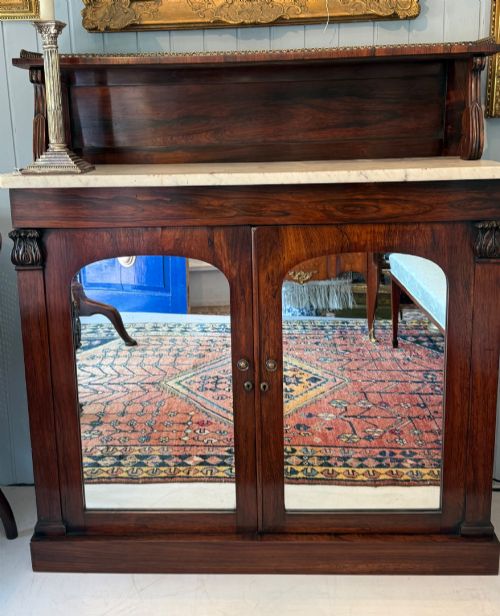
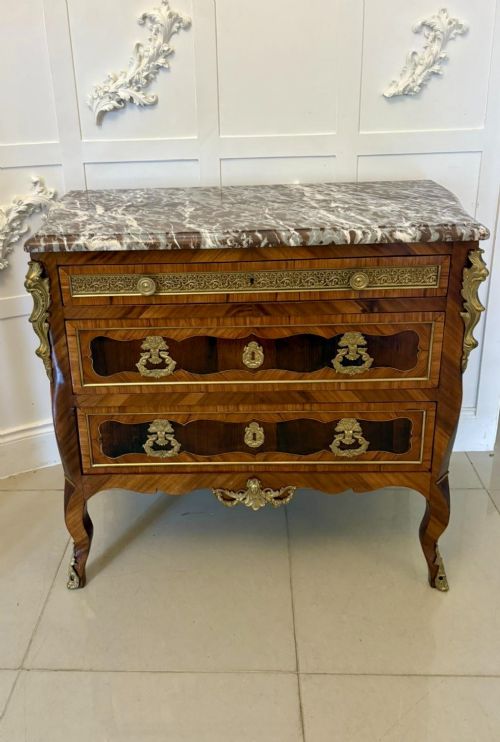


Victorian Marble Top Sideboard
A victorian marble top sideboard brings striking stone surfaces and rich timbers together for practical storage in a grand interior.
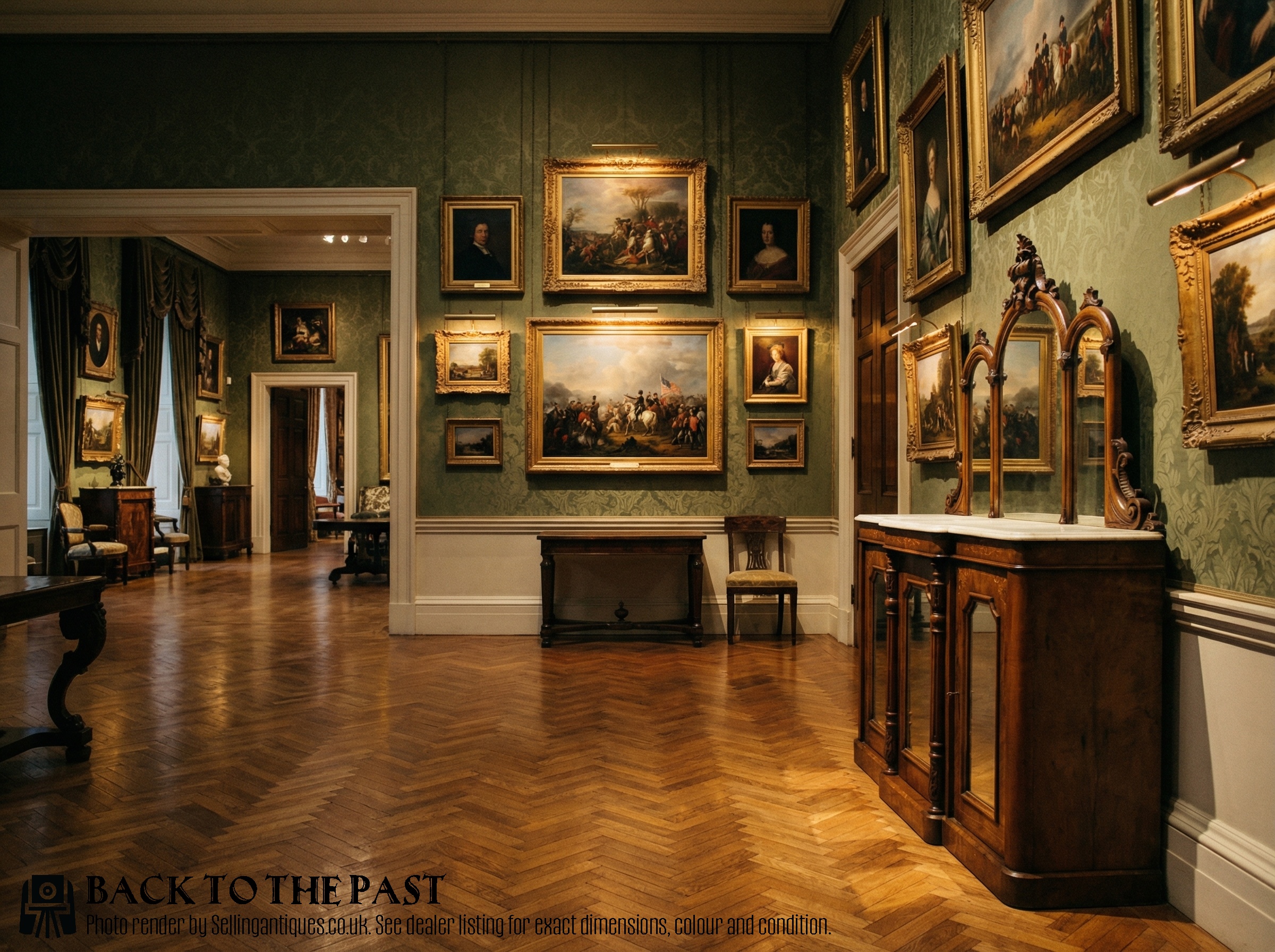
Victorian Marble Top Sideboard
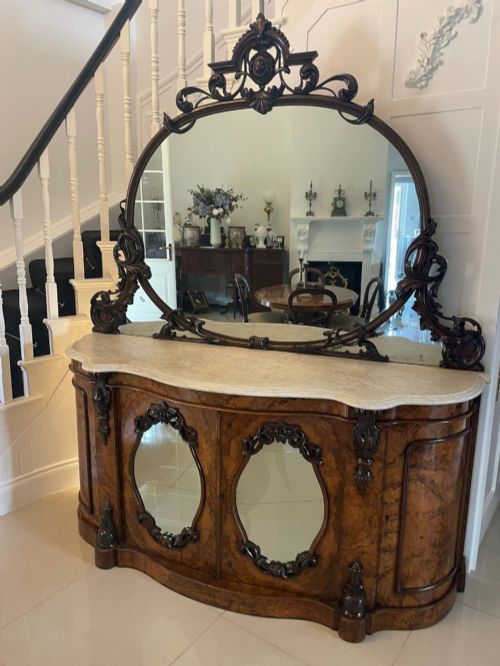
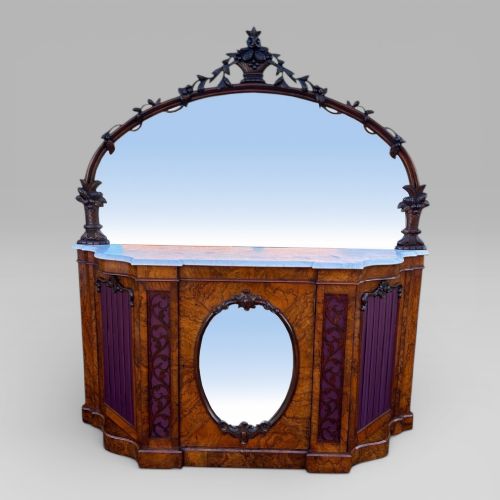
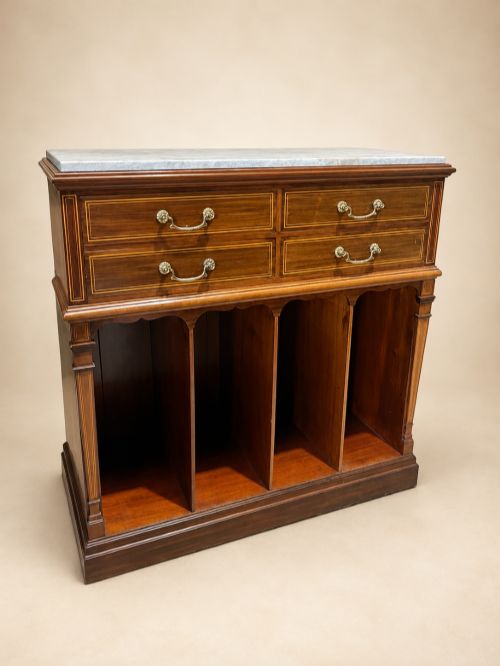
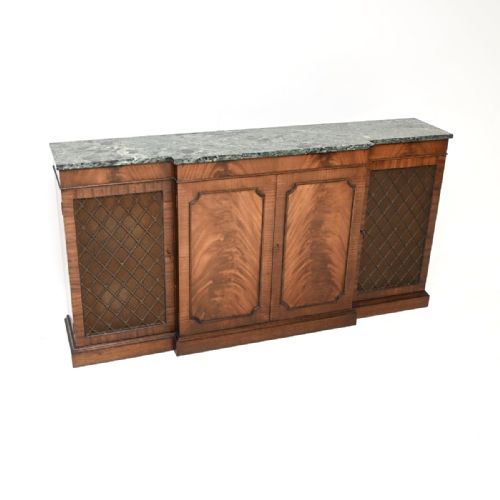
A victorian marble top sideboard combines substantial timber cabinetry with a durable stone slab across the upper surface, creating a dual-purpose piece for formal dining rooms and drawing rooms. The pieces appearing most frequently across this selection span the mid-nineteenth century, frequently taking the form of credenzas, low cabinets, or mirror-backed sideboards.
Makers and workshops constructed these heavy items to anchor dining spaces, utilising rich figured timbers like burr walnut, mahogany, and rosewood beneath polished marble. Many examples incorporate glazed or grilled doors, marquetry inlay, and carved mirror backs that reflect light across the room.
Materials and construction
Cabinetmakers constructed carcass frames from solid native and exotic hardwoods, applying decorative veneers such as burr walnut, kingwood, and satinwood to the visible exterior surfaces. These timbers received hand-applied polish to accentuate the natural grain patterns.
Heavy marble slabs, ranging from white to rouge and dark varieties, were fitted directly to the timber tops to provide a cool, water-resistant surface suitable for serving food or holding decorative objects.
Several pieces include hidden cellarete drawers designed specifically for keeping Victorian wine bottles cool against the stone.
Assessing the workmanship
Quality reveals itself in the selection of timber veneers, where symmetrical burr walnut or fine mahogany grain denotes superior workshop output. The thickness and precise shaping of the fitted marble top further distinguish finer examples from standard production.
Carved details, intarsia inlay, and the integration of original mirror plates demonstrate the level of hand labour invested by the cabinetmaker. Substantial brass mounts and tight door joints indicate higher workshop standards.
Gillows
The Victorian Marble Top Sideboard Glossary
- Credenza
- A low cabinet or sideboard designed for display and storage, frequently featuring glazed side compartments and central doors.
- Marquetry
- Decorative patterns formed by fitting contrasting pieces of veneer into a prepared wood ground.
- Chiffonier
- A compact sideboard or cabinet equipped with shelving and doors, popular during the nineteenth century.
- Rouge marble
- A deep red, variegated limestone prized for decorative furniture tops.
- Serpentine front
- A curved furniture front featuring a convex centre flanked by concave curves.
Victorian Marble Top Sideboard: Frequently Asked Questions
Where should I place a marble top sideboard?
These heavy items suit dining rooms, large hallways, or spacious living areas where their stone tops and timber facades can function as focal points.
Ensure the floor is level and capable of supporting the combined weight of the timber carcass and the thick stone slab.
How do I care for the marble surface?
Clean the stone regularly using a soft cloth and warm water, avoiding acidic substances that can etch the polished finish.
Applying a suitable stone sealer periodically helps protect the surface from moisture and staining.
Are these pieces suitable for everyday use?
The sturdy timber construction and durable stone top make these sideboards practical for holding serving dishes, books, or lamps.
Interior shelving provides enclosed storage for dinnerware or household items.
How do I distinguish mid-nineteenth century pieces?
Look for construction traits such as hand-cut dovetails, dense native or imported hardwoods, and traditional French polish finishes.
Design motifs often include revival styles referencing earlier French and English furniture periods.