
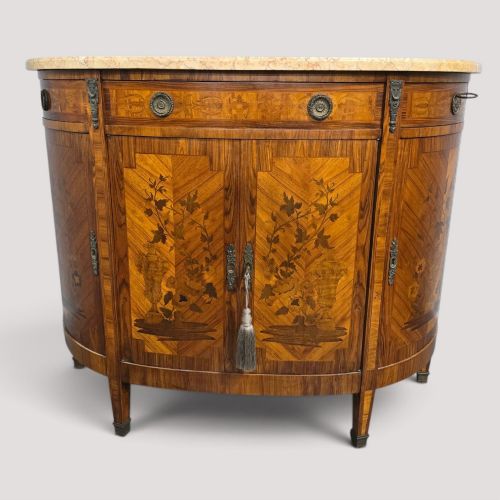
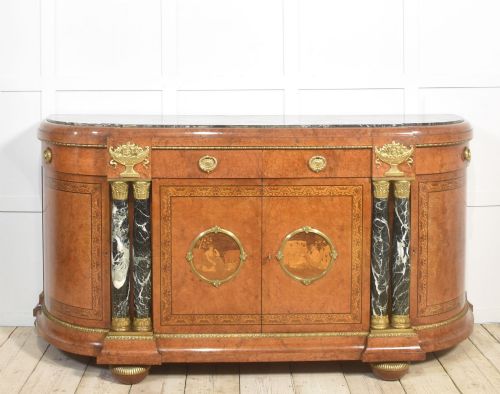


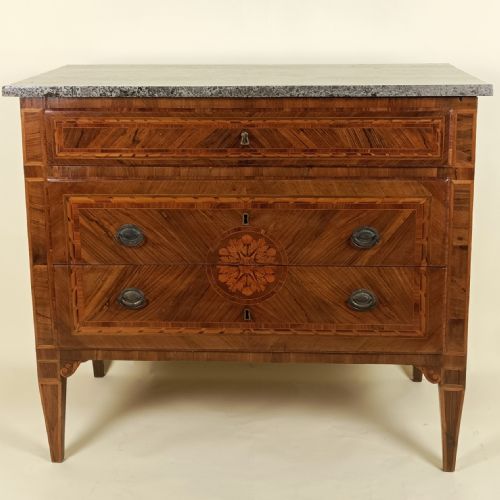


Marble Top Walnut Credenza
When you search for a marble top walnut credenza, you encounter substantial Victorian and continental cabinetry designed to anchor a principal room.
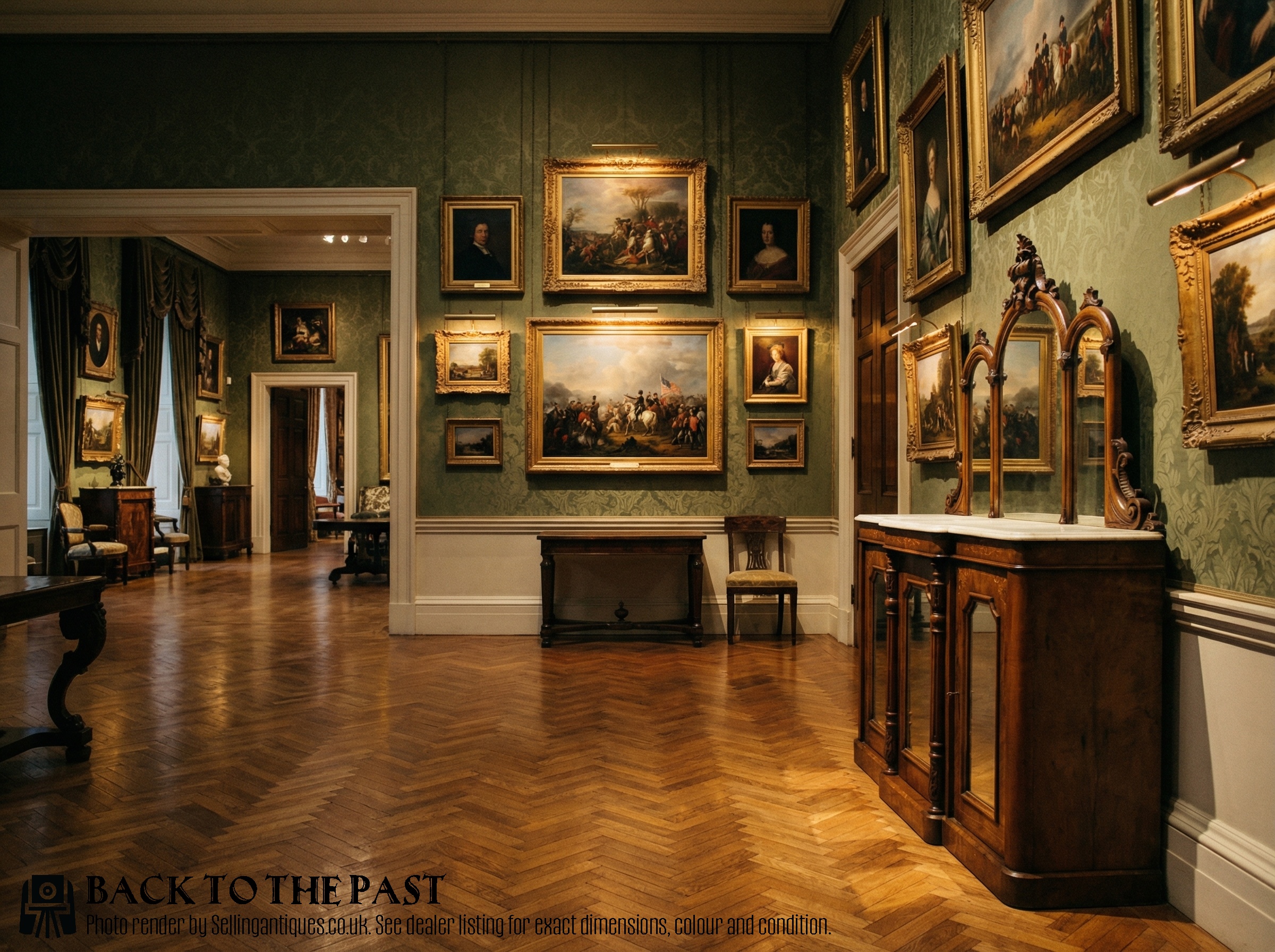
Marble Top Walnut Credenza
A marble top walnut credenza is a low-standing cabinet designed for display and storage, frequently incorporating a heavy stone slab bedded onto a richly figured wooden carcass. These pieces originate predominantly from the nineteenth and early twentieth centuries, spanning distinct English Victorian workshops and continental European ateliers.
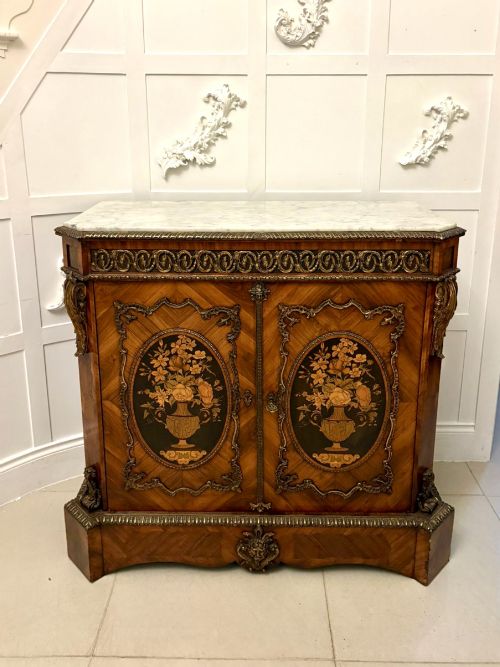
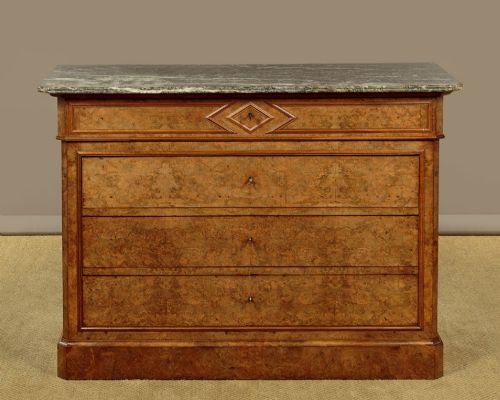
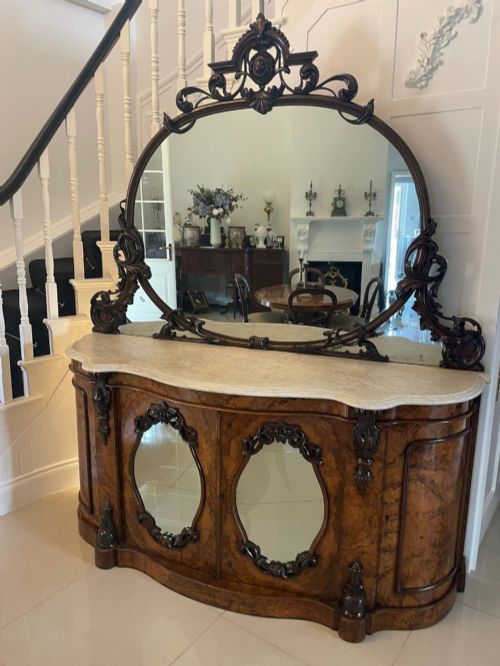
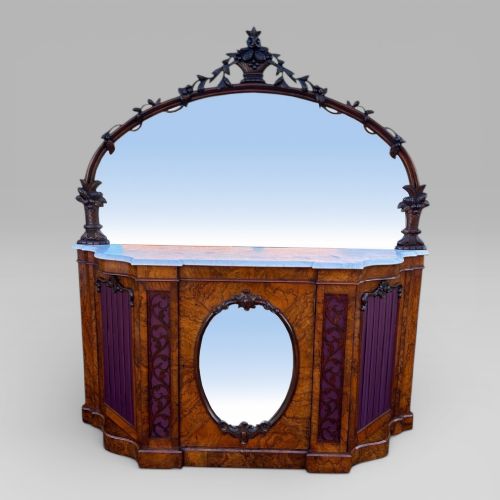
The version most commonly met on this page is the Victorian burr walnut credenza, often featuring serpentine fronts, marquetry inlay, and carved mirror backs. Alongside these, buyers encounter French side cabinets and commodes utilising similar materials from the decades around nineteen hundred.
Object types overlapping with this search include sideboards, buffets, and console tables, yet the core form remains a low cabinet topped with marble. Such pieces served historically in dining rooms and drawing rooms to hold silver, glass, and linen while offering a solid surface for decorative arrangements.
How they were made
Construction relies upon solid walnut and pine carcasses veneered in highly figured burr walnut, accented with marquetry, brass stringing, and gilt bronze or ormolu mounts. Cabinetmakers selected timbers for their swirling grain patterns, frequently arranging veneers symmetrically across doors and drawer fronts.
The defining stone surface consists of thick marble, commonly white Carrara, shaped to follow the contours of the wooden base whether straight, breakfront, or serpentine. Slabs rested directly upon the cabinet top, providing a durable, cool surface that contrasted with the warm tones of the polished wood below.
Listings feature pieces spanning from the late 18th century through the 1930s, constructed in walnut, burr walnut, and marble.
What varies in quality
Quality in these cabinets is measured by the selection and symmetry of the burr walnut veneers and the precision of the marquetry and brass inlay. Superior examples display continuous grain matching across multiple doors and drawers, whereas lesser pieces utilise plainer timber with repetitive or mismatched grain.
The weight, thickness, and finishing of the marble top also distinguish the tier of the piece, alongside the crispness of hand-carved mouldings and original brass or ormolu mounts. Cabinets retaining their original mirror backs, internal shelving, and working locks demonstrate higher original workshop expenditure.
The Marble Top Walnut Credenza Glossary
- Burr walnut
- A veneer taken from the gnarled growths on walnut trees, prized for its swirling, highly figured grain patterns. Cabinetmakers used these decorative cuts on the most prominent surfaces of nineteenth-century furniture.
- Credenza
- A low dining or drawing-room cabinet used for storage and display. The form evolved from a sixteenth-century Italian sideboard into the enclosed cabinet seen in the Victorian era.
- Marquetry
- The art of applying pieces of veneer to a structure to form decorative patterns and pictures. Craftsmen utilised various exotic and native woods to create floral or geometric designs.
- Ormolu
- Gilt-bronze mounts applied to furniture for decorative enrichment. French cabinetmakers frequently employed these cast and gilded metal details on nineteenth-century side cabinets.
- Serpentine
- A furniture front or marble slab shaped with a concave central section flanked by convex ends, or vice versa. This flowing contour requires precise carpentry and stone-cutting skills.
Marble Top Walnut Credenza: Frequently Asked Questions
Where were marble top walnut credenzas placed?
These cabinets stood primarily against principal walls in Victorian drawing rooms and formal dining rooms, where they functioned both as serveries and decorative focal points.
The heavy stone surface provided a practical landing area for serving dishes or displaying porcelain, while the enclosed cupboards beneath stored household silver and glassware.
How do I identify a Victorian credenza?
Victorian examples typically feature rich burr walnut veneers, elaborate marquetry inlay, and often a mirrored back superstructure mounted above the main cabinet body.
They frequently display serpentine or breakfront outlines and rest upon low plinth bases or short carved feet, distinguishing them from later continental commodes.
Are the marble tops original?
Most pieces retain their heavy stone slabs, which were cut specifically to match the curved or straight profiles of the wooden carcasses beneath.
Because the marble simply rests on the cabinet top, variations in thickness and veining reflect the specific quarry and workshop responsible for the piece.
How do I care for the wood and marble?
Walnut surfaces require regular dusting and occasional treatment with appropriate traditional waxes to preserve the polished finish of the burr veneer.
The marble top benefits from simple wiping with a damp cloth, avoiding acidic cleaners that might etch or dull the polished stone surface.