




Victorian Mantelpiece Vases
Victorian mantelpiece vases bring domestic display to life through striking glass lustres, earthenware spill vases and porcelain garnitures.
Victorian Mantelpiece Vases
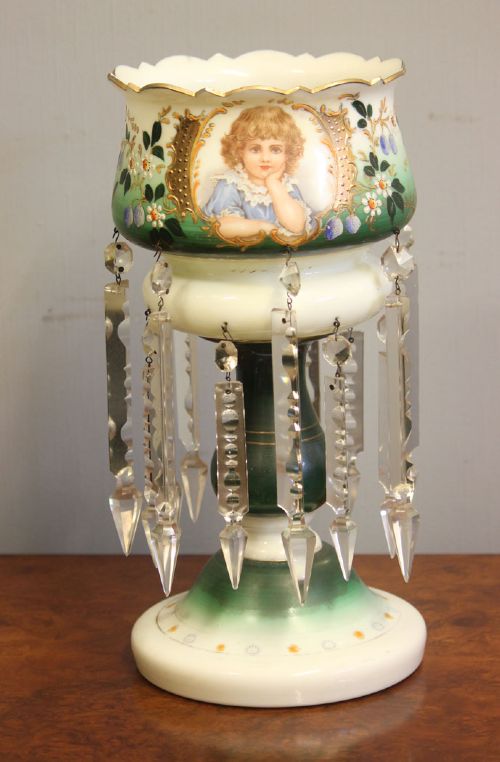
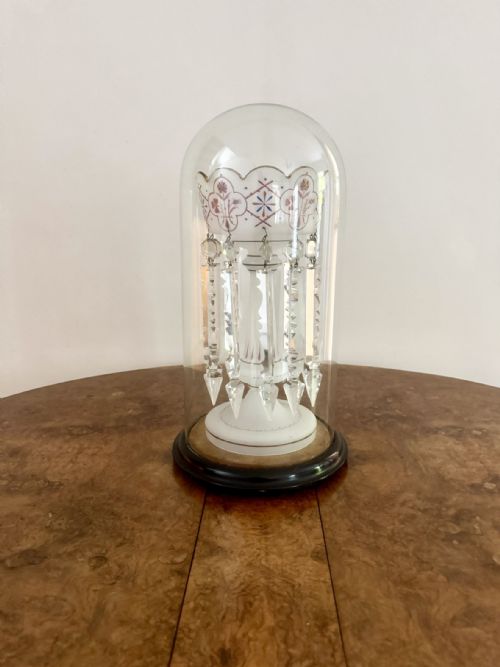
Victorian mantelpiece vases cover a varied group of ornamental vessels designed specifically to stand upon a hearth or shelf during the nineteenth century. These objects include glass lustres adorned with crystal prisms, earthenware spill vases modelled as animals or figures, and ceramic garniture sets paired with clocks.
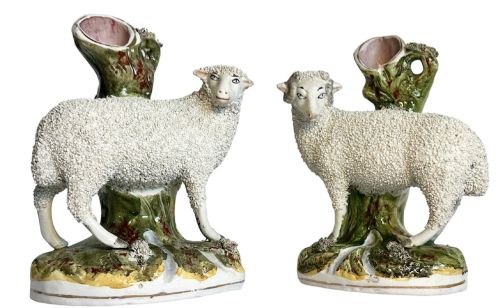
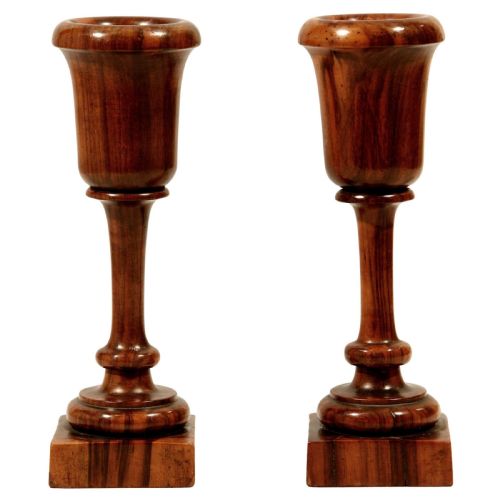
The versions most commonly met on this page span British pottery, particularly Staffordshire figures and spill holders depicting sheep, deer, and historical groups, alongside coloured glass lustres from English and continental makers. Forms range from simple turned wood stem vases to ornate gilt bronze ewers and porcelain urns.
Makers and workshops from Britain, France, and Germany contributed to this domestic tradition using materials from brass and bronze to opaline and cranberry glass. Buyers encounter pairs meant to flank a central clock or ornament, matching the symmetry favoured in Victorian interior arrangement.
How they were made
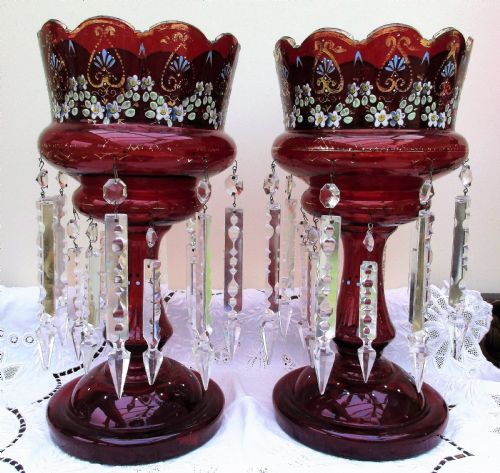
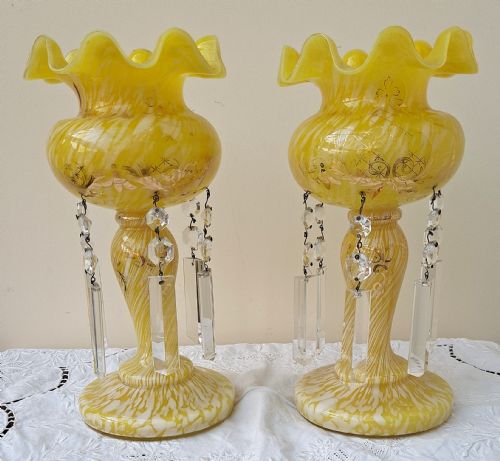
Glass vessels such as ruby, yellow, and cranberry lustres relied on hot glass blowing techniques, often incorporating overlay methods where a clear layer cased a coloured body before being cut back. Hanging crystal prisms were hand-faceted and suspended from the rims by wire or metal pins.
Earthenware spill vases and figures from Staffordshire potteries were slip-cast or hand-pressed into moulds, then painted with enamel colours and glazed before a second firing. Metal items like brass and bronze ewers utilised casting methods, sometimes finished with gold leaf or mounted onto marble plinths.
Nineteenth-century mantelpieces frequently hosted cheerful pottery sheep and cows doubling as spill holders, keeping parlour firesides company.
What varies in quality
In glass lustres, the richness of the glass colour, the depth of any overlay cutting, and the completeness of the original crystal prism fringes determine the piece's standing. Intricate piercing in brass work and the stability of marble plinths under bronze vases similarly indicate workshop ambition.
Royal Doulton·Mettlach Pottery·Royal Crown Derby·Royal Vienna
The Victorian Mantelpiece Vases Glossary
- Lustre
- A decorative glass or ceramic vase fitted with a ring of hanging crystal prisms that catch and reflect candlelight. These ornamental pieces sat prominently on parlour shelves.
- Spill Vase
- A small hollow vessel designed to hold taper spills used for lighting pipes, fires, and lamps. Potteries frequently modelled these in earthenware as animals or figural groups.
- Garniture Set
- A matched grouping of three or more ornamental vases and urns designed to sit together on a mantelpiece, often accompanying a central clock. They created formal symmetry in period rooms.
- Flat Back
- A ceramic figure or vase moulded with an unadorned, flat rear side intended to sit flush against a wall. This technique saved materials and suited shallow mantel shelves.
- Cranberry Glass
- A rich pinkish-red glass produced by adding gold chloride to the molten batch during the nineteenth century. It frequently featured in table lustres and decorative glassware.
Victorian Mantelpiece Vases: Frequently Asked Questions
What is a mantel lustre?
A mantel lustre is an ornamental glass vase featuring a flared rim hung with cut crystal prisms. These prisms caught the flickering light of gas lamps and candles in Victorian rooms.
They were typically displayed in pairs flanking a clock on the drawing-room mantelpiece, serving a decorative rather than practical function.
Why did Victorian vases have flat backs?
Many nineteenth-century ceramic figures and spill vases were made with flat backs because they were intended to stand on narrow mantelpieces against a wall. This method simplified manufacturing and reduced the weight of the piece.
Potters concentrated their detailed painting and modelling entirely on the front view where the eye naturally rested.
How were spill vases used?
Spill vases held thin rolled spills of paper or wood used to transfer a flame from the fireplace to lamps and pipes. They kept these combustible tapers neat and close at hand on the hearth.
Because matches were initially expensive or volatile, these holders were essential household accessories throughout the nineteenth century.